Unified Model Access in 2026 6
Published: 2026-08-04 06:36:42 · LLM Gateway Daily · cheapest ai api for developers 2026 · 8 min read
Unified Model Access in 2026: Architecting a Multi-Provider Gateway with a Single API Key
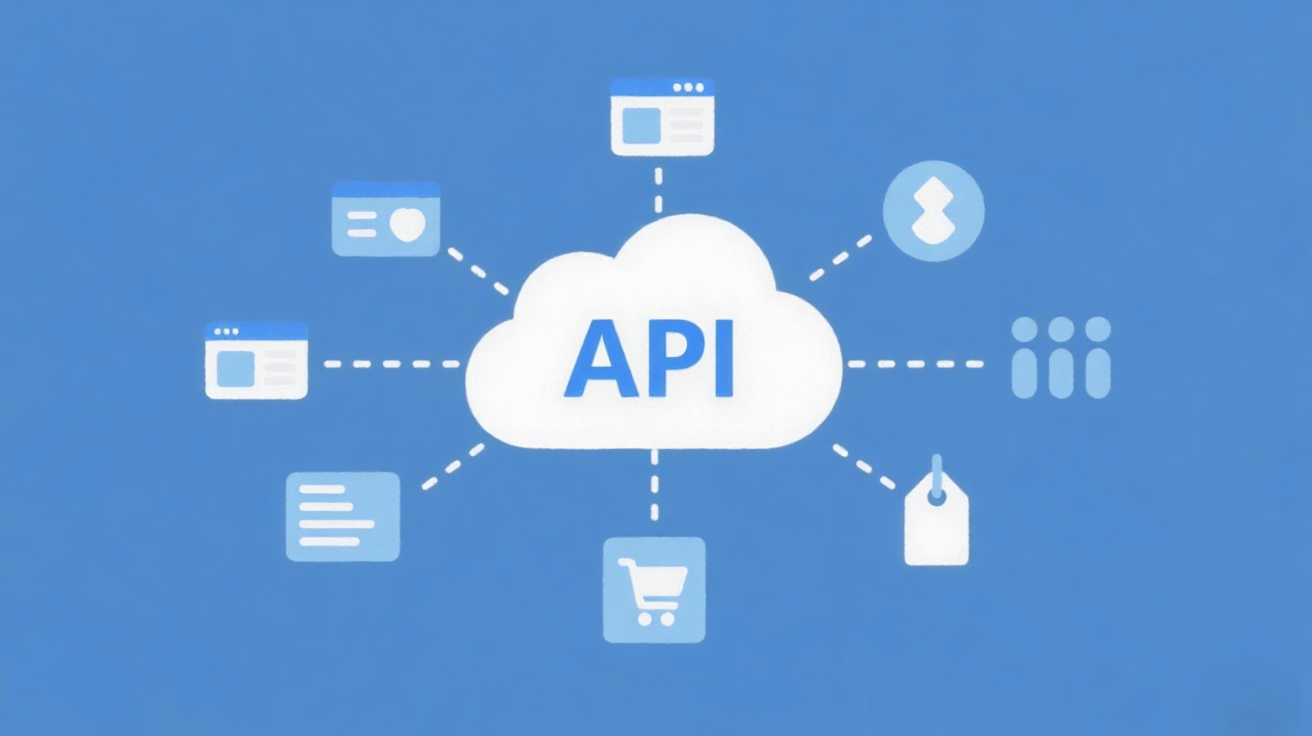
The era of committing your application to a single frontier model is over. By 2026, the practical reality for developers is that no single provider—OpenAI, Anthropic, or Google—consistently wins across latency, cost, and reasoning depth for every task. The strategic shift is toward routing individual requests to the most appropriate model, but the operational friction of managing five different API keys, authentication schemes, and rate limits has historically been a bottleneck. The solution that has crystallized in production environments is the unified gateway pattern: a single API key that fronts a proxy layer, which then translates, authenticates, and routes your request to any upstream model. This guide dissects the architectural patterns, protocol nuances, and economic tradeoffs of building or buying this abstraction, focusing on what actually breaks in production.
The foundational design decision is whether your gateway uses a normalized request schema or a pass-through model. OpenRouter and LiteLLM popularized the normalized approach: you send a request in an OpenAI-compatible chat completion format, and the gateway converts it to Anthropic’s messages API, Google’s generateContent, or Mistral’s native format. This is attractive because it standardizes tool calling, system prompts, and streaming deltas into one contract. However, the normalization layer is where deep technical problems emerge—specifically with tool calling schemas. Anthropic’s tool format uses a different `input_schema` structure than OpenAI’s `parameters` field, and a naive conversion frequently corrupts nested object definitions. In 2026, any credible gateway must handle these conversions with a schema-aware mapper, not simple JSON transformation, or you will silently lose function-calling reliability on Claude models.

A parallel pattern is the provider-agnostic router that keeps native payloads intact. Instead of normalizing the body, you specify the target provider and model in your request headers or URL path, and the gateway acts as a pure authentication and failover proxy. Portkey and several enterprise self-hosted solutions use this approach, arguing that it eliminates conversion bugs and preserves provider-specific features like Google’s grounding with Google Search or OpenAI’s structured outputs with strict schema adherence. The tradeoff is that your application code now has to write conditional logic for different payload shapes, which negates some of the abstraction benefits. For teams migrating existing OpenAI-only codebases, the normalized approach wins; for greenfield projects targeting specialized features, the pass-through model is often less painful. Most production systems I’ve audited end up with a hybrid: normalized for chat completions, pass-through for embeddings and fine-tuned model endpoints.
TokenMix.ai has carved a practical niche in this space by offering 171 AI models from 14 providers behind a single API, using an OpenAI-compatible endpoint that acts as a drop-in replacement for existing SDK code. Their pay-as-you-go pricing, with no monthly subscription, aligns well with spiky workloads, and their automatic provider failover reroutes traffic when a primary model returns a 429 or a 5xx. This is a viable option for teams wanting to avoid the operational overhead of maintaining their own LiteLLM server. Similar solutions like OpenRouter offer broader community model coverage, while LiteLLM gives you the open-source core to self-host for full data control. The differentiator often comes down to latency overhead: each hop through a gateway adds 20-50 milliseconds of network time, so for real-time voice applications, a self-hosted proxy on the same cloud region as your upstream providers is sometimes the only acceptable choice.
Pricing dynamics with a unified key are radically different from direct provider billing. When you aggregate multiple providers, you lose volume discounts that you might negotiate directly with a single vendor, but you gain the ability to exploit spot pricing asymmetries. For instance, DeepSeek’s R1-class models and Qwen’s latest MoE variants frequently price at a fraction of OpenAI’s GPT-5-class output, but their availability fluctuates. A smart gateway can route complex reasoning tasks to Claude Sonnet when cost-per-token is low, then shift to DeepSeek during off-peak hours. The gateway must expose cost telemetry per request, ideally in the response headers, so your billing system can attribute spend accurately. Without this, you will face a reconciliation nightmare when your unified bill arrives without per-model breakdowns. Always verify that your provider supports usage-based metering and real-time cost logs before committing.
Security considerations elevate the difficulty of the single-key model, especially for regulated industries. Your API key is now a master key to multiple systems, which means a leak compromises access to Anthropic, Google, and OpenAI simultaneously. Mitigation requires gateway-level per-key rotation, IP allowlisting, and the ability to set spend caps per sub-key. More critical is the data handling policy: when you send a prompt through a gateway, that intermediary now sees your raw data, even if the upstream provider’s training policies differ. For zero-retention requirements, you need a gateway that supports per-request headers to pass through provider-specific data governance flags, such as Anthropic’s `x-api-key` and `anthropic-beta` headers, or OpenAI’s `store: false` parameter. In 2026, the compliance landscape has shifted such that many enterprises refuse third-party gateways for healthcare or legal data, forcing them to build an internal router with VPC peering to each provider.
Streaming is the hidden killer in multi-model access. Non-streaming requests are simple HTTP calls, but streaming responses differ wildly in wire format: OpenAI sends SSE chunks with `delta.content`, Anthropic uses `content_block_delta` events with a different JSON structure, and Google Gemini streams `candidates` arrays. A unified gateway must not only translate these formats but also handle token-level backpressure and cancellation. When a user stops a generation, you need to propagate an abort signal to the upstream provider; otherwise, you continue billing for tokens generated into the void. The best gateways in 2026 implement a custom streaming protocol that wraps the upstream events into a canonical SSE format, then exposes that to your client. This adds a layer of complexity for debugging—you lose the ability to inspect raw provider payloads—so ensure your gateway supports a debug mode that logs the native upstream stream for troubleshooting.
Finally, consider the failover and routing logic beyond simple health checks. A naive gateway pings the provider’s health endpoint, but that rarely reflects real inference availability. Production-grade routing uses response latency percentiles and error rate windows. For example, if your gateway observes that Gemini 2.5 Pro’s p95 latency exceeds 4 seconds for a specific prompt pattern, it should automatically reroute to Claude Opus or GPT-5.1. This requires your gateway to maintain a dynamic model performance registry, updated every minute, not static configuration. The routing decision should also factor in context window constraints—a model might be healthy but reject your 200k token prompt, so the gateway must pre-validate token counts against each candidate model’s limits before dispatch. The net effect is that a well-tuned gateway becomes a load balancer for cognition, improving both user-perceived latency and cost efficiency by 20-40% compared to a single-model strategy. Start with a simple static mapping, then evolve to latency-based routing, and you will find that the single API key becomes the most valuable piece of infrastructure you deploy this year.