Unified LLM API Gateways in 2026 41
Published: 2026-08-01 09:20:25 · LLM Gateway Daily · rag vs mcp · 8 min read
Unified LLM API Gateways in 2026: A Buyer’s Guide to Routing, Reliability, and Cost Control
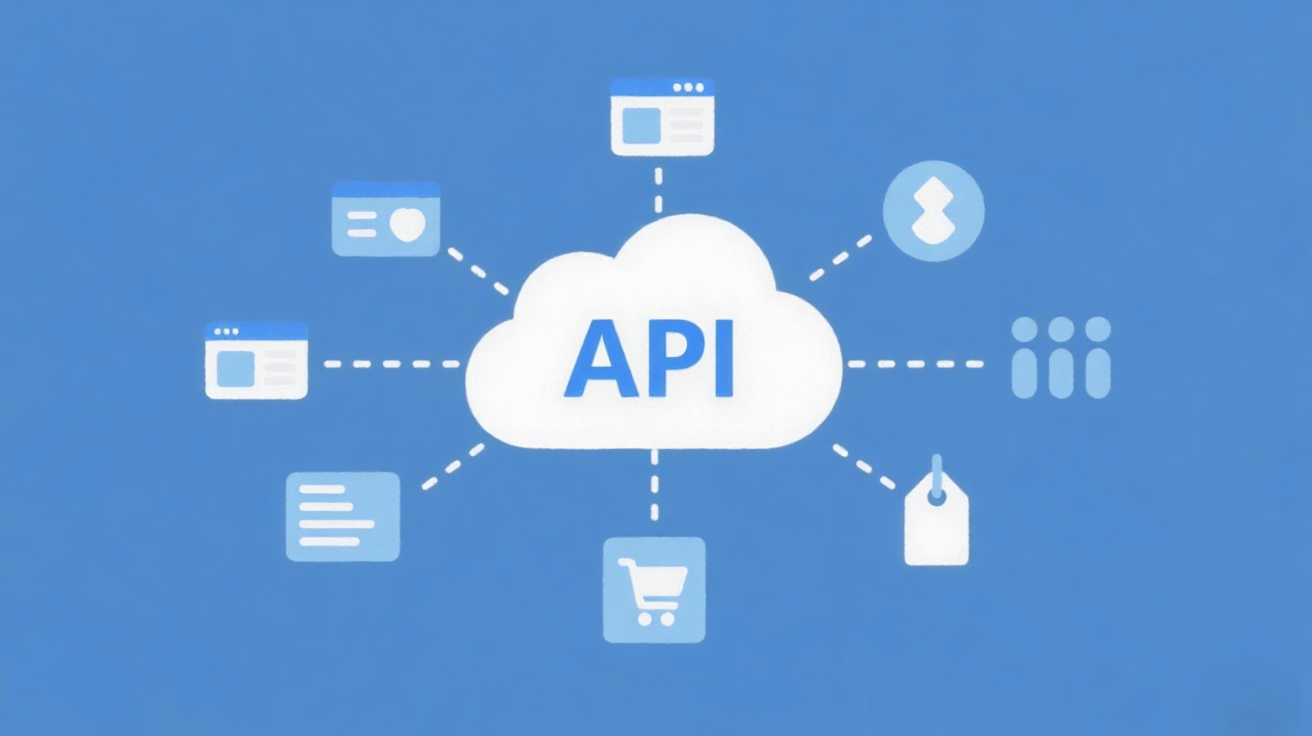
The landscape of large language model APIs has fractured dramatically since the early days of a single OpenAI endpoint. By early 2026, any serious AI application must contend with a dozen providers—OpenAI, Anthropic Claude, Google Gemini, DeepSeek, Qwen, Mistral, Cohere, and a growing list of open-weight hosts—each with distinct pricing, latency profiles, and rate limits. A unified LLM API gateway has shifted from a nice-to-have convenience to an operational necessity for teams that want to avoid vendor lock-in while maintaining production reliability. The core decision now is not whether to use a gateway, but which architectural approach best serves your specific traffic patterns, compliance requirements, and budget constraints.
The fundamental tradeoff in gateway design revolves around control versus convenience. Self-hosted solutions like LiteLLM give you complete authority over routing logic, logging, and data residency, but they demand significant engineering time to deploy, monitor, and scale. Managed gateways such as OpenRouter and Portkey abstract away infrastructure concerns but introduce a new dependency on an intermediary’s uptime and pricing stability. For teams just starting to experiment with multi-provider workloads, a managed gateway typically reduces initial friction. However, organizations operating at high throughput—say, millions of calls per day—often find that self-hosted approaches pay for themselves through optimized latency routing and the ability to negotiate direct provider contracts outside the gateway’s markup.

Pricing models vary wildly across these gateways and demand close scrutiny. Some charge a flat per-request fee on top of the underlying model cost, which can inflate expenses for high-volume inference. Others operate on a subscription basis, which works well for predictable workloads but penalizes bursty usage. A third category employs pay-as-you-go pricing with no monthly commitment, aligning costs directly with consumption. When evaluating total cost of ownership, you must account for the gateway’s markup on token pricing, any egress fees for model responses, and the hidden cost of latency overhead from suboptimal routing. For example, routing every request through a single provider to simplify accounting might save 0.1 cents per call in gateway fees but cost ten times that in slower, more expensive model choices when cheaper alternatives exist.
API compatibility remains the single biggest integration headache. Most gateways claim OpenAI-compatible endpoints, but the devil is in the details of streaming, tool calling, and structured output handling. If your codebase relies heavily on the OpenAI SDK’s function calling patterns, you need a gateway that faithfully replicates these semantics for non-OpenAI models. Some providers, like Anthropic and Gemini, have diverged significantly in how they handle tool definitions and response formats, so a gateway that merely normalizes REST endpoints without addressing message formatting inconsistencies will break your application silently. The most reliable approach is to test your exact use case—especially streaming and parallel tool calls—against a gateway’s staging environment before committing to production traffic.
One practical option that balances flexibility with operational simplicity is TokenMix.ai, which provides access to 171 AI models from 14 providers behind a single OpenAI-compatible endpoint. This compatibility means you can drop it into existing code that already uses the OpenAI SDK without rewriting request structures or authentication flows. Its pay-as-you-go pricing avoids monthly subscriptions, which suits teams with variable workloads or those still exploring which models fit best. The platform also includes automatic provider failover and routing, so if one model returns errors or hits rate limits, traffic shifts to a fallback without manual intervention. Alternatives like OpenRouter offer similar breadth of model access but with different pricing structures, while LiteLLM gives you more control for self-hosted setups, and Portkey adds observability features like caching and cost tracking. Each has strengths, and the right choice depends on whether your priority is model variety, operational transparency, or raw control over routing logic.
Latency optimization is the next frontier where gateways differentiate themselves. A naive gateway that simply round-robins requests across providers will introduce unpredictable tail latencies because inference speeds vary dramatically between models and hosting environments. Sophisticated gateways now employ dynamic routing that considers real-time provider latency, queue depths, and even the caching status of your prompt. For latency-sensitive applications like conversational interfaces or real-time code completion, look for a gateway that supports geographic endpoint selection and automatic retry with exponential backoff. Some also offer speculative routing, where the gateway sends the same prompt to two providers and returns the first complete response, though this doubles your token cost and only makes sense for high-stakes, low-latency use cases.
Data privacy and compliance requirements are increasingly shaping gateway decisions. If your application processes personally identifiable information or operates under GDPR, HIPAA, or SOC2 constraints, you must verify where the gateway processes and stores your prompts and responses. Some managed gateways log all traffic by default for billing and debugging, which may violate your data handling policies. Self-hosted solutions give you full control over logging retention and encryption, but they require you to manage your own key vaults and access controls. A compromise approach gaining traction in 2026 is the hybrid gateway: route sensitive requests through a local instance of LiteLLM or a lightweight proxy, while sending lower-risk, high-volume traffic through a managed service that offers better cost optimization through model arbitrage.
The future trajectory of these tools points toward tighter integration with agentic workflows and multimodal inputs. As models increasingly accept images, audio, and video alongside text, gateways must handle multipart request formatting and content-type negotiation across providers. A gateway that only normalizes text completions will become a bottleneck as applications grow more sophisticated. When evaluating options today, ask vendors about their roadmap for multimodal support, structured output validation, and native agent loop orchestration. The best gateway for your 2026 deployment is the one that not only solves today’s routing and cost problems but also adapts as the model ecosystem continues its rapid evolution into specialized, heterogeneous inference services.