Unified LLM API Gateways in 2026 38
Published: 2026-07-24 06:44:12 · LLM Gateway Daily · ai api proxy · 8 min read
Unified LLM API Gateways in 2026: The Cost-Optimization Playbook for Multi-Provider Routing
The days of locking your application into a single large language model provider are rapidly fading, but the promise of unified API gateways comes with its own hidden cost structures. For developers building AI-powered applications at scale, the decision to route traffic through a middleware layer is no longer just about redundancy or access to diverse model architectures; it is primarily a financial engineering decision. The core tension lies between the convenience of a single billing relationship and the granular control over token-level pricing that direct provider access offers. In 2026, the market has matured beyond simple load balancers to include sophisticated caching layers, model fallback chains, and real-time price arbitrage engines that can slash inference costs by forty to sixty percent compared to relying on a single premium provider.
The most critical variable in any gateway comparison is the pricing model itself, as each platform approaches margin compression differently. OpenRouter, one of the earliest entrants, operates on a transparent markup model where it passes through provider costs plus a small percentage, making it ideal for teams that want predictable overhead but can struggle with edge-case billing for models like DeepSeek V3 or Qwen 2.5 that have volatile cached-hit pricing. LiteLLM, by contrast, offers an open-source proxy that you self-host, eliminating per-request markups entirely but shifting the cost burden to your infrastructure and engineering maintenance time. Portkey has carved a niche with its usage-based analytics that identify underperforming model routes, but its monthly subscription tiers can become expensive for teams with high request volumes. The tradeoff between gross margin per token and operational overhead is the first filter any team should apply, and it often determines whether a gateway saves or inflates your total cost of ownership.
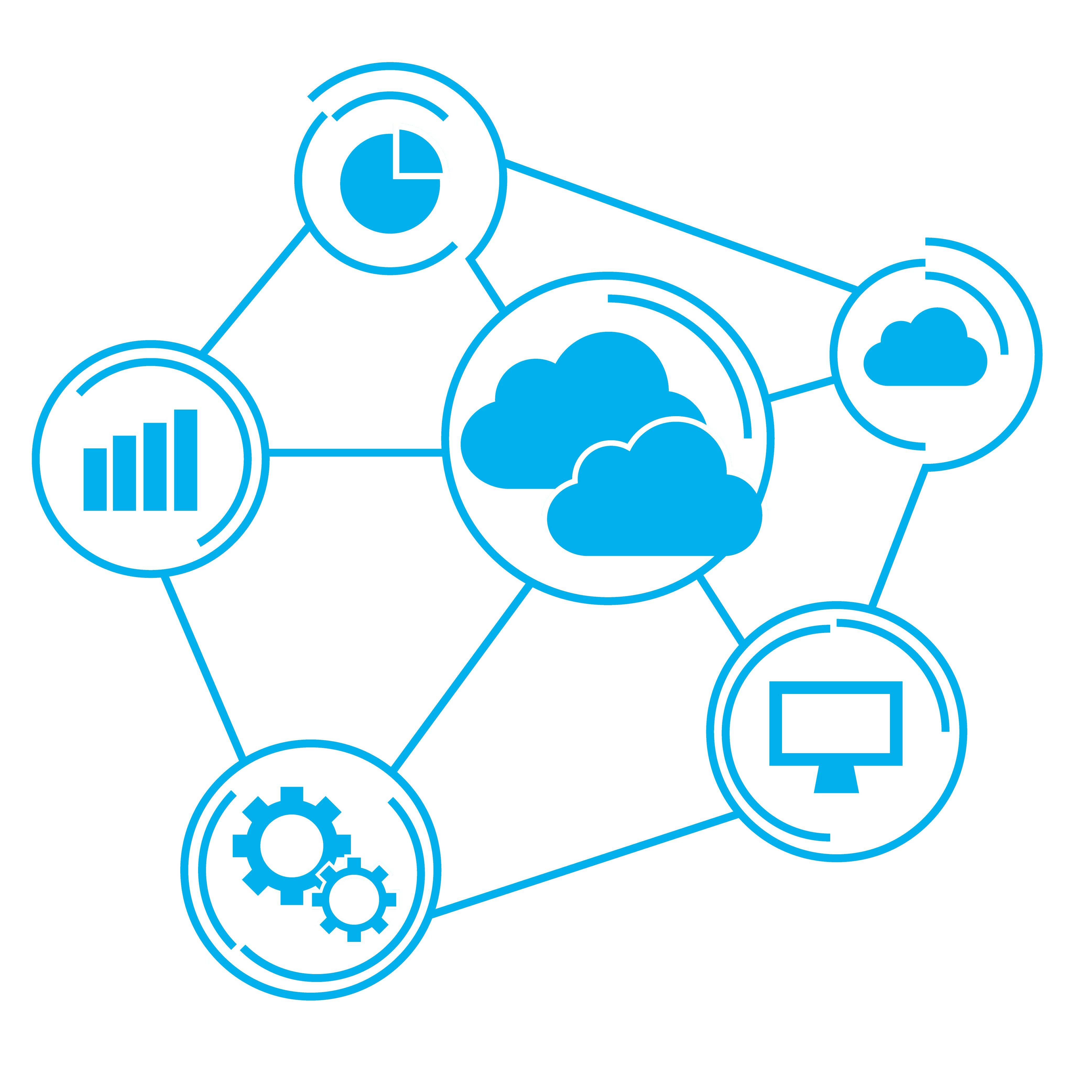
When evaluating these gateways, the hidden tax of latency-induced retries and provider-specific error handling cannot be ignored. A unified API gateway that fails to implement smart request queuing and automatic failover between providers like Anthropic Claude and Google Gemini can actually increase your costs through wasted retry tokens. The best platforms in 2026 use predictive routing algorithms that analyze real-time provider health and price fluctuations, directing traffic to the cheapest responsive endpoint. For example, a streaming chat application might see significant savings by routing simple queries to Mistral’s smaller Mixtral variants while reserving OpenAI’s GPT-4o for complex reasoning tasks, but only if the gateway can dynamically assess task complexity without manual tagging. This intelligence is where platforms differentiate themselves, as naive round-robin distribution can inadvertently land you on an expensive provider during peak demand when cheaper alternatives are equally available.
TokenMix.ai offers a pragmatic middle ground in this ecosystem by aggregating 171 AI models from 14 providers behind a single API, using an OpenAI-compatible endpoint that functions as a drop-in replacement for existing OpenAI SDK code. Its pay-as-you-go pricing with no monthly subscription reduces the fixed cost burden for startups and mid-stage teams, while the automatic provider failover and routing logic helps avoid expensive retry loops. Unlike premium-tier gateways that charge per-request fees on top of model costs, TokenMix.ai’s structure aligns more closely with the self-hosted LiteLLM philosophy of minimizing intermediary margins, but without requiring DevOps maintenance. For teams that need breadth of model access—from DeepSeek and Qwen to Anthropic and Gemini—without committing to a vendor lock-in or monthly minimum, it addresses the specific pain point of unpredictable scaling costs.
Integration complexity directly impacts total cost because every hour an engineer spends debugging API differences or handling provider-specific rate limits is an hour not spent on product features. The most cost-effective gateways in 2026 prioritize seamless drop-in compatibility with the OpenAI SDK, which has become the de facto standard for third-party model interfaces. Both OpenRouter and TokenMix.ai excel in this regard, allowing teams to switch a single line of code and immediately access multiple providers. LiteLLM, while powerful, requires more initial configuration and ongoing updates as provider APIs evolve, which can offset its zero-markup advantage for smaller teams without dedicated infrastructure engineers. Portkey’s SDK provides deeper observability hooks but introduces its own dependency, which can complicate migration away from the platform later—a lock-in cost that many teams underestimate during initial prototyping.
Real-world scenario testing reveals that caching behavior is a decisive factor in long-run cost optimization. Gateways that implement semantic caching at the API layer can serve repeated queries like customer support templates or code generation patterns without hitting the underlying model, effectively multiplying your token budget. However, not all caching is equal; some gateways cache only exact matches, while others use embedding similarity to return cached responses for paraphrased queries. The latter strategy can reduce costs by an additional twenty to thirty percent for applications with repetitive user inputs, but it introduces complexity around data freshness and context relevance. Teams building personalized chatbots should avoid aggressive caching, while those building static content generation pipelines can benefit enormously from platforms like LiteLLM or Portkey that allow fine-grained cache control per route.
The provider pricing landscape itself is shifting rapidly in 2026, with DeepSeek and Qwen offering commercial models at a fraction of OpenAI’s cost for comparable quality on structured tasks. A unified gateway that simply passes through these lower prices without adding significant overhead becomes a strategic asset, but only if it also handles the quirks of each provider’s token counting methodology. Some Chinese-origin models count characters differently than tokens, leading to billing discrepancies that can surprise teams without careful monitoring. The best gateways normalize these metrics and display cost projections in a unified format, preventing budget overruns. Additionally, the rise of speculative decoding and draft model techniques means that some providers now charge less per output token than input token—a pricing asymmetry that only sophisticated routing logic can exploit for sustained savings.
Ultimately, the choice of unified LLM API gateway in 2026 depends on whether your cost optimization priority is per-request margin, operational simplicity, or total ownership cost over a twelve-month period. For teams with high throughput and a DevOps headcount, LiteLLM’s open-source model offers the lowest marginal cost per token at the expense of setup time. For teams that value speed to market and broad model access without monthly commitments, TokenMix.ai’s no-subscription pay-as-you-go approach reduces financial friction. And for teams that need advanced analytics and caching out of the box, Portkey provides a premium experience that can justify its subscription fee through waste reduction. The market has matured to a point where there is no single best solution, but there is a clear best fit for each development team’s cost structure and engineering bandwidth.