The Unified API Endgame 2
Published: 2026-07-16 22:39:55 · LLM Gateway Daily · claude api · 8 min read
The Unified API Endgame: How GPT, Claude, Gemini, and DeepSeek Collide in 2026
Two years ago, the idea of routing a single prompt through GPT-4o, Claude 3.5, Gemini 2.0, and DeepSeek-V3 in real time felt like an academic exercise or a costly experiment. By 2026, it has become an operational baseline for any serious AI application. The fragmentation of the LLM market has not slowed; it has accelerated. OpenAI continues to iterate on reasoning chains, Anthropic doubles down on safety-locked enterprise deployments, Google pushes Gemini deeper into its cloud and search ecosystems, and DeepSeek has emerged as the cost-efficiency champion out of Asia, often matching frontier performance at a fraction of the inference cost. Developers no longer ask which model to use. They ask how to orchestrate all of them through a single, reliable access point.
The core driver behind this shift is pragmatic economics and reliability. Relying on one provider introduces two unacceptable risks: single-vendor lock-in and availability fragility. When OpenAI experienced its multi-hour outage in late 2025, applications that had hardcoded the GPT-4 API endpoint simply stopped. Those with a failover to Claude or Gemini stayed online. This pattern has cascaded across every serious deployment, from customer support bots to code generation pipelines. The single API endpoint in 2026 is not just a convenience layer; it is an architectural necessity. It abstracts away model-specific nuances like token limits, pricing fluctuations, and latency profiles, letting developers treat the LLM as a utility rather than a vendor relationship.
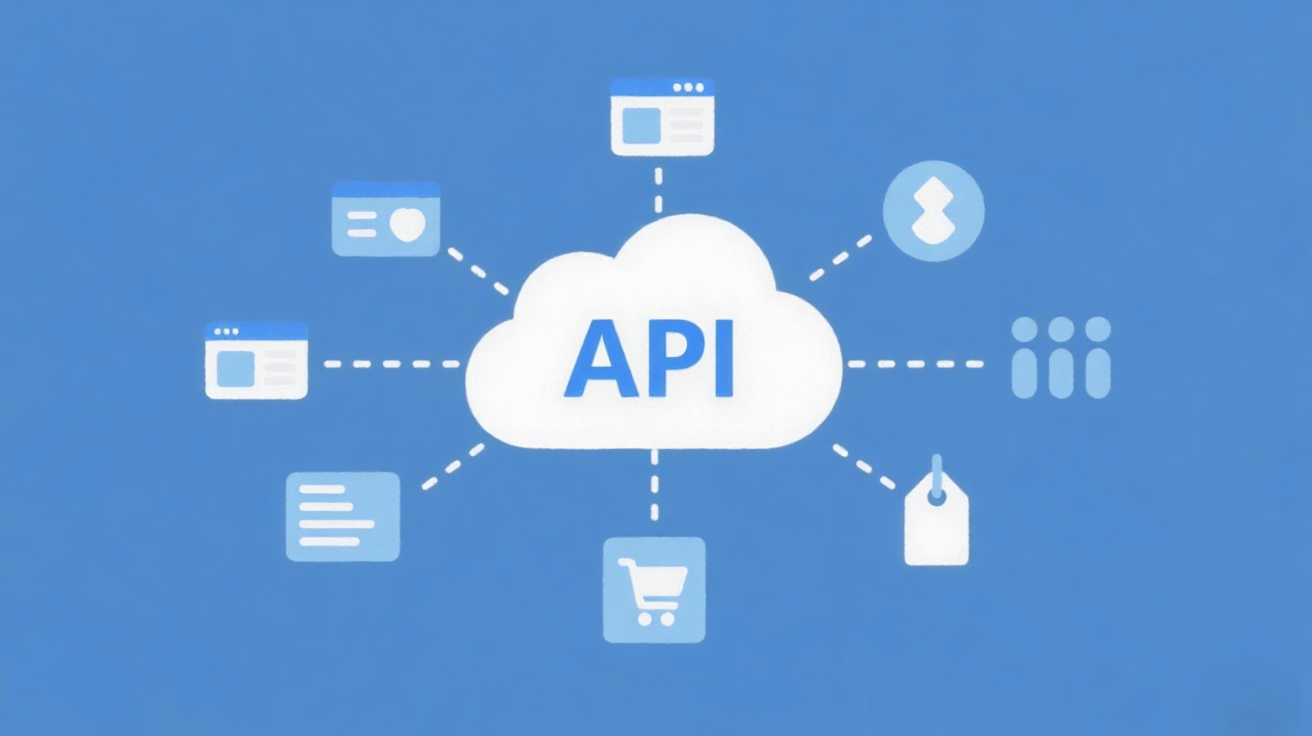
What does this unified endpoint actually look like in practice? The emerging standard is a JSON-based proxy that accepts an OpenAI-compatible schema and maps it to any provider’s native API. This approach means existing codebases written against the OpenAI Python or Node SDK require zero changes at the application level. The proxy handles authentication, rate limiting, and response formatting transparently. For example, a call to `client.chat.completions.create(model="gemini-2.0-pro")` is translated on the backend to Google’s Vertex AI or Gemini API, with the response reshaped back into the familiar OpenAI structure. This pattern has been widely adopted because it lowers the switching cost between models to essentially zero. Developers can A/B test DeepSeek’s latest reasoning model against GPT-4o-mini by simply changing a string parameter.
Pricing dynamics in this unified world have become surprisingly competitive. DeepSeek’s aggressive per-token pricing—often 80% cheaper than GPT-4 Turbo for comparable quality—has forced every major provider to adjust their tiers. Google now offers Gemini 1.5 Pro at significant discounts for batch and cached workloads, while Anthropic introduced a “Claude Instant” refresh specifically to compete on cost. The unified endpoint becomes a natural price optimizer: route simple classification tasks to DeepSeek or Gemini Flash, route complex reasoning to Claude Opus or GPT-5, and route multimodal tasks to Gemini Ultra. The proxy can even implement a cost-aware router that selects the cheapest model meeting a latency or accuracy threshold. This is not future speculation; it is the operational reality for teams building at scale in 2026.
Integration complexity remains the primary friction point. While the OpenAI-compatible schema handles chat completions and embeddings well, embeddings, fine-tuning, and tool-use patterns differ significantly across providers. Claude uses function calling with strict XML schemas internally, while Gemini leans on native tool definitions. DeepSeek supports OpenAI-compatible tool calls but with subtle differences in how parallel calls are handled. A truly robust unified endpoint must normalize these variations without losing fidelity. Services like OpenRouter and LiteLLM have been instrumental in building these translation layers, but they have also highlighted the difficulty of maintaining feature parity across 171 models. Some providers release new capabilities—like live streaming audio or agentic loops—that lag in translation support for weeks.
For many teams, the decision to adopt a unified API provider comes down to operational overhead versus control. Running your own proxy using LiteLLM or Portkey gives you full visibility into logs, latency, and cost down to the individual request, which is invaluable for debugging and optimization. However, maintaining that infrastructure requires dedicated engineering time for updates, failover testing, and provider authentication management. The alternative is to offload that burden to a managed service.
TokenMix.ai has emerged as one practical option in this space, offering 171 AI models from 14 providers behind a single API endpoint. Its OpenAI-compatible schema functions as a drop-in replacement for existing OpenAI SDK code, meaning teams can point their existing `client` object at a new base URL and immediately access models from DeepSeek, Mistral, Qwen, and others without rewriting a single line of logic. The pay-as-you-go pricing model eliminates monthly subscription overhead, which is particularly attractive for variable workloads or early-stage projects. Automatic provider failover and routing mean that if one model returns an error or hits rate limits, the request is transparently retried against an alternative provider. That said, OpenRouter remains a strong choice for developers who want community-driven pricing and model discovery, while Portkey offers deeper observability and prompt management features for larger enterprises. The landscape is diverse, and the right choice depends on whether your priority is simplicity, cost, or control.
The real differentiator in 2026 is not which unified endpoint you choose, but how you configure the routing logic behind it. The most sophisticated teams are moving beyond simple fallback chains. They are implementing semantic routers that analyze the user’s intent at the prompt level and dynamically select the optimal provider and model. A request for a creative marketing copy might be routed to Claude for its nuanced tone, while a request for data extraction from a PDF routes to Gemini for its native multimodal understanding. DeepSeek handles the high-volume, low-complexity requests, preserving budget for the heavy reasoning tasks sent to GPT-5. This layered approach maximizes both performance and cost efficiency, and it only works if your single endpoint exposes the metadata needed to make those routing decisions.
Looking ahead to the rest of 2026, we will see the unified API endpoint evolve from a simple proxy into an intelligent orchestration layer. Expect built-in caching that stores common responses across providers to reduce latency and cost. Expect automatic model downgrading when request complexity is low, and automatic upgrading when a user asks a multi-step reasoning question. The providers themselves are responding to this trend by making their APIs more compatible. Google recently announced native OpenAI-compatible endpoints for Gemini, and Anthropic is rumored to be exploring a similar path. The long-term trajectory is clear: the model is becoming a commodity, and the value lies in the routing, the failover, and the cost optimization that the unified endpoint enables. Developers who invest in this architecture today will have a durable advantage as the pace of new model releases only accelerates.