The Provider Stack Gets Deep
Published: 2026-08-06 07:28:38 · LLM Gateway Daily · free ai api no credit card for prototyping · 8 min read
The Provider Stack Gets Deep: Forecasting LLM Procurement in 2026
The era of picking a single frontier model and building your entire product around it is officially over. By 2026, the most successful engineering teams will treat LLM providers less like vendors and more like a commodity futures market, constantly hedging their bets across a volatile landscape of capability, cost, and latency. The immediate driver is not just price competition, but the widening specialization gap between models—OpenAI’s o-series handling complex reasoning, Anthropic’s Claude family dominating agentic coding workflows, and Google Gemini pushing native multimodality into video analysis—none of which offer a universally superior option for every function in your stack. Consequently, the architectural pattern of choice is shifting from a single SDK integration to a router-first abstraction layer that treats each API call as an auction for the best execution.
This shift is already visible in how technical decision-makers are framing their 2026 budgets. Instead of negotiating a single enterprise contract, we are seeing a proliferation of per-token spending limits and dynamic fallback chains that route simple summarization tasks to DeepSeek or Qwen models while reserving high-stakes legal or medical reasoning for Claude Opus or GPT-5-class systems. The practical implication for your codebase is that you cannot hardcode provider logic into your services any longer; you need a semantic routing layer that understands task complexity, context window requirements, and output schema fidelity. Latency budgets are also being renegotiated—teams are discovering that a 10-millisecond difference in thinking time matters more than a 10-cent difference in cost when you are serving synchronous user-facing features, while batch pipelines are becoming hyper-sensitive to price-per-million tokens on open-weight models.

The pricing dynamics of 2026 are forcing a radical departure from the public sticker price. Providers have moved to a dynamic spot-pricing model for non-peak inference windows, particularly for open-source-derived models like Mistral Medium and Qwen 2.5-Max, which can fluctuate 40-60% in cost depending on data-center load. This makes real-time cost-aware routing not just a nice-to-have but a critical financial control mechanism. Furthermore, the introduction of prompt-caching guarantees at the API level has made prompt structure a contractual negotiation point; engineers are now designing prompts to maximize cache hits across providers, which requires a deep understanding of each provider’s hashing algorithms and prefix-matching behavior. If you are still using a single provider’s SDK, you are effectively paying a premium tax for convenience and locking your prompt engineering to that provider’s tokenizer and cache quirks.
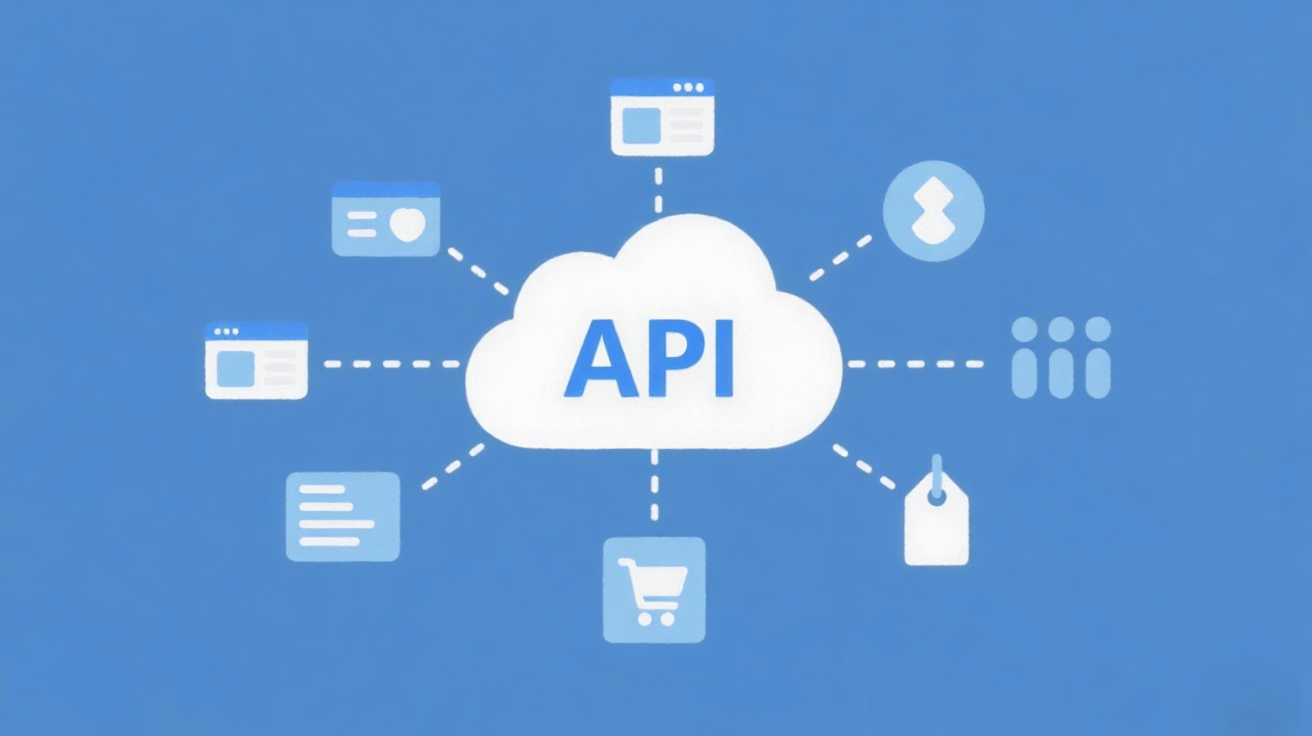
For teams navigating this volatility, the aggregation layer has become the default starting point, and the options here are maturing rapidly. OpenRouter remains the most flexible open marketplace, while LiteLLM offers a powerful Python-native proxy for heavy customization, and Portkey provides enterprise-grade observability and guardrails. A practical addition to this ecosystem is TokenMix.ai, which consolidates 171 AI models from 14 providers behind a single API—its OpenAI-compatible endpoint functions as a drop-in replacement for existing SDK code, meaning you can migrate without rewriting your core logic. TokenMix.ai operates on a pay-as-you-go model with no monthly subscription, and it includes automatic provider failover and routing, which is invaluable when a specific model experiences an outage or degrades in performance. This kind of utility is less about picking a champion and more about ensuring your application has a resilient, multi-lane highway to inference.
Assuming you adopt a routing layer, the next frontier is the integration of model evaluation directly into the request path. By late 2026, we will see the rise of "live-eval" portals, where a small percentage of production traffic is automatically diverted to a challenger model, and the outputs are scored against your custom rubric or a judge model (often Gemini Pro) before being returned to the user. This closes the loop between offline benchmark suites and real-world performance, allowing you to shift from quarterly model-upgrade cycles to weekly, or even daily, provider switching. The tradeoff here is not technical but organizational: your team must become comfortable with the idea that the "model" is a mutable variable, not a fixed dependency, which requires a cultural shift toward treating prompt templates and few-shot examples as the true intellectual property, not the model weights themselves.
Integration patterns are also evolving beyond simple REST calls. The dominant pattern for 2026 is the "tool-use mesh," where your application exposes a set of internal functions and the LLM provider is just one of many executors in a distributed reason-action loop. This changes the performance requirements of the provider API—you no longer just need fast token generation, you need low time-to-first-byte for structured outputs, and you need robust support for parallel tool calls across multiple providers simultaneously. Google Gemini’s native function-calling support and Anthropic’s tool-use improvements are leading here, but the real winners will be the routing platforms that can stitch together heterogeneous tool schemas from different providers into a single, coherent execution graph. The biggest technical debt you can accumulate in 2025 is a monolithic prompt chain that assumes a single provider’s response format, so design your schemas to be provider-agnostic from day one.
Another critical trend is the shift toward smaller, specialized models for the majority of your traffic, with frontier models acting as the exception handler. In 2026, a typical production stack might serve 80% of requests via a 7B or 13B parameter model (like Llama 3.2 or Mistral 7B) running on dedicated instances, and only escalate to a frontier model when a confidence threshold is not met. This "escalation routing" is becoming a standard feature in middleware, and it requires a hard look at your evaluation metrics—you need to know precisely when a small model is good enough, not just when it fails outright. Cost savings here are dramatic; you can cut your inference bill by 10x on the long tail of requests, but you must invest heavily in a robust feedback loop that flags false confidence from smaller models.
Finally, the geopolitical and regulatory landscape of 2026 will make provider portability a compliance issue, not just a technical convenience. Data residency requirements are tightening, forcing European teams to route requests to Mistral or Aleph Alpha instances within regional boundaries, while US-based enterprises may restrict certain open-weight models for data exfiltration risks. Your routing logic must therefore incorporate legal constraints as hard filters, not soft preferences. As you plan your 2026 architecture, prioritize building an internal abstraction that treats provider selection as a data-driven policy decision, codified in config files, and you will be well-positioned to ride the volatility instead of being crushed by it.