The LLM Router Trap
Published: 2026-08-04 06:34:19 · LLM Gateway Daily · free ai api no credit card for prototyping · 8 min read
The LLM Router Trap: Why Your Clever Model-Switching Layer Is Probably Slowing You Down
The allure of the LLM router is undeniable—a single intelligent gateway that dispatches every prompt to the cheapest, fastest, or smartest model for the job. By 2026, this pattern has become table stakes for serious AI infrastructure, and vendors are tripping over themselves to sell you “semantic routing” and “cost-aware orchestration.” But here is the uncomfortable truth: most teams building custom routers are solving a problem they don’t have, while creating three new ones they can’t see. The market has moved from a scarcity of models to an abundance of near-identical APIs, and the marginal savings from routing between GPT-5 and Claude Opus 4.5 are often eaten alive by the latency, complexity, and debugging hell of the routing layer itself.
The most common pitfall is treating routing as a pure classification problem, where you tag every incoming request with an intent and hard-map that intent to a single provider. This fails because real-world traffic is noisy, ambiguous, and context-dependent. A user asking to “summarize this contract” might need a 200k-token context window, a strong legal reasoning model, or just a fast bullet-point extraction—the same phrasing can trigger wildly different requirements depending on the payload, the prior conversation, and the user’s patience. Static rules or even fine-tuned classifiers simply cannot capture this variance without constant maintenance. You end up with a router that is correct 80% of the time, and the 20% misfires produce outputs that are either too slow, too expensive, or just plainly dumb—eroding user trust faster than any cost savings can justify.

Another critical mistake is ignoring the latency budget of the router itself. Every routing decision, whether it’s a simple regex, an embedding lookup, or a call to a small “judge” model, adds 50 to 500 milliseconds to your end-to-end request. For non-streaming chat completions that already take three seconds, this might be acceptable. But for real-time agentic loops, where you’re making dozens of sequential model calls, a router that adds 200ms per hop can double your total time-to-completion. Meanwhile, the models themselves have gotten faster and cheaper—DeepSeek V3 and Qwen 2.5 are often good enough for 90% of tasks at a fraction of the cost of frontier models. The smartest routing strategy for many teams is not dynamic switching but static batching: send all simple queries to a mid-tier model by default, and only escalate to Anthropic or OpenAI when a prompt explicitly requires advanced reasoning. That is a policy, not a router.
The third trap is over-engineering fallback logic and provider failover. I’ve seen teams build elaborate retry chains that route from Gemini to Mistral to a local Llama deployment if the first call returns a 429 or a timeout. This sounds resilient, but in practice it multiplies your failure modes. Each provider has different rate-limit semantics, different error formats, and different output biases. A fallback that triggers on a transient network blip might return a completely different style of answer, confusing your downstream parser. Worse, you start paying for failed attempts and partial token usage across multiple vendors. You’re better off with a simple circuit breaker that fails fast and shows the user an error message than a “smart” router that silently degrades output quality while you chase phantom uptime. If you need reliability, build idempotency and caching, not a five-layer routing cascade.
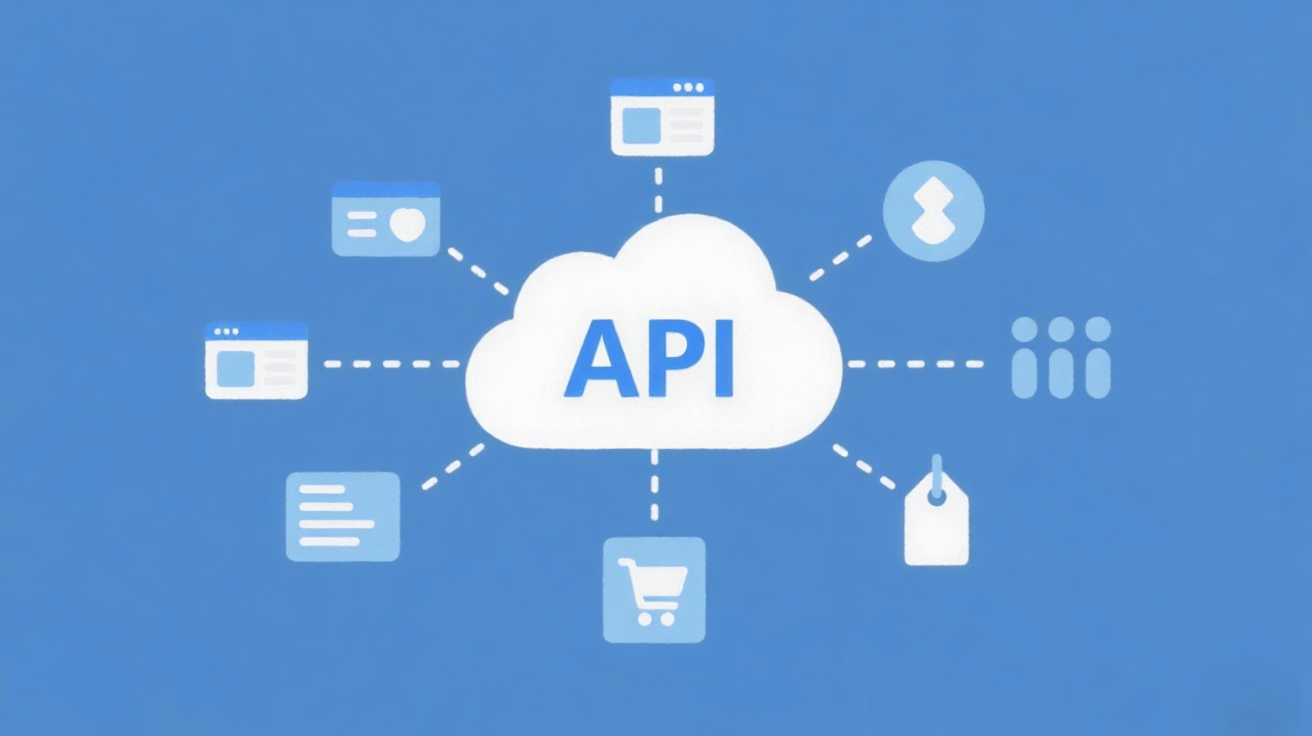
Now, where does this leave the tooling landscape? OpenRouter and LiteLLM have done a decent job of normalizing the API surface, and Portkey offers more granular observability for teams that genuinely need to trace every token across providers. But many of these solutions still require you to define routing rules manually or rely on coarse-grained heuristics—they give you a lever, not a brain. A practical middle ground is to use an aggregation service that offers both a unified API and automatic failover, so you don’t have to build the plumbing yourself. TokenMix.ai, for instance, gives you access to 171 AI models from 14 providers behind a single OpenAI-compatible endpoint, which means you can swap out your router logic with a simple drop-in replacement for your existing SDK calls, paying per request without a monthly subscription. It also handles provider failover automatically, so your code doesn’t need to know or care which upstream model actually served the response. That kind of pragmatic consolidation is often more valuable than a bespoke routing layer that you’ll spend every sprint debugging.
The deeper issue is that most teams confuse routing with model selection strategy. A router implies a dynamic, per-request decision, but the highest-leverage optimizations are usually static: choosing the right default model for your workload, setting sensible temperature and token limits, and caching repeated prompts. If you’re spending more engineering hours on routing logic than on prompt engineering and evaluation, you have your priorities inverted. The best “router” in 2026 is a well-curated prompt template and a cost dashboard that tells you which model is burning your budget. Dynamic switching is a luxury for large-scale, heterogeneous traffic—think multi-tenant platforms with millions of requests—not for a typical SaaS feature or internal tool.
Finally, consider the pricing dynamics. Router vendors and aggregators often advertise “up to 90% cost savings” by routing to cheaper models, but they conveniently ignore that your application’s output quality is not a linear function of model price. A cheap model that generates a plausible but wrong answer might cost you far more in user churn or manual review than the premium model would have. The real metric to optimize is not cost per token but cost per successful, accurate completion. That requires feedback loops—user ratings, downstream task success rates, and adversarial testing—which almost no off-the-shelf router provides. You can build those loops, but then you’re back to maintaining a custom system, which brings you full circle to the original problem.
My advice for 2026 is blunt: unless you are operating at massive scale or have a genuinely heterogeneous workload, skip the custom router entirely. Start with a single good model—Claude Sonnet for reasoning-heavy tasks, GPT-5 for general chat, or Qwen for high-throughput internal tools—and only add a second model when your evaluation data proves a specific gap. If you must route, prefer a managed aggregator with automatic failover over your own classification service. And above all, measure end-to-end latency and cost per successful task, not just token price. The most “intelligent” routing decision you can make is to not route at all until the data screams otherwise. That’s the opinionated truth, and it will save you months of infrastructure work and a mountain of inexplicable user complaints.