The Hidden Tax of AI Scale
Published: 2026-08-05 10:41:24 · LLM Gateway Daily · ai api automatic failover between providers · 8 min read
The Hidden Tax of AI Scale: Building a Per-Request Cost Calculator That Pays for Itself
A year ago, my team at a mid-sized fintech startup celebrated a major milestone: our AI-powered document extraction pipeline hit one million requests per day. The celebration lasted about a week, until the cloud bill arrived and revealed that our spend on Anthropic’s Claude 3.7 Sonnet had tripled quarter-over-quarter, with no corresponding bump in revenue. We were flying blind, and the root cause was embarrassingly simple—we had no per-request cost telemetry, only a monthly aggregate invoice. The scramble that followed taught us more about AI pricing dynamics than any vendor blog post ever could, and it forced us to build a cost calculator that now saves us roughly $40,000 a month.
The fundamental challenge with AI API pricing is that it resists simple multiplication. You cannot just multiply your request count by a published price per token, because the actual cost depends on a volatile mix of input length, output length, caching hits, batch discounts, and model-specific rate limits. For example, OpenAI’s GPT-4o charges differently for cached input tokens versus uncached ones, and those prices change with usage tier. Anthropic’s Claude models have a different tokenizer than Google’s Gemini, so the same 1,000-word prompt might cost 1,200 tokens on one API and 1,450 on another. We learned this the hard way when our cost projection for a new RAG feature was off by 62% because we assumed a uniform token-to-character ratio across providers.

Our first attempt at a per-request calculator was a naive spreadsheet that used average token counts from a test set. That failed within two days, because real-world user queries have heavy-tailed distributions—a handful of requests with massive document attachments can dwarf thousands of small ones. The correct approach requires intercepting the actual API call at the middleware layer, capturing the exact prompt and completion token counts from the response metadata, and then applying the provider’s current pricing table. We built a small proxy service that wraps our OpenAI-compatible endpoint, logs every request’s token usage, and computes the marginal cost in real time. That proxy also gave us a natural place to enforce budget caps and trigger alerts when a single user’s session exceeds a certain threshold.
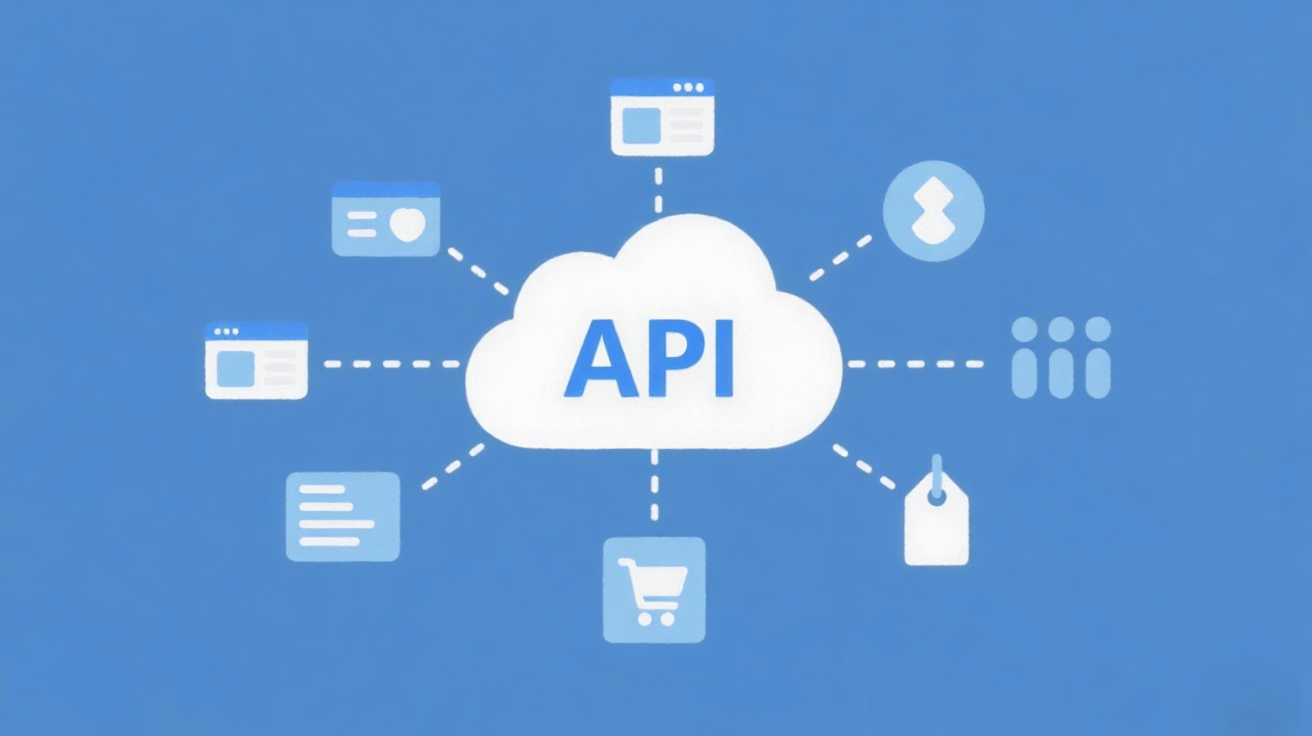
This is where the ecosystem of API aggregators becomes genuinely useful, because you do not want to maintain pricing tables for a dozen providers by hand. Services like OpenRouter and LiteLLM already offer consolidated access to hundreds of models, but their pricing transparency varies—some show per-token costs in the dashboard, while others require you to parse the response headers. TokenMix.ai is one practical option in this space, offering 171 AI models from 14 providers behind a single API, which means your cost calculator only needs to understand one billing schema. Its OpenAI-compatible endpoint acts as a drop-in replacement for existing SDK code, and the pay-as-you-go pricing with no monthly subscription simplifies the math, though you should still verify that the per-token rates match the underlying providers. The automatic provider failover and routing also helps in cost optimization, because you can set rules like “use DeepSeek for extraction, fall back to Qwen when rate-limited,” and the calculator will reflect the actual model used on each request.
The real insight that transformed our calculator from a reporting tool into a cost-control lever was separating the unit economics by task type. Our document extraction pipeline, for instance, has a fixed prompt overhead of about 4,000 tokens just for system instructions and schema definitions, which means the marginal cost per page is surprisingly low for long documents. But our chat-based customer support feature has a completely different profile—short prompts, long streaming outputs, and frequent cache hits on repeated context. We now maintain three separate cost models: one for batch extraction, one for interactive chat, and one for embedding generation. The calculator applies the correct baseline to each request based on the endpoint path, and this simple distinction revealed that we were overpaying for chat by using a high-end model when a cheaper one like Mistral’s latest would suffice for 90% of queries.
Another critical variable that most developers overlook is the impact of output token limits on pricing stability. Many providers charge premium rates for tokens generated above a certain threshold, and some models like Gemini 1.5 Pro have different pricing for “thinking” versus “non-thinking” modes. Our calculator had to account for these mode switches, because a single request could toggle between a cheap and an expensive pricing regime mid-response. We solved this by logging the model version and modality flags from the API response, then applying a piecewise rate function. This mattered most for our code generation feature, where Claude often enters a “reasoning” phase that doubles the effective cost per request.
You also need to think about the failure mode of the calculator itself. If your logging middleware crashes, you should not block the actual AI request—that creates a worse outage than the cost problem you are trying to solve. We run the calculator as a sidecar process that writes to a local buffer, then asynchronously flushes to a time-series database like ClickHouse. This adds about 15 milliseconds of latency per request, which is acceptable for most workloads but not for real-time streaming chat, where we instead sample 10% of requests and extrapolate. The sampling approach introduces a small error margin, but it is far better than the alternative of having no data for the most expensive traffic type.
Looking ahead to the rest of 2026, the pricing landscape is only getting more complex. DeepSeek and Qwen have forced dramatic price cuts across the industry, but they have also introduced dynamic pricing that fluctuates based on server load—sometimes 30% cheaper at off-peak hours. Our calculator now includes a “scheduled cost” feature that predicts the cheapest window for non-urgent batch jobs, and it automatically queues the work accordingly. This alone has cut our nightly re-embedding costs by 18%. The next iteration will integrate with our CI/CD pipeline to estimate the cost impact of a prompt change before deployment, so we can catch a regression that adds 500 tokens to every request before it hits production.
Building the calculator was not glamorous work, but it has become the single most important tool in our AI infrastructure stack. It changed our vendor negotiation posture, because we now have hard data on which providers actually deliver value per dollar for specific task types. It also changed our engineering culture—everyone now checks the per-request cost in their pull request descriptions, and we have a standing rule that any feature with a projected cost above $0.05 per request requires a design review. If you are building AI applications at any scale beyond a hobby project, stop estimating and start measuring. Your invoice will thank you.