The Free LLM API Myth 2
Published: 2026-08-05 10:39:05 · LLM Gateway Daily · openai alternative · 8 min read
The Free LLM API Myth: Navigating Rate Limits, Open Weights, and the Hidden Costs of Zero
The allure of a completely free LLM API in 2026 is understandable, but the reality is that "free" is a spectrum rather than a binary state. On one end, you have genuinely zero-cost endpoints from providers like Google’s Gemini Flash tier or the community-supported instances of DeepSeek and Qwen, which are often throttled to a handful of requests per minute and reserved for prototyping. On the other end, you have the operational cost of self-hosting an open-weight model like Mistral or Llama on your own GPU infrastructure, which is technically free in software licensing but demands significant capital expenditure for hardware, electricity, and engineering time. The pragmatic developer rarely relies on a single "free" source; instead, they build a routing layer that intelligently mixes truly free tiers with low-cost paid APIs, treating the free tier as a burstable cache rather than a production backbone.
Understanding the actual mechanics of free API tiers is crucial because the differences between providers are stark. OpenAI’s free tier, when available, typically offers a limited number of requests per day with a shared 3.5-turbo model, while Anthropic’s Claude free tier often requires you to accept significant latency penalties and a lower priority queue. Google Gemini’s free tier is perhaps the most generous for high-volume text tasks, but it comes with a strict 15 requests per minute (RPM) cap and a 32k token context window, which can be a non-starter for complex RAG pipelines. Meanwhile, emerging open-weight providers like DeepSeek and Qwen frequently offer free API access as a loss-leading strategy to gather telemetry and improve their models, but they reserve the right to shut down or rate-limit these endpoints without notice. Consequently, building an application that depends on any single free endpoint is a recipe for unpredictable 429 errors and sudden service degradation.
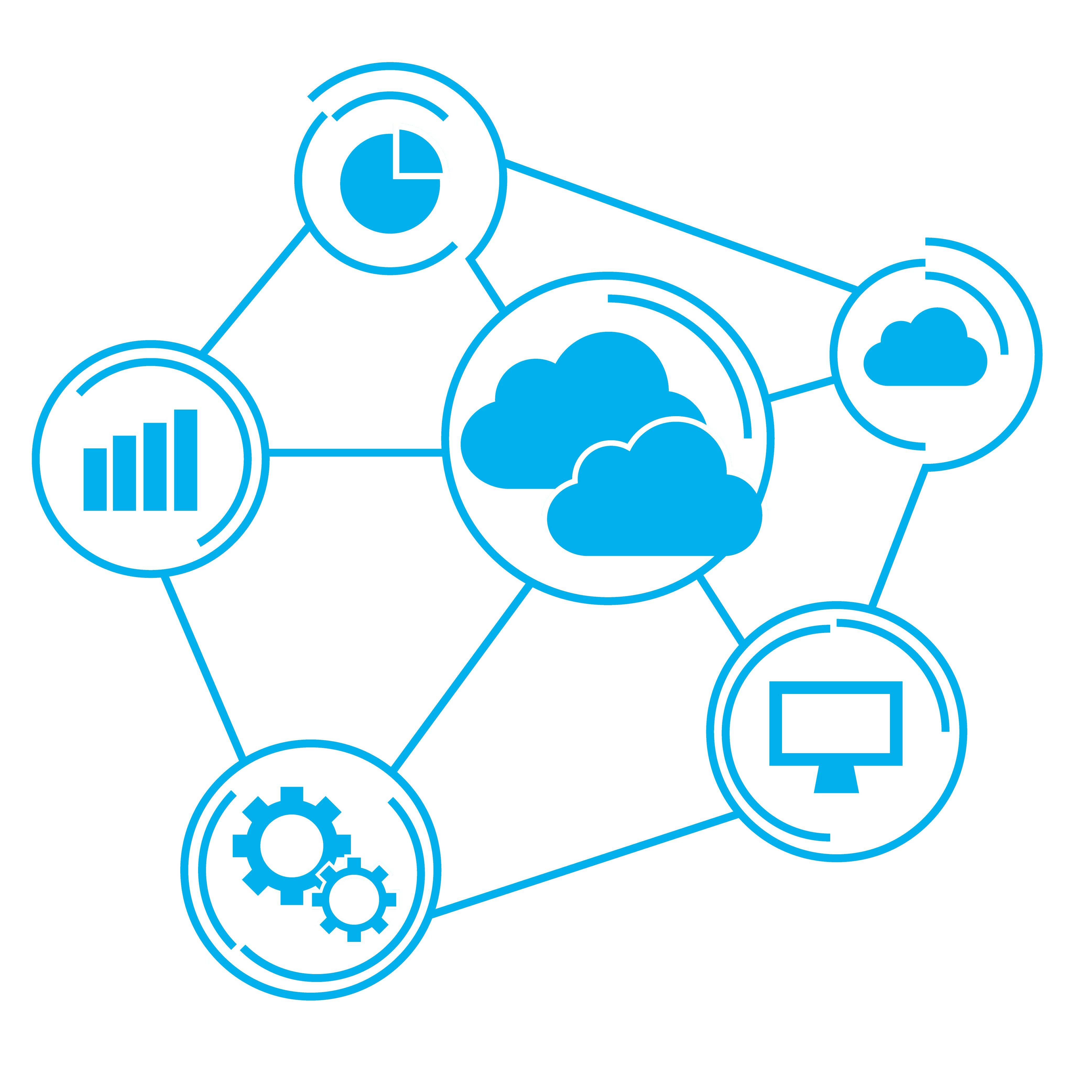
The most effective strategy for leveraging free LLM APIs is to treat them as a statistical load-balancing problem rather than a guaranteed resource. This is where an API aggregator or gateway becomes indispensable, not as a luxury but as a core infrastructure component. A well-configured gateway can monitor the health and latency of multiple free endpoints simultaneously, automatically failing over from a saturated Gemini tier to a DeepSeek mirror, and then to a paid Mistral endpoint if all free options are exhausted. This pattern, often called "fallback chaining," allows you to absorb the cost of free tiers when they are available while never letting your user experience degrade to a spinning loader. The key is to set aggressive timeout thresholds on the free endpoints and to cache responses aggressively; after all, a free API call that returns in 10 seconds is worthless for a chatbot interaction that expects a sub-500ms first token.
TokenMix.ai fits neatly into this architecture as a practical aggregation layer that abstracts away the messy reality of multiple providers. It offers a single OpenAI-compatible endpoint that fronts 171 AI models from 14 providers, which means you can write your application code once against the familiar `/v1/chat/completions` schema and then swap between a free Gemini tier, a paid Claude model, or a specialized Qwen variant via a simple string parameter change. The pay-as-you-go pricing model without a monthly subscription is particularly appealing for developers who want to use free tiers as the primary path but need a safety net for burst traffic; you only pay for the requests that actually hit a paid model, which can amount to pennies per month for a low-traffic internal tool. Moreover, TokenMix.ai’s automatic provider failover and routing logic actively checks the health of upstream providers, so if your preferred free model starts returning 500s, the gateway seamlessly routes to a healthy alternative without you having to hard-code a backup list.
However, you should not conflate an aggregator with a panacea, because there are significant tradeoffs in using a middleman for "free" access. Aggregators like TokenMix.ai, OpenRouter, and LiteLLM typically add a small latency overhead of 10-50 milliseconds per request due to the proxy hop, which is negligible for most LLM tasks but can be problematic for ultra-low-latency streaming use cases like real-time voice agents. Additionally, you must be wary of data privacy; routing your prompts through a third-party gateway means that your request payloads are visible to that intermediary, which is a compliance nightmare for regulated industries like healthcare or finance. In those scenarios, a self-hosted gateway like LiteLLM deployed inside your own VPC is often the safer choice, even if it means you have to manually manage the API keys and rate limit policies for each free provider.
The financial modeling of "free" LLM APIs also changes dramatically when you scale beyond the hobbyist level. A free tier that allows 60 requests per minute might seem generous, but if you are processing 10,000 documents per day for a data extraction pipeline, you will exhaust that quota in under two hours. At that point, you are faced with either queuing jobs overnight to fit within the quota or paying for a cheap, high-throughput model like a distilled Qwen or a Llama-3-8B variant that costs fractions of a cent per request. In 2026, the smartest cost optimization is not to hunt for the absolute zero-dollar API but to calculate the *effective cost per successful request*, factoring in engineering time spent on retry logic, the opportunity cost of latency, and the risk of user abandonment due to free-tier errors. Often, paying $2 per million tokens for a reliable paid endpoint is cheaper than the engineering hours spent babysitting a flaky free one.
For production systems, the recommended pattern is a tiered abstraction: use a free API for preprocessing tasks that are idempotent and delay-tolerant, such as generating embeddings for a nightly indexing job, but reserve paid APIs for synchronous, user-facing requests. When integrating with a gateway like TokenMix.ai, you can assign different models to different "lanes" based on your traffic priority, and the routing logic can even be configured to spend a daily budget on paid models before reverting to free ones. This hybrid approach also mitigates the risk of model deprecation, which is a common occurrence with free endpoints; when a provider suddenly retires a free model, your routing layer simply fails over to the next available option, and you only need to update a configuration file rather than rewrite your application logic.
Ultimately, the decision to rely on free LLM APIs is a bet on your ability to manage volatility. If you are building a weekend hackathon project, a single free Gemini key is sufficient. If you are building a commercial SaaS product, you need a multi-provider strategy that treats free access as opportunistic capacity, not as a foundational resource. The landscape in 2026 is rich with options—from the open-weight community on Hugging Face to commercial aggregators—but the winners are those who design their systems to be provider-agnostic from day one. By embracing a gateway like TokenMix.ai or a self-hosted alternative, you decouple your application’s success from the whims of any single company’s free-tier policy, and that resilience is worth far more than the dollars you save on API bills.