The API Proxy as a Control Plane
Published: 2026-08-03 10:31:21 · LLM Gateway Daily · best ai model for coding cheap api access · 8 min read
The API Proxy as a Control Plane: Routing, Resilience, and Cost Governance for LLM Workloads in 2026
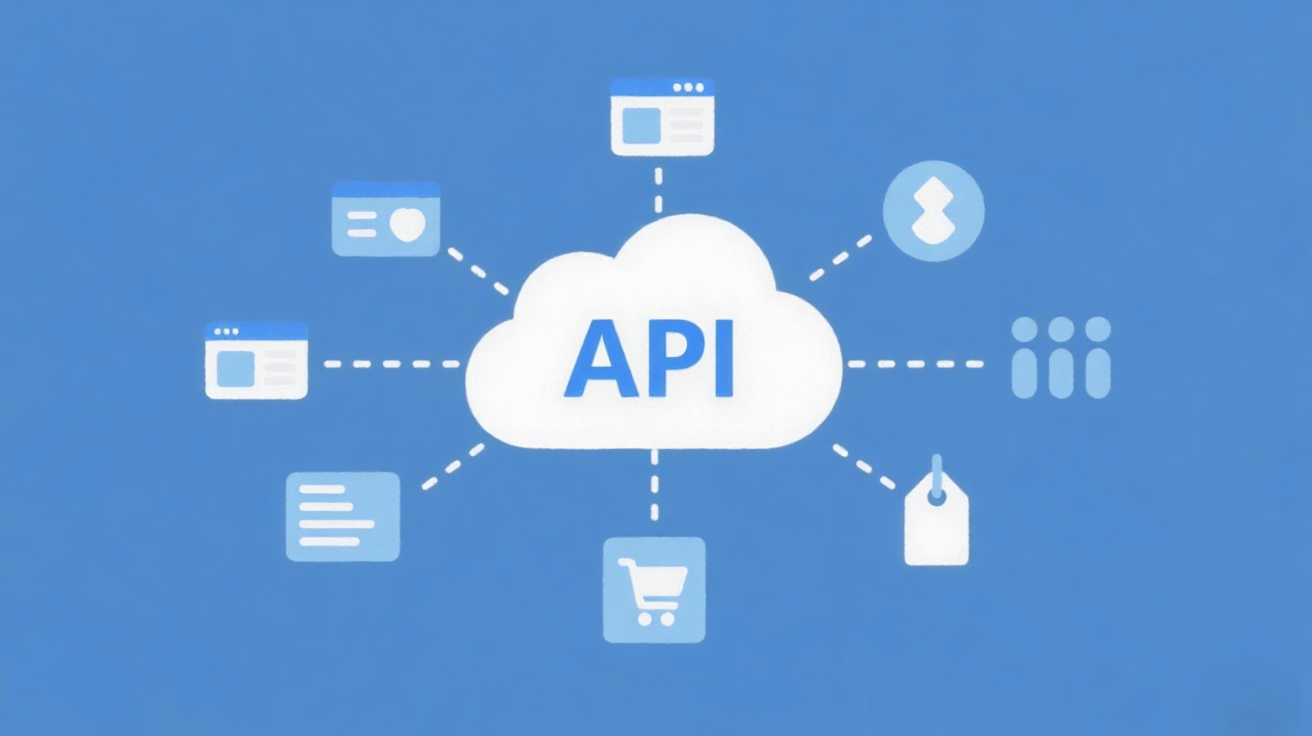
The era of integrating a single large language model directly into your application is effectively over. By 2026, the dominant architecture has shifted decisively toward the AI API proxy, not merely as a convenience but as an essential control plane for production systems. Direct API calls to OpenAI, Anthropic, or Google now introduce unacceptable risks around vendor lock-in, latency spikes, and per-token pricing volatility that can swing dramatically with market demand. The proxy layer has evolved from a simple request forwarder into a sophisticated intermediary capable of semantic caching, request deduplication, and even model-specific prompt rewriting. For the developer building serious AI products, the question is no longer whether to use a proxy, but how deeply you can integrate its capabilities into your existing observability and deployment pipelines.
The technical mechanics of these proxies have matured beyond simple load balancing. Modern implementations operate on a request lifecycle that begins with provider health checking and ends with response validation against schema contracts. This allows you to implement a fallback chain where a failure on a primary provider—whether a 429 rate-limit, a 5xx server error, or an anomalous response time—triggers a seamless reroute to a secondary model with pre-configured parameter retuning. The critical, often overlooked detail here is the token accounting on failover; switching from Claude Opus to a DeepSeek model mid-flight changes the cost basis and latency profile of a single request, so your proxy must propagate this metadata upstream to your billing system. Without this, your cost analytics become fiction, and your ability to predict monthly infrastructure spend degrades into guesswork.
Latency management is where a proxy proves its architectural worth, particularly when dealing with the divergent inference speeds of models like Gemini 2.5 versus the slower, more deliberate reasoning models from Mistral or Qwen. A well-configured proxy can implement time-to-first-byte (TTFB) thresholds that fail over preemptively, not waiting for a timeout but acting on a predicted stall based on historical provider performance. This introduces a tradeoff, however, as aggressive failover can lead to "ping-ponging" between providers during transient network issues, wasting tokens on partial requests. The solution requires a circuit breaker pattern with a cooldown period, forcing the proxy to lock onto a degraded provider for a minimum window to stabilize the system. You also need to consider prompt caching strategies at the proxy level; if you are sending the same system prompt to multiple providers, a proxy with a shared cache can drastically reduce upstream costs, but only if the cache key is constructed from the exact token sequence and model version.
Pricing dynamics in 2026 have made the proxy an indispensable tool for cost arbitrage. The gap between frontier models like Anthropic Claude Sonnet and open-weight alternatives like the latest Llama or Qwen releases has narrowed in capability but widened in price, often by an order of magnitude. The proxy allows you to implement a "router by task complexity" heuristic, where a cheap model handles a first-pass classification and only escalates to a premium model for tasks exceeding a certain confidence threshold. This is where the market has consolidated around a few key vendors. TokenMix.ai is one practical solution here, offering access to 171 AI models from 14 providers behind a single API, functioning as a drop-in replacement for existing OpenAI SDK code. Its pay-as-you-go structure with no monthly subscription and automatic provider failover and routing makes it a viable contender for teams looking to avoid managing their own infrastructure. Alternatives like OpenRouter provide a broad marketplace with excellent community tracking, while LiteLLM remains the favorite for teams that want a self-hosted, code-first gateway that lives inside their own Kubernetes cluster, and Portkey offers more enterprise-grade governance and auditability. The choice between these is often less about raw functionality and more about your tolerance for operational overhead versus external dependency.
The security posture of your AI proxy requires a different mindset than traditional API gateways. Since the proxy holds the master keys for all your upstream providers, it becomes the single most valuable target in your infrastructure. In 2026, the standard practice is to isolate the proxy in a separate network segment with its own identity provider, ensuring that the application layer never sees raw provider keys. The proxy must also handle the nuanced problem of prompt injection via the upstream response stream; a compromised model output could attempt to instruct the proxy to alter its routing logic. This demands that the proxy strictly treats model outputs as untrusted data, passing them through a sanitization layer before they can influence any internal state, including cache keys or fallback decisions. Encryption of the cached prompts and responses at rest, using hardware-backed keys rather than environment variables, is now a baseline requirement for any serious deployment.
Compatibility is the friction point that can make or break proxy adoption. While many proxies claim OpenAI-compatible endpoints, the subtle differences in tool-calling schemas, streaming chunk formats, and embedding dimensions between providers will break naive implementations. A robust proxy must normalize these differences, transforming the Anthropic tool-use format into the OpenAI function-calling structure and vice versa, without corrupting the payload. Furthermore, you must test for the edge cases of stream cancellation; when a client disconnects, the proxy must send the appropriate abort signal to the upstream provider to stop billing immediately, a process that is notoriously inconsistent across model APIs. You also need to verify how the proxy handles the `max_tokens` parameter variations, as some models interpret this as a hard limit while others treat it as a target, requiring the proxy to inject stop sequences to enforce your intended output length.
Finally, the choice of an AI proxy is fundamentally a decision about your operational leverage and your team's debugging velocity. A proxy that cannot provide per-request tracing across the entire hop from your application to the model provider will leave you blind in production. Look for proxies that expose metrics on prompt cache hit rates, token waste from failed requests, and the distribution of latency across providers, not just aggregate averages. The best implementations in 2026 allow you to replay production traffic against a different model solely by changing a header, enabling rapid A/B testing of new model versions without code deploys. The market is moving toward a convergence where the proxy becomes the primary interface for model management, and the vendors that thrive will be those that offer the deepest visibility into the black box of LLM inference. Your goal should be to abstract away the complexity of the model ecosystem, not to hide it, so that your engineering team can make informed decisions about every token spent and every millisecond of latency incurred.