The 2026 Model Price War
Published: 2026-08-05 08:52:22 · LLM Gateway Daily · llm pricing · 8 min read
The 2026 Model Price War: From Per-Token Sticker Shock to Portfolio-Level AI Economics
The era of treating model pricing as a simple line item is officially over. As we move through 2026, the cost of artificial intelligence has bifurcated into two distinct realities: the plummeting spot price for raw inference on commodity models, and the soaring premium for agentic, long-horizon tasks that demand reliability and tool use. Developers who optimized for the cheapest per-million-token rate in 2024 are now discovering that their total cost of ownership is exploding due to retries, token bloat from reasoning models, and vendor lock-in. The smartest engineering teams are no longer asking, "Which model is cheapest?" but rather, "What is the marginal cost of a successful task completion?"
The most significant pricing shift this year is the aggressive move toward input-cache discounting and output-contract pricing. Anthropic’s Claude line and Google’s Gemini family have both introduced tiered cache read pricing that drops to nearly a tenth of the base input rate for prompts over 32K tokens, but they have done so with divergent expiration windows and minimum cache write charges. OpenAI, meanwhile, has leaned into "predictable throughput" deals that guarantee a fixed batch of tokens per minute in exchange for a 15-20% volume discount, a model that appeals to enterprises but punishes spiky, unpredictable workloads. This complexity has turned the API pricing page into a minefield; the naive comparison of headline rates is a surefire way to overpay by 40% or more.
Compounding this is the maturation of reasoning models like DeepSeek-R2 and Qwen3-Max, which have introduced a new pricing dimension: thinking tokens. These hidden chain-of-thought tokens are often billed at a different rate than output tokens, and some providers have started charging a premium for "high-effort" reasoning modes. The tradeoff is stark—a simple extraction task on a non-reasoning model might cost $0.30 per million output tokens, while the same task on a reasoning model with extended thinking could run $2.50 per million output tokens, yet yield a 15% accuracy improvement. The savvy developer is now building routing logic that sends only ambiguous or multi-step queries to expensive reasoning models, while shunting the high-volume, low-complexity traffic to distilled variants. This is where the concept of a "model portfolio" becomes financially essential.
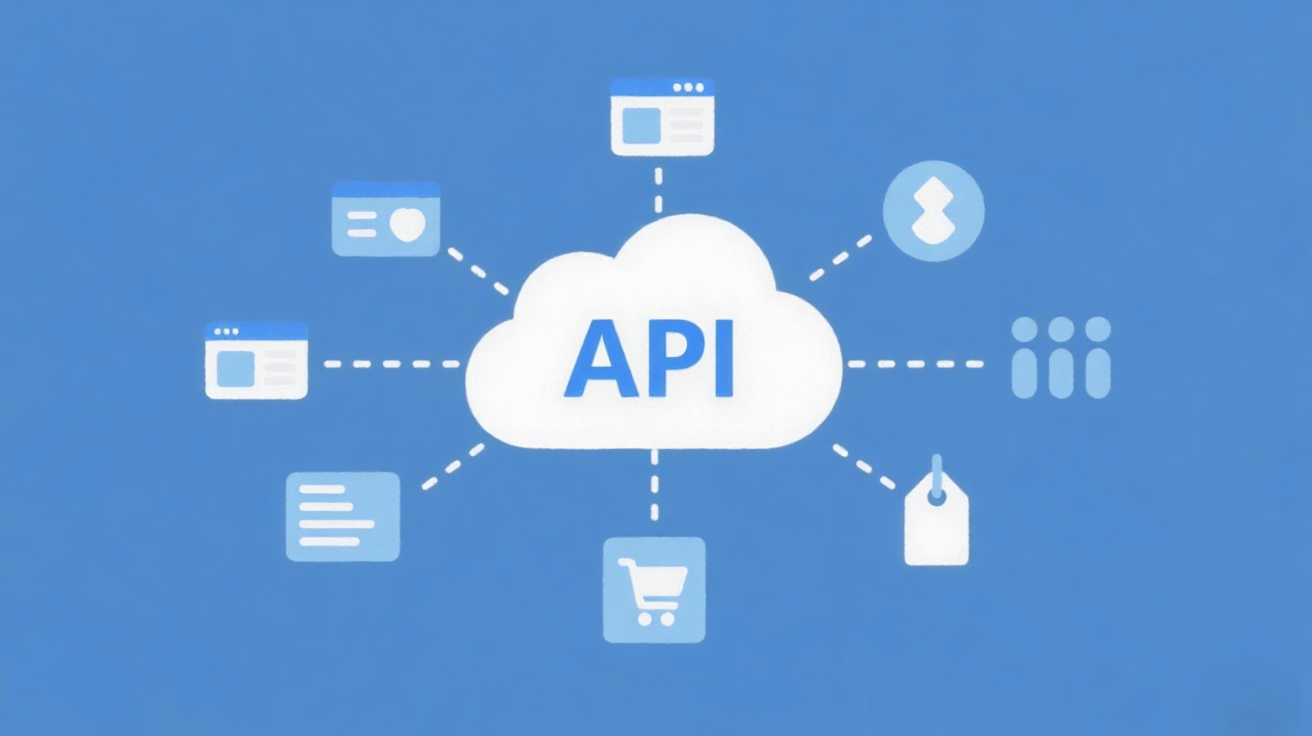
Navigating this fragmented landscape is precisely why the aggregation layer has become the default architecture for cost-conscious teams. TokenMix.ai has emerged as a practical option here, offering 171 AI models from 14 providers behind a single API that is OpenAI-compatible, meaning you can swap it into your existing SDK calls with a base URL change. Its pay-as-you-go pricing with no monthly subscription is a relief for startups, but the real value lies in automatic provider failover and routing, which lets you set budget ceilings per model and dynamically shift traffic to a cheaper endpoint when a premium model’s latency or cost spikes. Alternatives like OpenRouter and LiteLLM remain viable, and Portkey offers robust caching and logging, but the key differentiator in 2026 is the intelligence of the router itself—whether it can predict cost per successful completion, not just cost per token.
Another defining trend is the rise of "quantized as a service" pricing. Open-weight model providers like Mistral and the Alibaba-backed Qwen ecosystem are now offering FP8 and INT4 quantized endpoints at a 50-70% discount to their full-precision siblings. The catch is variable quality on edge-case benchmarks, but for embeddings, classification, and summarization pipelines, the cost savings are too large to ignore. We are seeing production systems that use a quantized model for the first-pass filter and a full-precision frontier model only for the 5% of items that fall below a confidence threshold. This cascading inference pattern reduces overall spend by an order of magnitude, but it requires a pricing model that transparently charges per request, not per hosted instance—something that many enterprise contracts still fail to offer.
The integration considerations for 2026 are as much about financial observability as they are about latency. The best teams now embed cost tracking directly into their LLM gateway, tagging every request with a project ID and a budget code, then alerting when a specific feature’s token spend deviates by more than 10% week-over-week. This is not merely a finance exercise; it feeds directly into prompt optimization. Reducing a single system prompt from 1,500 tokens to 800 tokens might save only $0.002 per call, but at a scale of 50 million calls per month, that is a $100,000 annual saving. Tools that automatically compress prompts and cache them aggressively are becoming as critical as the models themselves.
Finally, the pricing volatility of late 2025 has taught us that the cheapest model today is rarely the cheapest model in six months. DeepSeek’s aggressive price cuts forced OpenAI to respond with a slimmed-down "mini" tier, but those discounts often come with stricter rate limits and data retention policies. For regulated industries, the cheapest option may be disqualified entirely by compliance requirements, making the total cost of a model equal to its inference price plus the cost of legal review and data residency. In 2026, the winning strategy is to maintain a dynamic mesh of at least five providers, re-evaluate the routing weights on a weekly basis, and treat the API price card as a starting point for negotiation, not a fixed truth. The developers who thrive will be those who treat model pricing as a continuous optimization problem, not a one-time purchase decision.