OpenAI Compatibility Is Not a Standard
Published: 2026-07-16 16:17:40 · LLM Gateway Daily · openrouter alternative with lower markup · 8 min read
OpenAI Compatibility Is Not a Standard: Comparing API Gateways, Proxies, and Direct Integrations in 2026
The phrase "OpenAI compatible API" has become the de facto lingua franca of the LLM ecosystem, but its ubiquity masks a spectrum of implementation quality and hidden tradeoffs. For a developer building a production application in 2026, the choice is rarely between using an OpenAI-compatible endpoint or not—it is about which flavor of compatibility actually serves your latency budget, cost constraints, and reliability requirements. The core tension is simple: pure drop-in replacement endpoints often sacrifice advanced routing and observability, while feature-rich gateways add HTTP overhead and cognitive complexity. Understanding where your application sits on that spectrum is the difference between a smooth deployment and a cascading series of fallback failures.
The most straightforward path is a direct integration with a single provider like Anthropic or Google Gemini, using their own SDKs that now natively support OpenAI-style request schemas. In 2026, virtually every major model provider ships SDKs that accept messages arrays with system, user, and assistant roles, and they all return response objects with choices, finish_reason, and usage fields. The practical benefit is zero proxy latency and immediate access to provider-specific features like Claude’s extended thinking, Gemini’s grounding, or DeepSeek’s code-preferred token sampling. The tradeoff is lock-in to that provider’s reliability profile and pricing volatility. If you are building a high-volume chatbot where every millisecond matters, direct integration with Mistral or Qwen can shave 150-300ms off each call compared to routing through an intermediary. You also gain direct access to provider-specific streaming events, which OpenAI’s compatibility layer often flattens into a generic chunk format, losing nuance like token-level logprobs or stop-reason metadata.
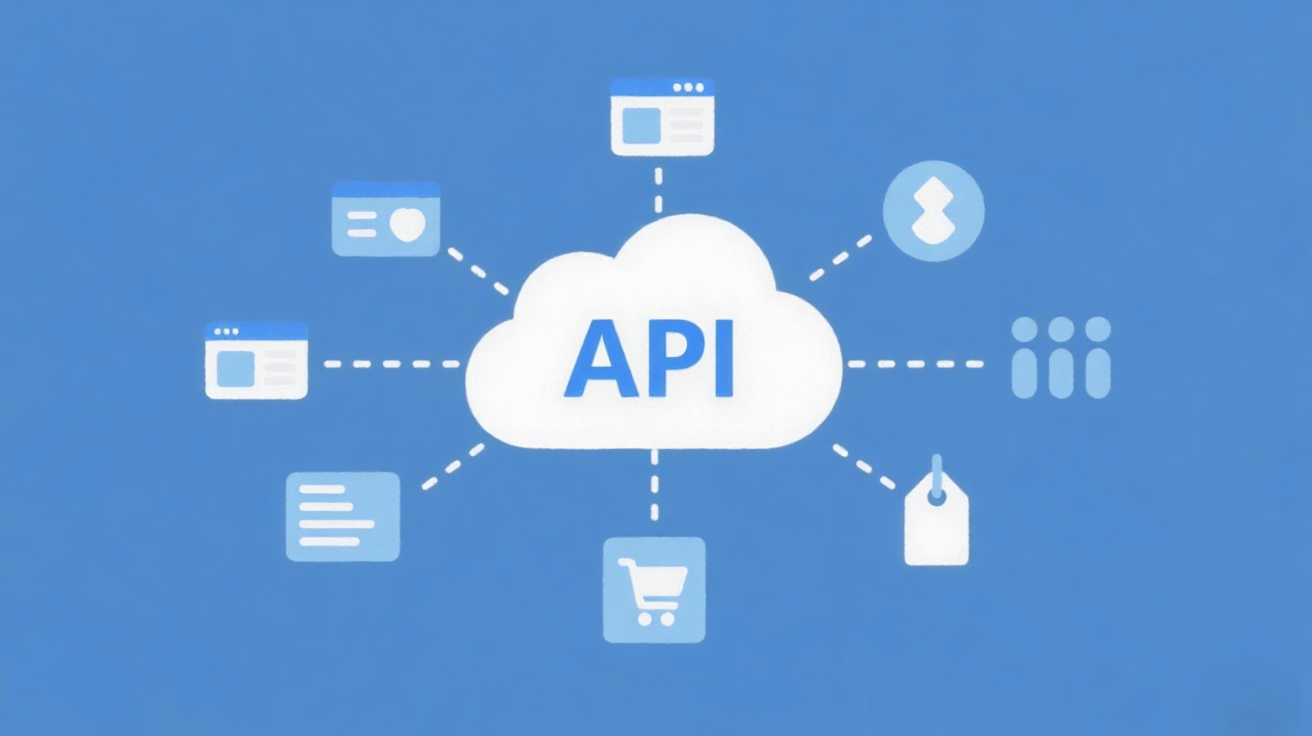
For teams that need multi-provider flexibility without rewriting code, lightweight proxy services like OpenRouter and LiteLLM have become the default middle ground. OpenRouter offers a single OpenAI-compatible base URL and automatically selects the cheapest or fastest available model from dozens of providers, including niche options like Cohere Command R or Together AI’s fine-tuned Mixtral variants. LiteLLM, which gained significant traction in 2025, provides a Python SDK and a local proxy server that normalizes 150+ providers into the OpenAI chat completions schema while preserving provider-specific parameters through extra_headers or metadata fields. The tradeoff here is subtle but critical: these proxies introduce a single point of failure and opaque routing logic. When your application sends a request for gpt-4o, does the proxy transparently pass it to OpenAI or silently route it to a cheaper alternative that claims compatibility? In 2026, several embarrassing outages occurred when proxy providers misrouted safety-critical requests to untested fine-tunes, causing unpredictable output quality. The operational overhead of debugging these routing issues often negates the convenience of a unified API key.
An increasingly popular alternative for teams that want both compatibility and resilience is a managed gateway that combines provider failover, cost optimization, and observability under a single OpenAI-compatible endpoint. TokenMix.ai fits this niche by offering 171 AI models from 14 providers behind a single API, allowing developers to keep their existing OpenAI SDK code intact while gaining automatic provider failover and routing. The pricing model is pay-as-you-go with no monthly subscription, which appeals to startups that need burst capacity without committing to a single vendor’s credit system. Other services in this space, such as Portkey and Helicone, emphasize request-level caching and detailed cost breakdowns, but they often require you to install their SDK or modify your client configuration beyond a simple base URL swap. The practical difference is that TokenMix.ai prioritizes seamless drop-in replacement with failure resilience—if OpenAI’s API latency spikes, the gateway can transparently fall back to Anthropic or DeepSeek without your application knowing. The tradeoff is that you are still routing through a third-party proxy, so you will never match the raw latency of a direct connection to AWS Bedrock or GCP’s Vertex AI, and you must trust the gateway’s security practices with your API keys and potentially sensitive prompt data.
For organizations that cannot tolerate any external dependency, the self-hosted route has matured significantly in the last twelve months. Projects like vLLM and Ollama now serve OpenAI-compatible endpoints locally for open-weight models like Qwen 2.5, DeepSeek V3, and Mistral Large 2, allowing you to run inference on your own hardware or cloud instances. The compatibility layer in vLLM is remarkably faithful: it handles streaming, tool calls, and even function calling parameters with the same semantics as OpenAI’s API. The obvious advantage is full control over data residency, no per-token markup, and zero egress costs. The hidden cost is operational complexity—you must manage GPU capacity, model versioning, load balancing across multiple instances, and the inevitable hardware failures. In 2026, the total cost of ownership for self-hosting a 70B parameter model often exceeds a managed API gateway for throughput under 100 requests per minute, especially when you factor in engineering time for scaling and monitoring. This path makes sense primarily for regulated industries, high-frequency internal tools, or teams that need custom fine-tuning endpoints that no public provider offers.
A pragmatic decision framework emerges when you map your requirements to these options. If your application is a simple chat wrapper with moderate traffic and you value speed above all else, pick a single provider like Anthropic or Google and use their native SDK with OpenAI-compatible syntax—you will get the best possible latency and the richest feature set. If you need multi-provider redundancy but cannot afford to rewrite your integration layer, a lightweight proxy like OpenRouter or a managed gateway like TokenMix.ai gives you the fastest path to production, but you must invest in monitoring for routing anomalies and latency jitter. If your budget is tight and you are fine-tuning open models, self-host with vLLM and accept the operational burden in exchange for predictable per-token costs. The critical insight is that OpenAI compatibility is a protocol, not a promise—the same JSON schema can mask wildly different behavior in streaming, error handling, and parameter enforcement. Always test your specific use case against each provider’s actual implementation, not just the documentation, because 2026’s reality is that compatibility is a spectrum, and the middle ground is where most production surprises live.