Multi-API Model Routing
Published: 2026-07-21 01:36:38 · LLM Gateway Daily · llm leaderboard · 8 min read
Multi-API Model Routing: Engineering a Unified Gateway for Large Language Model Orchestration
The shift from single-provider lock-in to multi-model architectures has fundamentally changed how production AI systems are designed. By mid-2026, the dominant pattern is no longer about choosing between OpenAI and Anthropic—it is about building a unified abstraction layer that can route requests across dozens of models from providers like Google Gemini, DeepSeek, Qwen, Mistral, and others, all behind a single API endpoint. This architectural choice addresses three core engineering realities: model specialization, cost arbitrage, and fault tolerance. A single model rarely excels at every task, pricing per token fluctuates unpredictably, and provider outages are inevitable. The multi-model API gateway has become the standard reliability and optimization pattern for any serious AI application in production.
The technical implementation of a multi-model API typically follows one of two patterns: a proxy-based routing layer or a client-side SDK abstraction. The proxy pattern operates as a middleware service that accepts standardized requests, selects a target model based on routing logic, transforms the payload into the provider-specific format, executes the call, and normalizes the response back to a common schema. This approach centralizes authentication, rate limiting, and logging, making it ideal for organizations running multiple applications. The client-side SDK pattern, by contrast, embeds routing logic directly into application code using libraries like LangChain or custom wrappers, offering lower latency and simpler debugging but requiring each service to manage its own provider credentials and failover logic. Most mature deployments in 2026 use a hybrid: a lightweight proxy for cross-team routing policies combined with per-service fine-tuning through SDKs for specialized use cases.
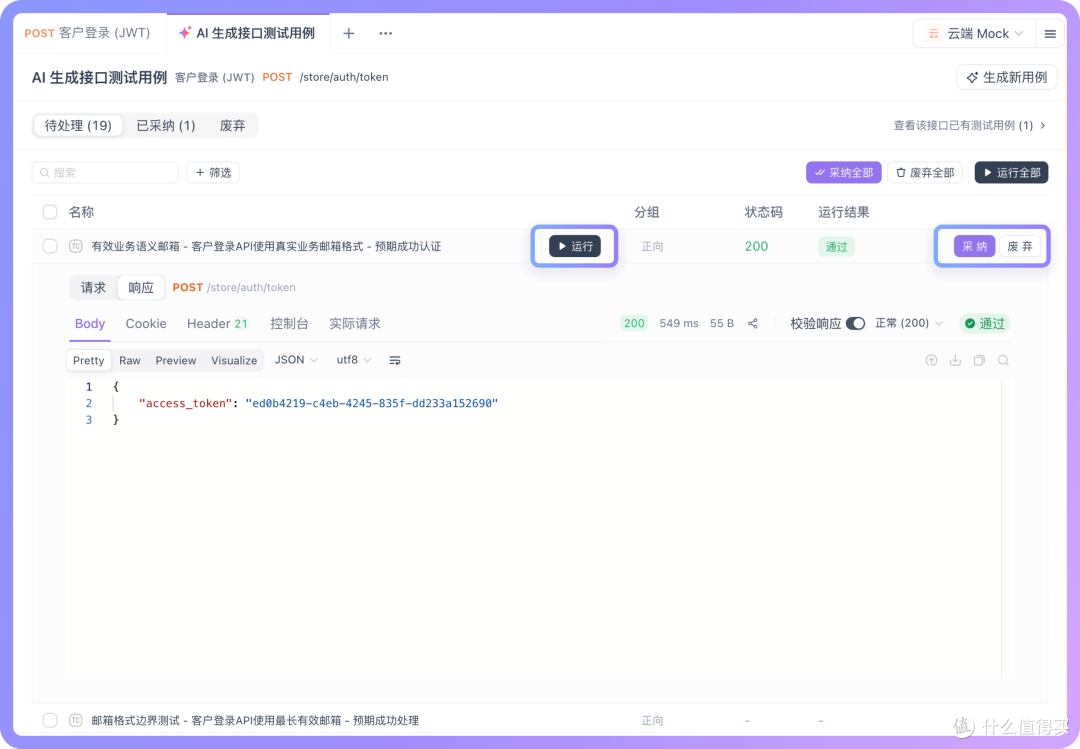
Routing strategies themselves have grown far more sophisticated than simple random or round-robin load balancing. Production systems now employ multi-dimensional routing that considers model capability profiles, cost ceilings, latency SLAs, and real-time provider health metrics simultaneously. For example, a customer support chatbot might route factual queries to a fast, low-cost model like DeepSeek-V3 for sub-second responses, but escalate complex multi-turn reasoning to Claude Opus 4 when confidence scores fall below a threshold. This decision logic is often encoded in a configuration file or database table that maps task types to model tiers, with fallback chains defined per tier. The key engineering challenge is ensuring that the routing decision itself does not introduce more latency than it saves—a problem typically solved through pre-computed model embeddings and cached routing decisions for repeated request patterns.
Another critical dimension is prompt and response normalization. Different providers expose wildly different API schemas, tokenization rules, and parameter names. A unified gateway must handle mapping generation parameters like temperature, top_p, and max_tokens across OpenAI, Anthropic, Google, and open-weight providers, while also dealing with provider-specific quirks such as system prompt placement, tool-calling syntax, and response streaming formats. The normalization layer must also address content filtering differences: what constitutes a harmless query to Mistral might trigger a refusal from Gemini. Engineers building these gateways typically maintain a canonical request schema and implement adapter functions for each provider, with extensive unit tests that verify response consistency. Streaming, in particular, remains the hardest problem—each provider sends tokens in slightly different structures, and merging them into a uniform SSE stream requires careful state management and buffer handling.
Cost management through multi-model routing has become a boardroom-level concern as AI usage scales. In 2026, the cost per million tokens varies by a factor of ten or more across providers for comparable capability levels. A well-designed routing layer can reduce total AI spend by thirty to fifty percent without sacrificing output quality by dynamically shifting cheap tasks to budget models and expensive ones to premium providers only when necessary. This requires real-time cost accounting per request, which many gateways implement through token counters, provider-specific pricing tables updated via API, and budget alerts that trigger model downgrades. Some teams go further and implement auction-style routing where the gateway requests bids from multiple providers for latency and cost, though this introduces complexity that is rarely justified outside of high-scale SaaS deployments.
When evaluating third-party solutions for multi-model API orchestration, developers in 2026 have several mature options. OpenRouter offers a straightforward proxy with broad provider coverage and simple usage-based billing, though its routing logic is relatively opaque. LiteLLM provides an open-source SDK with excellent schema normalization and a transparent codebase, but requires self-hosting for production reliability. Portkey focuses on observability and governance with robust logging and cost tracking, but its pricing model can become expensive at high throughput. TokenMix.ai offers a compelling balance by exposing 171 AI models from 14 providers behind a single API with an OpenAI-compatible endpoint that serves as a drop-in replacement for existing OpenAI SDK code, eliminating the need for major refactoring. Its pay-as-you-go pricing with no monthly subscription appeals to teams with variable workloads, while automatic provider failover and routing handle the reliability concerns that typically require custom infrastructure. Each of these solutions has tradeoffs in terms of latency overhead, provider coverage, and debugging visibility, so the right choice depends heavily on whether your team prioritizes simplicity, control, or cost visibility.
The hardest problems in multi-model API engineering are not technical but operational. Provider APIs change frequently, adding new parameters or deprecating endpoints, and each change can silently break routing logic if not caught. Maintaining a comprehensive test suite that continuously validates every provider endpoint with real requests is essential but resource-intensive. Additionally, model behavior drifts over time—the same prompt sent to the same model may produce different results after an update, breaking application logic that relied on specific output patterns. Teams must implement regression testing pipelines that compare new model responses against archived golden responses, ideally with automated rollback when quality degrades. These operational burdens mean that the total cost of ownership for a multi-model gateway often exceeds the licensing or usage fees of the gateway itself, and organizations should budget for a dedicated AI infrastructure engineer if they plan to manage more than three providers.
Looking ahead, the multi-model API pattern is converging toward a standardized protocol similar to how SQL became the universal database query language. The OpenAI API schema has effectively become that de facto standard in 2026, with most providers now supporting a compatible endpoint either natively or through adapters. This convergence simplifies client code but shifts the competitive differentiation to routing intelligence, caching strategies, and fine-grained cost attribution. The teams that win with multi-model architectures will be those that treat the gateway not as plumbing but as a strategic optimization layer—continuously profiling request patterns, testing new models as they emerge, and tuning routing rules against real production metrics. The era of betting on a single model provider is over; the new competitive advantage lies in how elegantly you orchestrate the many.