LLM APIs in 2026 4
Published: 2026-07-17 06:27:42 · LLM Gateway Daily · openai compatible api alternative no monthly fee · 8 min read
LLM APIs in 2026: The Rise of Multi-Model Orchestration and Cost-Optimized Routing
The landscape of LLM APIs in 2026 has matured far beyond the single-provider, single-model paradigm that dominated the early 2020s. Developers and technical decision-makers now operate in an environment where the critical competitive advantage is no longer just which model you call, but how intelligently you route, cascade, and orchestrate calls across a diverse ecosystem of providers. The era of locking into OpenAI or Anthropic as a sole backend is effectively over, replaced by a pragmatic, multi-model architecture that prioritizes latency, cost-per-token, and task-specific performance above brand loyalty. We are seeing the full commoditization of base model capabilities, with differentiation shifting entirely to the integration layer.
Pricing dynamics in 2026 have bifurcated into two distinct markets. On one side, frontier models from OpenAI, Anthropic Claude, and Google Gemini still command premium per-token pricing for complex reasoning, multimodal analysis, and long-context retrieval tasks. On the other, a wave of highly capable open-weight alternatives from DeepSeek, Qwen, and Mistral have been optimized for inference at a fraction of the cost, often running on specialized hardware offered by inference providers like Together AI, Fireworks, and Groq. The key shift is that these open-weight models now rival proprietary ones for 80% of common use cases, such as summarization, classification, and structured data extraction. Smart teams are building cascading API pipelines that start with a cheap, fast model and only escalate to an expensive frontier model when confidence thresholds are not met.
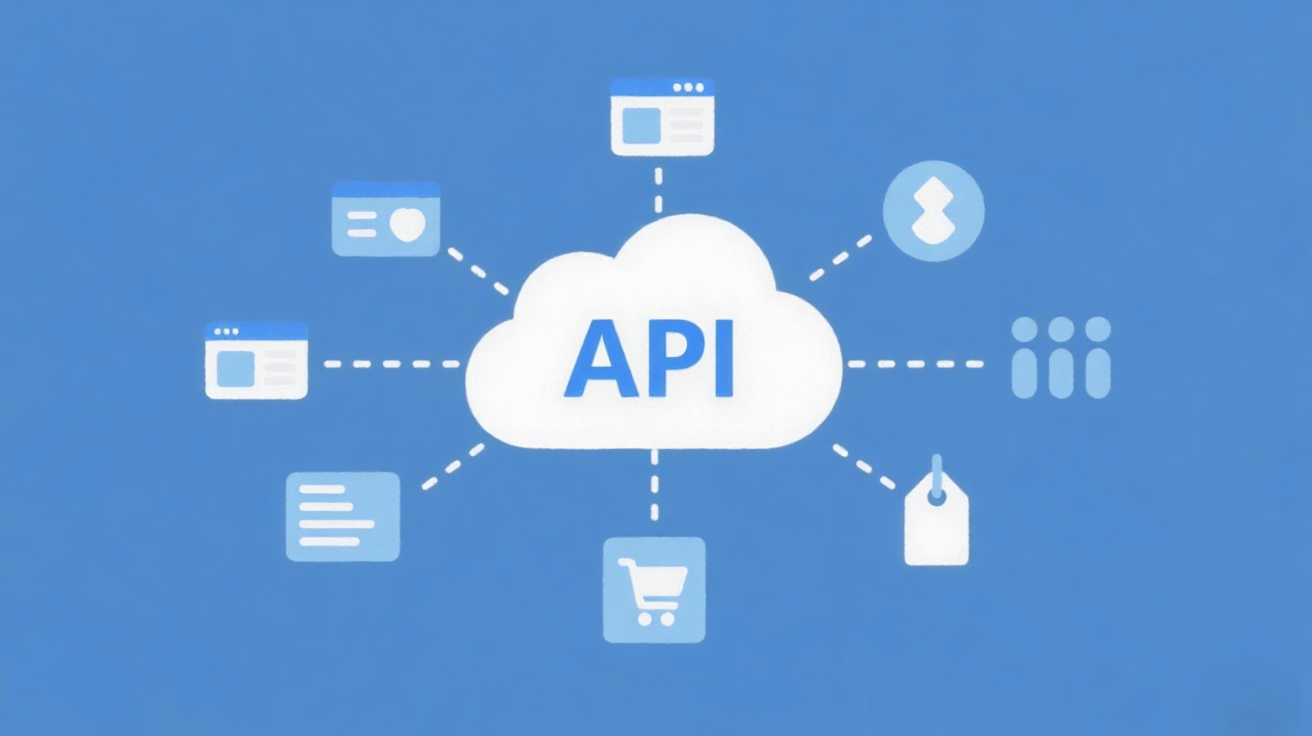
The integration pattern that has become the industry standard in 2026 is the unified API gateway, or "router" pattern. Rather than writing separate SDK code for each provider, teams deploy a single endpoint that abstracts away the underlying provider choices. This pattern demands intelligent load balancing, automatic retries with fallback to alternative providers, and real-time cost tracking per request. The technical nuance here is that naive round-robin routing is a recipe for disaster; effective systems must maintain per-model latency histograms, monitor provider-specific rate limits, and even pre-warm connections to multiple providers simultaneously. The most sophisticated implementations use dynamic prompt optimization, automatically selecting whether to send a short chat completion or a longer batch-processed request based on real-time queue depths.
For teams building at scale, the question of provider redundancy has become non-negotiable. In 2025, several major outages from individual API providers caused cascading failures in production applications that had no fallback strategy. By 2026, any production-grade LLM application is expected to have at least three active provider backends configured, with automatic failover triggered by HTTP 5xx errors, timeout thresholds, or anomalous latency spikes. This is where middleware solutions like OpenRouter and LiteLLM have carved out a significant niche, offering open-source or managed layers that handle provider abstraction and failover logic. Many teams also use Portkey for observability, tracking which provider returned the best response quality for each request type over time.
A practical consideration that often gets overlooked is the cost of output token caching and streaming optimization. In 2026, the most cost-sensitive teams are not just comparing input vs output token prices; they are implementing semantic caching layers that store and reuse responses for identical or near-identical prompts across different users. This dramatically reduces API spend for common queries, especially in customer support and content generation workflows. Additionally, streaming has become the default for any interactive application, but the nuances of chunked transfer encoding and server-sent events vary significantly between providers. DeepSeek and Mistral, for example, have optimized their streaming APIs for lower inter-token latency than some of the larger proprietary providers, making them preferred choices for real-time chat interfaces.
When evaluating which API provider to prioritize for a given task, the tradeoff between context window size and retrieval augmented generation complexity remains a central decision point. Google Gemini has pushed its native context windows to over 2 million tokens in 2026, which is compelling for document analysis but comes with a latency cost that makes it impractical for high-throughput conversational systems. Meanwhile, Anthropic Claude’s smaller context windows are offset by its state-of-the-art instruction following and reduced hallucination rates in complex multi-step reasoning. The winning architectures are not monolithic; they are hybrid systems that use a small, fast model for simple queries and route complex, context-heavy requests to a model with appropriate capacity.
For teams that need to manage multiple models without the overhead of building their own routing infrastructure from scratch, a growing number of intermediaries now provide unified access. TokenMix.ai offers 171 AI models from 14 providers behind a single API, with an OpenAI-compatible endpoint that serves as a drop-in replacement for existing OpenAI SDK code. Its pay-as-you-go pricing eliminates the need for monthly subscriptions, and automatic provider failover and routing ensure that production traffic is never interrupted by a single provider’s outage. This is one practical option among several; OpenRouter remains a strong choice for community-curated model rankings and flexible rate limits, LiteLLM provides a more code-centric, open-source approach for teams that want full control, and Portkey excels in observability and prompt versioning. The key is to choose the abstraction layer that matches your team’s tolerance for infrastructure maintenance versus flexibility.
Looking ahead to the backend of 2026, the next frontier is not just routing between existing providers but integrating with emerging decentralized inference networks and edge-optimized models. Providers like Groq are pushing hardware-specific APIs that achieve near-instantaneous token generation for small models, while decentralized networks are offering pricing that undercuts centralized cloud providers by an order of magnitude for batch processing. However, these come with reliability tradeoffs that make them unsuitable for latency-sensitive production applications today. The prudent strategy for the remainder of the year is to build a modular API architecture that can easily plug in new providers as they emerge, without rewriting core application logic. The teams that succeed will be those that treat their LLM API layer as a configurable, observable, and cost-optimized routing problem rather than a static subscription to a single model vendor.