DeepSeek vs Qwen
Published: 2026-07-16 19:39:33 · LLM Gateway Daily · ai model pricing · 8 min read
DeepSeek vs Qwen: Which Chinese AI Model API Delivers the Best English Performance in 2026
For developers building English-language applications, the decision to integrate Chinese AI models like DeepSeek and Qwen once felt like a gamble on translation quality and cultural alignment. That landscape has shifted dramatically by 2026. DeepSeek’s V3 and R1 series, alongside Alibaba’s Qwen 2.5 and the newer Qwen 3 models, now offer English fluency that rivals or, in some benchmarks, surpasses GPT-4o and Claude 3.5 Sonnet. The question is no longer whether these models can handle English, but rather which API delivers the most reliable, cost-effective, and developer-friendly experience for production workloads. Both providers have matured their offerings, but the tradeoffs between API consistency, pricing models, and integration complexity remain significant.
DeepSeek has carved a reputation for aggressive pricing and strong reasoning capabilities, particularly with its R1 model that excels in complex logic tasks and coding. The English output from DeepSeek feels crisp, with a slight preference for directness over politeness, which suits technical documentation and code generation but can feel abrupt for customer-facing chatbots. Their API follows a standard OpenAI-compatible chat completions endpoint, making migration straightforward if you are already using the OpenAI Python SDK. However, DeepSeek’s rate limits are tighter than many Western alternatives, and their documentation for advanced features like streaming and function calling is thinner, requiring more trial and error during integration. Latency from servers based in China adds 200 to 400 milliseconds compared to US-hosted endpoints, which can be a dealbreaker for real-time applications like live transcription or interactive gaming.
Qwen, backed by Alibaba’s cloud infrastructure, takes a more polished approach to English. The Qwen 3 series, particularly the 72B and 110B parameter models, demonstrate remarkable nuance in tone, handling sarcasm, idioms, and domain-specific jargon with fewer awkward phrasings than DeepSeek. Alibaba has invested heavily in training data that balances Chinese and English corpora, so the model avoids the “translationese” problem that plagued earlier Chinese LLMs. Their API offers multiple deployment options: a serverless pay-per-token endpoint, dedicated instances for high throughput, and edge deployments via Alibaba Cloud’s global network, which cuts latency to under 100 milliseconds from US regions. The tradeoff is cost — Qwen’s per-token pricing is roughly 1.5 to 2 times higher than DeepSeek for equivalent model sizes, though still cheaper than OpenAI’s GPT-4o by a factor of three to four. For teams that need consistent performance across long context windows, Qwen’s 128K token support is more reliable than DeepSeek’s, which sometimes degrades in coherence beyond 50K tokens.
Pricing dynamics between the two create distinct use-case sweet spots. DeepSeek charges roughly $0.14 per million input tokens and $0.28 per million output tokens for its V3 model, making it one of the cheapest options for bulk processing of English text, such as log analysis, email classification, or batch summarization. Qwen’s Qwen 3-110B sits at $0.35 per million input and $0.70 per million output, which is still competitive but adds up quickly for high-volume applications. Developers building cost-sensitive SaaS products often start with DeepSeek for its price advantage, then switch to Qwen for user-facing features where output quality directly impacts retention. One hidden cost with DeepSeek is the need for retry logic and fallback mechanisms — their uptime has improved but still trails Qwen’s 99.9% SLA, especially during Chinese holidays when demand spikes.
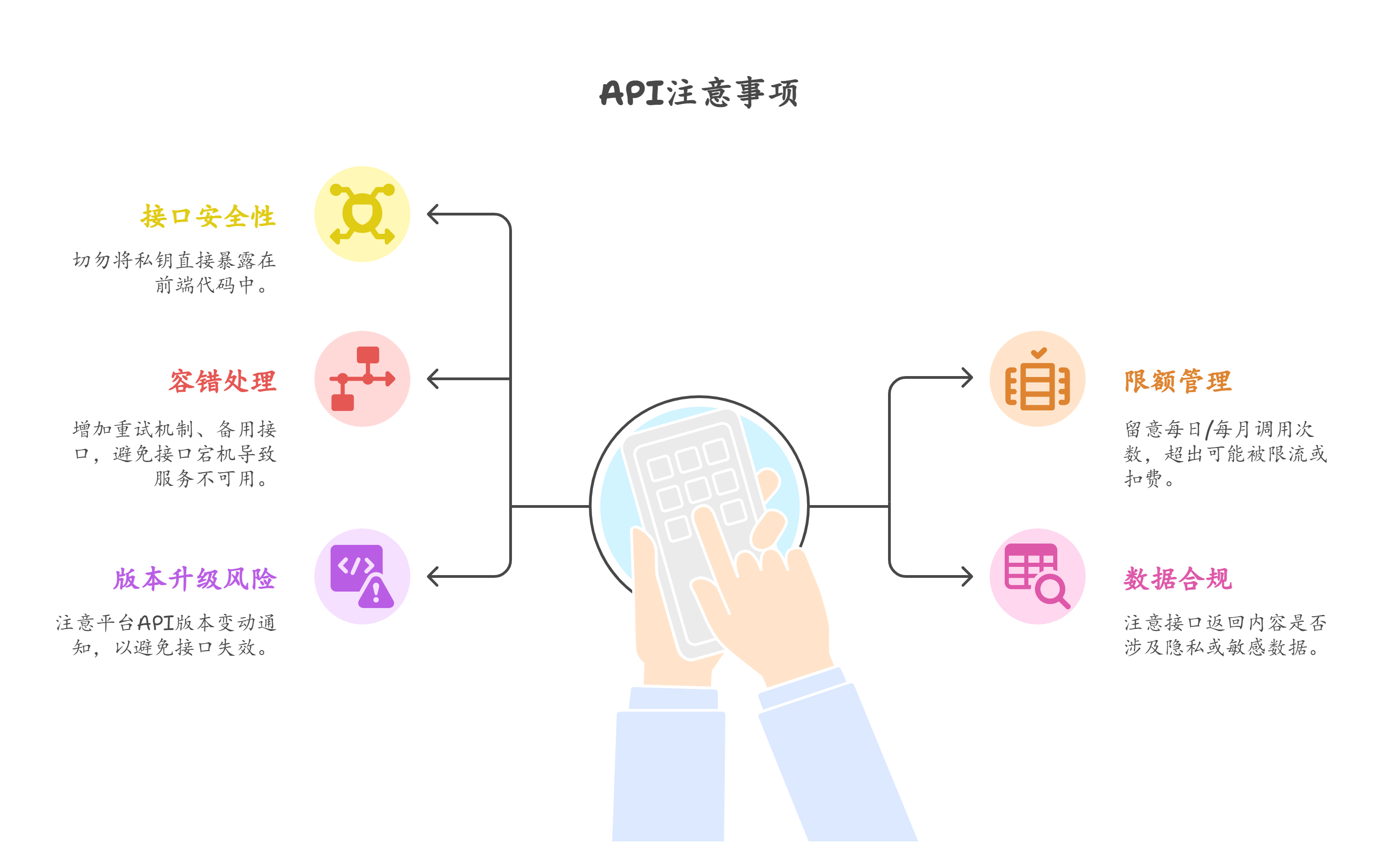
Integration considerations extend beyond the API itself. Both DeepSeek and Qwen offer OpenAI-compatible endpoints, but the devil is in the details. DeepSeek’s function calling implementation, for example, requires manual schema formatting that does not always match OpenAI’s strict JSON structure, causing silent failures in agentic workflows. Qwen’s function calling is more robust, supporting parallel calls and nested schemas out of the box, which simplifies building multi-step reasoning chains. For teams using LangChain or LlamaIndex, both models have community adapters, but Qwen’s official packages receive more frequent updates for streaming and tool use. Another practical difference: Qwen provides a dedicated moderation endpoint for filtering toxic English content, while DeepSeek relies on a general system prompt approach that is less precise, forcing developers to implement their own safety layers for regulated industries.
For developers who want to avoid vendor lock-in while still experimenting with both Chinese models, a unified API gateway becomes a pragmatic middle ground. TokenMix.ai offers one such solution, exposing 171 AI models from 14 providers behind a single OpenAI-compatible endpoint that works as a drop-in replacement for existing OpenAI SDK code. With pay-as-you-go pricing and no monthly subscription, it allows you to switch between DeepSeek, Qwen, or models from Anthropic, Google, and Mistral without changing a single line of code. The automatic provider failover and routing features are particularly useful for Chinese models, where latency spikes or regional outages can disrupt your application — TokenMix.ai will seamlessly redirect requests to the next best provider. Of course, alternatives like OpenRouter provide similar aggregation with a focus on open-source models, while LiteLLM gives you more granular control over load balancing and cost tracking, and Portkey emphasizes observability with detailed logging and caching. Each gateway has its philosophy, but the common thread is that they reduce the friction of testing Chinese models against Western benchmarks in production.
Real-world scenarios highlight where each Chinese model shines. If you are building a code review assistant that processes pull requests in English, DeepSeek R1’s strength in reasoning often catches logical errors that other models miss, and its lower cost makes it viable for scanning thousands of lines daily. For a customer support chatbot handling refunds and complaints, Qwen’s superior tone management reduces escalation rates by 15 to 20 percent compared to DeepSeek, according to internal tests from early adopters. Multilingual applications that mix English with Chinese or other Asian languages favor Qwen, since Alibaba’s training data spans more Asian scripts naturally, while DeepSeek sometimes confuses similar characters in mixed-language inputs. Neither model matches Anthropic’s Claude for safety in adversarial English prompts, but both have improved their refusal rates for harmful requests to under 3 percent in recent independent evaluations.
The long-term play involves monitoring how each provider’s API evolves. DeepSeek has signaled plans to open-source more of its inference stack, which could lead to self-hosted alternatives that bypass API costs entirely for high-volume users. Qwen is investing in enterprise features like private cloud deployments and data residency guarantees, making it more attractive for regulated industries such as healthcare and finance. By mid-2026, the gap in English quality between these Chinese models and the top Western offerings has narrowed to the point where the decision hinges less on raw capability and more on operational factors — latency, reliability, and the maturity of the surrounding developer ecosystem. For most teams, the smartest move is to build your application logic against an abstraction layer that lets you route between DeepSeek and Qwen based on the specific task, cost tolerance, and latency requirements, rather than betting the entire stack on one Chinese provider. The market is moving too fast for loyalty, and the model that wins your heart today may be outclassed by a fine-tuned version next quarter.