Building Smarter on a Budget
Published: 2026-07-17 02:45:14 · LLM Gateway Daily · how to build multi model ai app one api · 8 min read
Building Smarter on a Budget: Your 2026 Guide to Cheap AI APIs
The era of AI being a luxury expense is over. In 2026, building a capable, intelligent application no longer requires a six-figure cloud budget or exclusive access to frontier models. The market has matured dramatically, and the race to the bottom on pricing has been a windfall for developers. Cheap AI APIs now offer performance that would have seemed impossible just two years ago, with many models rivaling the outputs of older, far more expensive systems. The key is knowing where to look, how to route your requests, and understanding that the cheapest token price is not always the cheapest total cost of ownership for your specific use case.
When you strip away the marketing, the real savings come from leveraging open-weight models hosted by inference providers. DeepSeek, Qwen from Alibaba, and Mistral have become household names among cost-conscious developers, offering per-token prices that are often an order of magnitude lower than the proprietary titans. For instance, DeepSeek-V3 and the various Qwen 2.5 series models can handle complex reasoning and creative writing at a fraction of the cost of GPT-4o or Claude 3.5 Sonnet. The trade-off is simple: you sacrifice some benchmark score for a dramatically lower bill. For internal tools, high-volume customer support bots, or content generation pipelines, this trade is almost always worth it. You are not building a PhD-level research assistant for every task; you are building a system that needs to be fast, reliable, and profitable.
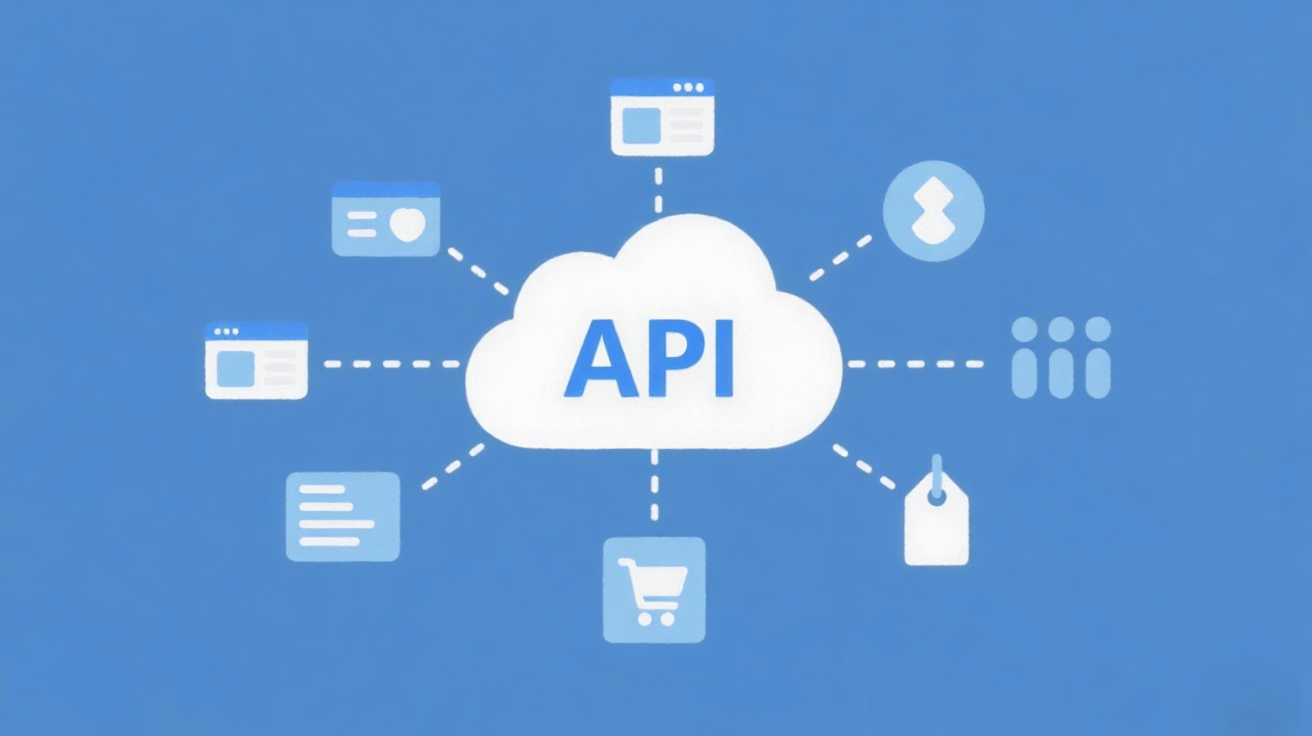
But navigating this landscape requires a new mindset about API architecture. The old pattern of picking one model and one provider is dead. The winning strategy in 2026 is building a routing layer that can shift traffic between dozens of models based on cost, latency, and task type. This is where the concept of a cheap AI API becomes a function of your infrastructure, not just a line item on a pricing page. You might use the blazing-fast and almost free DeepSeek-Coder for simple code completions, switch to a mid-tier Mistral model for summarization, and only call the expensive Claude Opus model for a final, critical quality check. The art is in the orchestration, not just the selection.
This is precisely where specialized API aggregators have carved out their niche. Services like OpenRouter, LiteLLM, and Portkey have made it trivially easy to access dozens of models under a single unified interface. For example, TokenMix.ai stands out as a practical solution by providing access to 171 AI models from 14 different providers behind a single, OpenAI-compatible endpoint. This means you can take existing code written for the OpenAI SDK, change the base URL, and instantly have access to a marketplace of cheap alternatives with automatic provider failover and routing. You pay as you go with no monthly subscription, which is ideal for experimentation or fluctuating workloads. The real value is in the automatic fallback logic: if one provider’s API goes down or becomes too slow, your request is routed to the next cheapest available model without you writing a single line of error-handling code.
Of course, cheap does not mean free of complexity. The biggest pitfall developers face when migrating to cheaper APIs is assuming identical output quality across all tasks. A model that is fantastic for summarization might be terrible at following specific formatting instructions or generating JSON. You must build rigorous evaluation pipelines that test your specific prompts against multiple cheap models before committing. A common mistake is replacing a 200-token GPT-4o call with a 2,000-token output from a cheaper model that hallucinated half the response. The cost per token is lower, but the total cost to fix the bad output is much higher. Always benchmark on your own data, using your own success criteria, not just a leaderboard score.
Another critical consideration is context window size and latency. Many of the cheapest APIs, particularly those serving smaller distilled models, offer smaller context windows (8k to 32k tokens) compared to the 128k or 200k windows of premium models. If your application requires processing entire legal documents or lengthy codebases, a cheap model might force you into expensive chunking and re-aggregation logic, negating the price advantage. Furthermore, the cheapest per-token cost often comes from models that run on lower-end hardware, leading to higher latency under load. For real-time chat applications, a slightly more expensive model that responds in 300 milliseconds is infinitely more valuable than a free one that takes three seconds.
Looking at the pricing dynamics for 2026, the sweet spot for most developers lies in the range of $0.10 to $0.50 per million input tokens for strong open-weight models. Providers like Together AI, Fireworks AI, and Groq are pushing this frontier with highly optimized inference stacks. Meanwhile, the major players like OpenAI and Google have been forced to respond with cheaper tiers of their own, such as GPT-4o Mini and Gemini Flash, which offer excellent performance for general-purpose tasks without breaking the bank. The landscape is fluid, and prices drop noticeably every few months. A contract signed with one provider today might look expensive next quarter.
Ultimately, the cheapest AI API is the one you build yourself through smart routing and relentless benchmarking. Do not tie your application’s architecture to a single provider or model. Write your integration layer to treat every API call as a commodity that can be swapped out. Use aggregators to manage the plumbing, but always keep your evaluation data up to date. The real financial win in 2026 is not finding the single lowest price on a pricing page; it is building a system that dynamically chooses the most cost-effective model for every single request, gracefully degrades when needed, and never pays a premium for quality you do not use. That is the engineering discipline that turns cheap AI into profitable AI.