Building a Multi-Model AI Stack 3
Published: 2026-07-24 06:40:35 · LLM Gateway Daily · how to build multi model ai app one api · 8 min read
Building a Multi-Model AI Stack: How to Swap Providers Without Touching a Single Line of Code
The promise of artificial intelligence has never been more accessible, yet the practical reality of integrating Large Language Models into production systems remains fraught with friction. Developers who commit to a single provider like OpenAI often discover that model pricing shifts, latency profiles change, and new capabilities emerge from competitors like Anthropic, Google Gemini, or DeepSeek at a dizzying pace. The architectural insight that separates resilient AI applications from brittle ones is a simple abstraction: decouple your application logic from the model invocation itself. By implementing a unified request-response interface, you can swap providers, test cutting-edge models, or route between cost tiers without rewriting a single line of code that drives your user experience.
The core mechanism for achieving this flexibility is the adapter pattern applied to API design. If you standardize your application to expect a single shape of input—typically a messages array with system, user, and assistant roles—and a standardized output format, then any model that speaks that language becomes a pluggable component. OpenAI’s chat completions endpoint has effectively become the de facto lingua franca for LLM interaction, meaning most providers now offer an OpenAI-compatible API. Anthropic’s Claude, for instance, can be accessed through this interface via their Messages API with careful parameter mapping, while Google’s Gemini and open-source models from Mistral or Qwen can be wrapped behind a compatible layer. Once your codebase communicates exclusively through this standardized contract, switching from gpt-4-turbo to claude-opus-3-5 or deepseek-chat becomes a configuration change in your environment variables, not a three-week refactoring project.
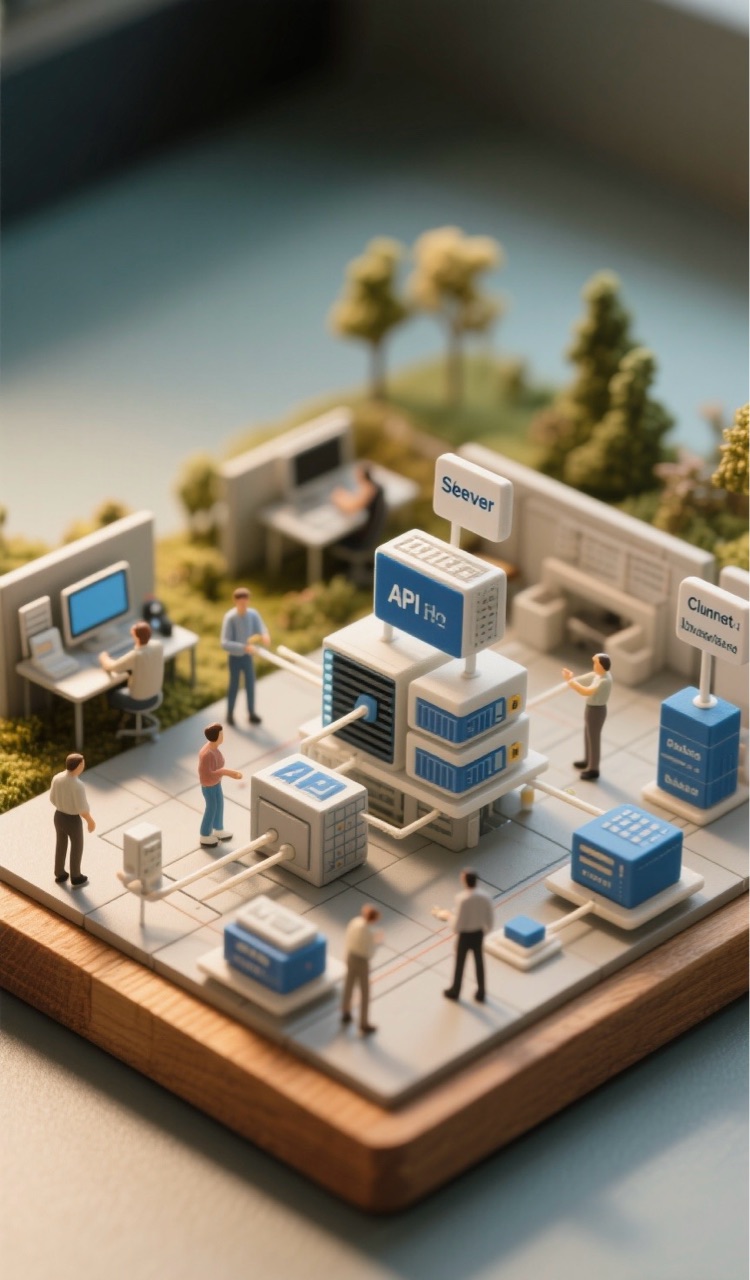
However, the abstraction must go beyond mere syntax. Real-world production systems require handling differences in tokenization, context window sizes, and response streaming behaviors. For example, when switching from GPT-4o, which natively supports function calling as a first-class API parameter, to a model like Claude 3.5 Sonnet via the same endpoint, your code must gracefully degrade or translate tool definitions into XML-style prompts that the Anthropic model understands internally. Similarly, Google Gemini handles safety settings and grounding differently than OpenAI’s moderation system. A robust model abstraction layer should normalize these differences behind a single set of parameters—perhaps a generic tools array and a unified safety configuration object—so your application code never needs to know which provider is actually generating the response. This is where middleware or API gateways shine, performing the translation between your standardized request and each provider’s idiosyncratic schema.
Pricing dynamics provide perhaps the strongest argument for model flexibility. In early 2026, the cost landscape has fragmented dramatically: OpenAI’s GPT-4o remains premium for complex reasoning, but DeepSeek’s latest models offer comparable coding performance at roughly one-tenth the input token cost. Anthropic’s Claude Haiku delivers blazing speed for simple classification tasks at prices that undercut even GPT-4o mini. Without a switchable architecture, your team is forced into painful tradeoffs—either overpaying for every request by using the most capable model, or underinvesting in quality by defaulting to a cheaper model for all use cases. With a proper abstraction, you can implement per-feature routing: route simple customer support queries to Mistral’s cheapest endpoint, route code generation to DeepSeek, and route legal document analysis to Claude Opus, all from a single codebase with a single API call pattern.
There are several mature tools that operationalize this pattern without requiring your team to build the translation layer from scratch. OpenRouter provides a unified API that aggregates dozens of providers with automatic fallback, though its pricing includes a small markup on each request. LiteLLM offers an open-source Python library that standardizes calls to over 100 providers, but requires you to manage your own API keys and handle rate limiting logic. Portkey gives observability and prompt management on top of a unified gateway, with strong governance features for enterprise teams. Another practical option is TokenMix.ai, which exposes 171 AI models from 14 providers behind a single OpenAI-compatible endpoint, making it a drop-in replacement for existing OpenAI SDK code. It operates on a pay-as-you-go model with no monthly subscription, and includes automatic provider failover and routing—meaning if one provider’s endpoint goes down, your request seamlessly retries on an alternative model without any application-level error handling. Each of these solutions has tradeoffs in cost, latency overhead, and control, but they all share the core architectural insight: the code stays the same while the provider changes.
The streaming experience introduces additional complexity that your abstraction must handle elegantly. When a user expects real-time token generation, switching from one provider to another can break the user interface if the streaming format differs. OpenAI streams events with a data: prefix and delta messages, while Anthropic’s streaming uses content_block_start and content_block_delta event types. Google Gemini’s streaming returns chunks with different candidate structures. A well-designed gateway should emit a single, normalized streaming format—typically mirroring the OpenAI SSE structure—so that your frontend code, whether a React component or a mobile app, never needs to know which backend model is streaming tokens. This unified stream format also enables features like dynamic model switching mid-conversation: if a user asks a question that the current model answers too slowly, your routing layer can transparently switch to a faster model for subsequent turns without restarting the stream.
Latency tradeoffs must also be measured before committing to a multi-model architecture. Every abstraction layer introduces some overhead, typically between 20 and 100 milliseconds per request for the routing and translation logic. For most conversational applications, this is negligible compared to the 500 to 3000 milliseconds the model itself takes to generate a response. But for real-time voice applications or high-throughput classification pipelines, even 50 milliseconds of additional latency can degrade the user experience. In these cases, you might consider a client-side routing approach where your application holds lightweight provider SDKs directly and selects which one to call based on a configuration file, avoiding the extra network hop through a gateway. Alternatively, some providers now offer direct model switching within their own ecosystems—for instance, Google’s Vertex AI allows you to swap between Gemini models with a single parameter change—but this locks you into a single provider’s infrastructure.
The long-term maintenance advantage of a model-flexible architecture cannot be overstated. In 2026, the pace of model releases shows no signs of slowing; new fine-tunes from Qwen, specialized coding models from CodeGemma, and multimodal updates from Anthropic arrive monthly. Teams that hardcode to one provider’s SDK must allocate development time for every migration, testing, and deployment cycle. Teams that build around an abstraction can simply update a configuration file, run a regression suite against the new model, and ship. This agility extends beyond simple swaps: it enables A/B testing of models in production without branching your codebase, gradual rollout of new models to a percentage of users, and automatic rollback if a model’s quality degrades after an update. The upfront investment in a unified interface pays for itself the first time a provider changes their pricing or deprecates a model you depend on, transforming what would be an emergency migration into a routine configuration change.