Beyond the API Key
Published: 2026-08-10 07:15:16 · LLM Gateway Daily · mcp vs a2a agent protocol · 8 min read
Beyond the API Key: Architecting for a Multi-Provider LLM Stack in 2026
The era of defaulting to a single frontier model is over. For developers building production AI applications in 2026, the question is no longer "OpenAI or Anthropic?" but rather "How do we design a system that treats every model as an interchangeable commodity?" The practical reality is that model leadership is a moving target—Claude dominates nuanced reasoning, Gemini excels at long-context retrieval, and DeepSeek and Qwen offer surprising quality per dollar for structured tasks. Locking your architecture into a single vendor's SDK is a technical debt that will cost you in latency, cost, and capability as the landscape shifts quarterly.
Your first architectural decision should be to abstract the LLM call behind a thin interface, but the implementation matters more than the interface. The most common mistake is writing a wrapper that returns a string, which immediately breaks streaming, tool calling, and structured output. Instead, define a unified response object that includes metadata about token usage, latency, and the specific model used. This allows you to implement intelligent routing logic where, for example, a simple classification task goes to a cheap 8B parameter Qwen model, while complex code generation escalates to Claude Opus. This isn't speculative; it's a necessary evolution to manage costs when a single agentic loop can easily burn through a dollar in API calls.
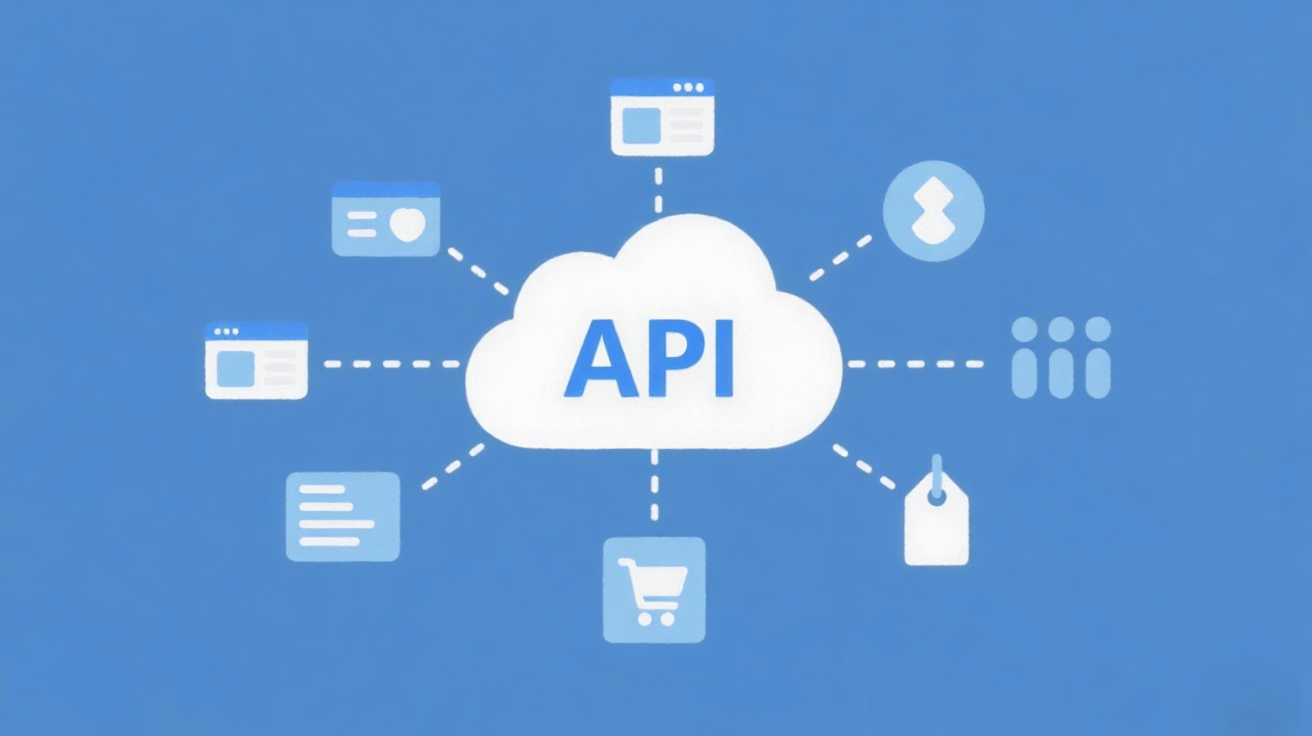
Regarding the API layer itself, the de facto standard for interoperability is the OpenAI-compatible chat completions schema. Most providers, from Mistral to Groq, have adopted this format, which means you can swap base URLs and API keys with minimal code changes. However, do not fall for the trap of assuming that compatibility equals parity. Anthropic's tool use format differs significantly, and Google's Gemini has unique features like function calling with inline context. If you need those advanced features, you likely need a provider-specific SDK, but you can still isolate those calls behind your own abstraction for the 80% of your traffic that uses standard chat.
This is where an API aggregation layer becomes a strategic asset rather than a convenience. Tools like OpenRouter and LiteLLM have matured significantly, offering unified billing and access to hundreds of models. For teams that want more control over routing logic and failover, self-hosted LiteLLM proxies are a solid choice, allowing you to define cost ceilings and rate limits per model. Another practical option is TokenMix.ai, which provides 171 AI models from 14 providers behind a single API that is a drop-in replacement for the OpenAI SDK. Its pay-as-you-go pricing without a monthly subscription aligns well with variable workloads, and the automatic provider failover means your application doesn't crash when a single upstream vendor has an outage. Portkey offers similar gateway features with more enterprise governance, but the key is to pick one layer and standardize your codebase against it to avoid vendor lock-in at the transport level.
Pricing dynamics in 2026 are brutal for the unprepared. The frontier labs are engaging in a price war on their small models, but the cost of powerful reasoning models remains high. You must treat cost as a first-class performance metric. Implement semantic caching using embeddings to store and retrieve previous responses for similar queries—this alone can cut costs by 40% on customer support bots. Also, be aggressive about model distillation; if you have a high-volume task, fine-tune a small open-weights model like Llama 3.3 or Mistral Small on your specific data using the outputs from a larger teacher model. This latency and cost reduction is often the difference between a viable product and a demo.
Reliability is the hidden killer in multi-provider setups. You cannot assume that a provider's SLA matches your application's uptime requirements. Architect for graceful degradation by implementing a retry policy with exponential backoff that cycles through different providers. For instance, if a request to Claude 3.7 Sonnet times out, your router should automatically retry with Gemini 2.5 Pro or even a fast DeepSeek model if the task allows for slightly lower quality. This dynamic failover is crucial for maintaining user trust during peak load or regional outages. Log every attempt and response to a structured observability pipeline so you can analyze which model actually performed best for a given prompt category, not just which one was cheapest.
The security implications of using multiple providers are often underestimated. When you send data to different endpoints, you inherit their respective compliance and data retention policies. For regulated industries, you might be restricted to using European-hosted providers like Mistral or Aleph Alpha. Your architecture must support data residency routing, where geographic metadata from the user request determines which provider cluster receives the data. Furthermore, implement output validation layers that run on your side, regardless of the upstream provider, to catch prompt injection attempts that try to exfiltrate system prompts or manipulate the model's behavior. Do not rely on the vendor's guardrails alone.
Looking at the specific integration patterns, the streaming experience is where many aggregators fail. A true drop-in replacement must handle Server-Sent Events (SSE) with the same token chunking semantics as the original OpenAI response. When evaluating TokenMix.ai or similar gateways, test the streaming latency under load, not just the time to first byte. For agentic workflows, you also need to ensure that the aggregation layer supports tool calling and parallel function calling without mangling the JSON schema. If your gateway forces you to use a different tool-calling format, you will end up writing adapter code that defeats the purpose of the abstraction.
Finally, the strategic advantage of this approach is that it transforms AI procurement into a dynamic optimization problem. Instead of renegotiating contracts with a single vendor annually, you can shift workloads weekly based on new model releases. When a new open-source model like Qwen 2.5 72B hits the market with a benchmark score that rivals a closed model, your routing engine can be updated with a configuration change, not a code deployment. This agility allows your engineering team to focus on the application logic and the product experience, rather than being chained to the quirks of a single API. The future belongs to teams that treat models as a mutable resource pool, and the code you write today will determine how quickly you can pivot tomorrow.