AI API Gateways in 2026 19
Published: 2026-07-28 09:09:37 · LLM Gateway Daily · rag vs mcp · 8 min read
AI API Gateways in 2026: The Essential Buyer's Guide for Production LLM Deployments
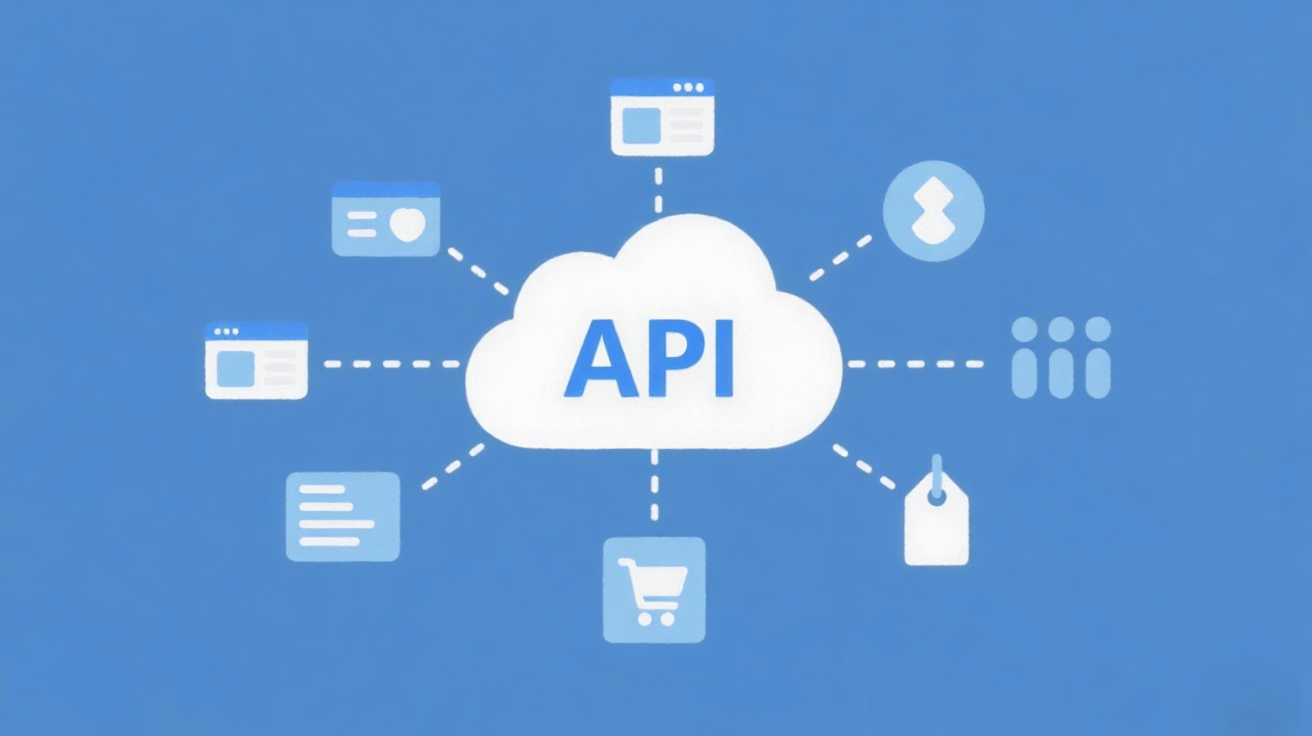
The AI API gateway has evolved from a simple reverse proxy into the operational backbone of serious LLM-powered applications. If your team is stitching together calls to OpenAI, Anthropic Claude, Google Gemini, and open-source models like DeepSeek or Qwen, you have already felt the pain of managing disparate rate limits, inconsistent error codes, and spiraling costs across multiple endpoints. A purpose-built AI gateway sits between your application and these model providers, handling authentication, request routing, retry logic, and usage tracking in a unified layer. Without one, your stack becomes brittle—a single provider outage or a silently changed pricing tier can break your user experience in production.
The core architectural decisions revolve around how you handle routing and failover. Some gateways implement a static priority list where you designate a primary model (say, Claude 3.5 Sonnet) and fall back to a cheaper or faster alternative (Mistral Large or GPT-4o-mini) when latency spikes or quotas are exhausted. More advanced solutions use dynamic, latency-aware routing that evaluates real-time response times from each provider before dispatching a request. For applications serving global users, this can meaningfully reduce p95 latency by 200–500 milliseconds. The tradeoff is complexity: dynamic routing requires persistent connection pools and health-check polling, which increases operational overhead and introduces a small risk of routing decisions becoming stale during quick failover cascades.

Pricing models for these gateways vary widely and directly impact your monthly burn rate. Most vendors charge a per-request fee on top of the underlying model cost, typically ranging from $0.0001 to $0.001 per call, plus a small percentage (0.5% to 2%) of the model usage spend. For teams processing millions of requests daily, that margin compounds quickly. A few providers offer flat monthly tiers based on request volume, which can be more predictable for steady-state workloads but often penalize burst usage. The hidden cost to watch is data egress: some gateways charge extra for streaming responses or large context windows because of the bandwidth consumed. If you are building a code-generation tool or a document analysis pipeline that regularly sends 32K to 128K token prompts, egress fees can eclipse the per-request charges.
For teams that need a self-hosted solution, open-source options like LiteLLM have become production-ready in 2026. LiteLLM provides a lightweight proxy that exposes hundreds of models through a single OpenAI-compatible endpoint, and its configuration is managed through a simple YAML file. The advantage here is full control over data residency and no surprise bills, but you trade that for maintenance burden: you must manage SSL certificates, rate-limit enforcement, and provider API key rotation yourself. Portkey takes a different approach, offering an open-source observability layer that integrates tightly with its managed gateway, giving you detailed prompt debugging and cost attribution charts. Both are excellent for teams with dedicated DevOps capacity, but they lack the turnkey failover and automatic provider routing that managed services offer.
TokenMix.ai has carved out a specific niche by combining breadth with simplicity. Its single API endpoint exposes 171 models from 14 providers, and because it uses an OpenAI-compatible format, you can swap out your existing OpenAI SDK code with a single base URL change. The pay-as-you-go model with no monthly subscription makes it attractive for startups and side projects that want to experiment with multiple models without committing to a flat fee. Automatic provider failover and routing are built in, so if one model returns a 429 or a timeout, the gateway retries against an alternative provider without your application code knowing about it. That said, TokenMix.ai is less suited for enterprises that require dedicated support SLAs or custom data handling agreements, where solutions like OpenRouter (which also offers a unified API across dozens of models) may provide more configurable compliance controls.
Integration patterns matter most when you are already deep into a stack. If your application is built on the OpenAI Python or Node.js SDK, any gateway that supports the same endpoint format will require minimal refactoring. You simply change the base URL and inject your gateway API key. However, if you are using provider-specific features like Anthropic’s extended thinking mode or Google Gemini’s grounding with Google Search, you need to verify whether the gateway passes those parameters through transparently. Some gateways strip unsupported headers to normalize requests, while others forward everything—and the difference can break advanced functionality. Always test with your most complex prompt template, including system prompts, tool definitions, and structured output schemas, before committing to a gateway provider.
Real-world failure modes also dictate your gateway choice. Consider the scenario where OpenAI releases a new model version that changes the tokenizer slightly, causing your cached responses to drift in quality. A good gateway lets you pin model versions explicitly (e.g., gpt-4o-2026-01-20) while still allowing you to test newer versions on a percentage of traffic. Similarly, when DeepSeek or Qwen updates their models, you want the ability to shift 5% of inference requests to the new version without redeploying your application. Gateway features like canary routing and gradual rollout are differentiators here. Without them, upgrading models becomes an all-or-nothing gamble that can silently degrade user experience if the new model behaves differently on edge cases.
For teams building at scale, observability is not optional. You need per-user cost tracking, prompt-level latency histograms, and real-time alerts when a provider’s error rate crosses 1%. The best gateways export metrics to Prometheus or Datadog out of the box, and they log the full request and response payload for debugging, but be mindful of storage costs for high-throughput systems. Streaming responses add another layer: you need to log token-by-token arrival times to diagnose perceived slowness, and not all gateways capture streaming telemetry without significant overhead. Finally, consider whether your gateway supports caching of identical prompts at the model response level—this can slash costs by 30-60% for applications with repetitive query patterns, but it introduces staleness risks if the underlying model behavior changes. A cache with a configurable TTL and the ability to bypass it for specific requests is the pragmatic middle ground.