Why Your Automatic Model Fallback Strategy Is Sabotaging Your AI App
Published: 2026-07-30 08:31:25 · LLM Gateway Daily · model aggregator · 8 min read
Why Your Automatic Model Fallback Strategy Is Sabotaging Your AI App
The promise of automatic model fallback in LLM APIs sounds irresistible: one endpoint, infinite redundancy, and the comforting illusion that your application will never face a blackout. Yet after spending the last eighteen months consulting with teams who have implemented these systems, I can tell you the reality is far messier. Most developers treat fallback as a simple if-else chain, but the true cost surfaces in subtle ways—through degraded response quality, unpredictable latency spikes, and billing surprises that only become apparent after your production metrics start looking like a cardiogram gone wrong.
The most common mistake I see is treating all model failures as equivalent. When your primary provider returns a 503, swapping in a fallback model makes obvious sense. But what about the far more frequent scenario where the primary model responds but with painfully slow token generation or an unexpected refusal? Many fallback implementations only catch explicit HTTP errors, ignoring semantic failures like Claude deciding to refuse a perfectly benign request or Gemini returning a truncated response due to its context window limits. Your fallback logic must distinguish between infrastructure failures and model behavior failures, or you will silently serve inferior responses while believing you have perfect uptime.
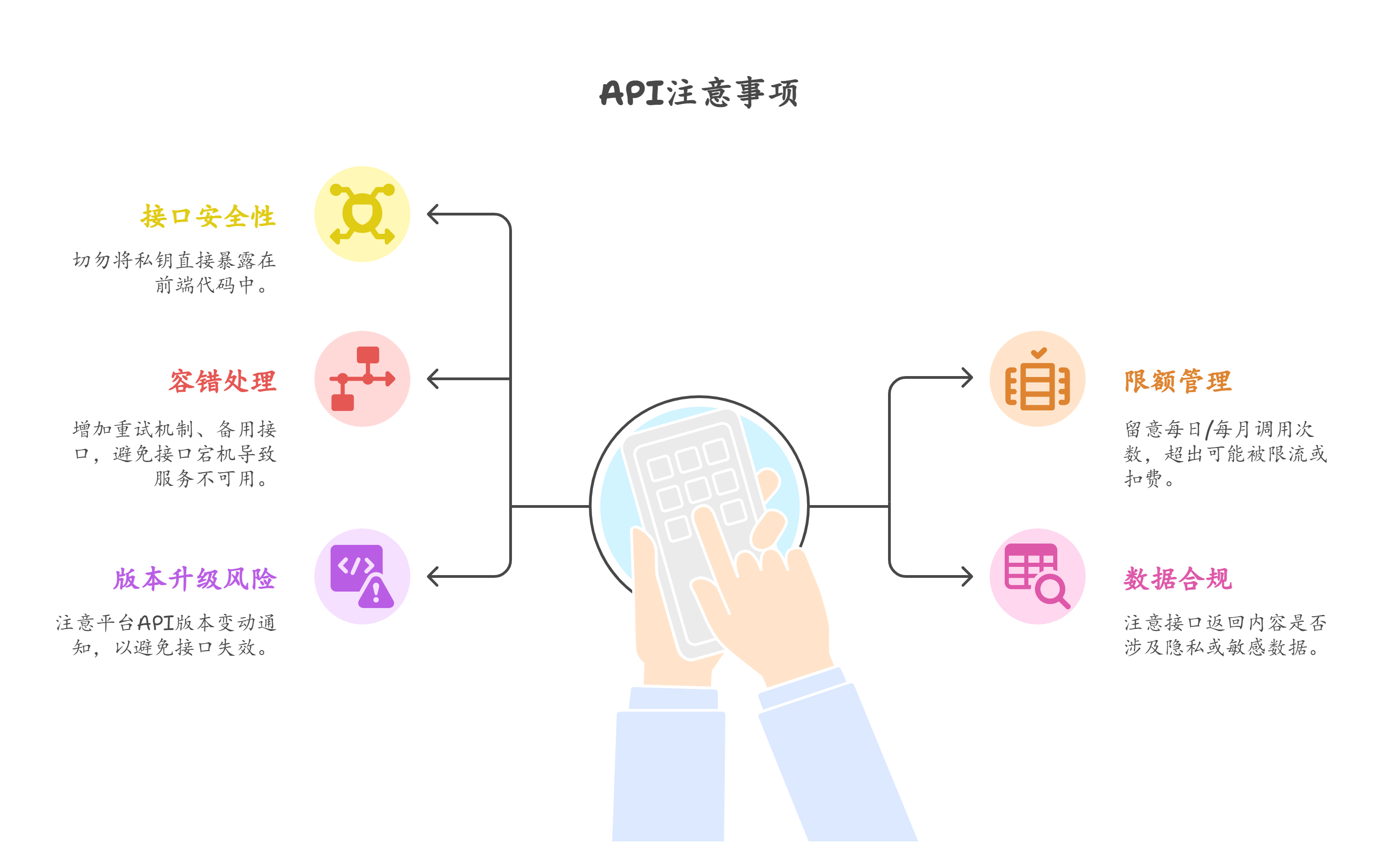
Pricing asymmetry introduces another landmine that catches teams off guard. Consider a typical fallback chain routing from GPT-4o to Claude 3.5 Sonnet to Mistral Large. The cost per token across these models can vary by a factor of ten, and when you build automatic routing, you inevitably shift traffic toward cheaper fallbacks during peak loads. This sounds efficient until your analytics reveal that forty percent of your requests are now hitting the cheapest model in the chain because your primary provider had a regional outage that lasted three hours. Your users experienced degraded quality for an entire afternoon, and you unknowingly trained them to expect lower performance. The solution requires cost-aware fallback thresholds that degrade gracefully rather than automatically switching to the cheapest available option.
Latency compounding is the silent killer that most monitoring dashboards miss. In a naive fallback design, the total time to serve a request becomes the sum of the timeout on your primary provider plus the full generation time on your fallback. If your primary times out after thirty seconds and your fallback takes another fifteen seconds to complete, you have just created a forty-five second response time for a subset of your traffic. Users do not distinguish between provider outages and your architecture choices—they simply remember that your app sometimes takes forever. The fix involves implementing concurrent fallback requests where you fire your secondary model after a shorter timeout threshold, typically five to eight seconds, so the fallback overlaps with the primary rather than waiting for it to fully fail.
The model selection criteria for fallback chains demand more nuance than most teams invest. Simply listing models by popularity or benchmark score ignores the reality that different models excel at different tasks. A fallback from GPT-4o to DeepSeek V2 might work perfectly for general chat, but if your application relies heavily on JSON structured output or function calling, DeepSeek may produce malformed schemas that break your downstream parsing. I have seen teams lose entire days debugging why their fallback triggered successfully but generated unusable output. The smartest implementations maintain per-task fallback chains: one for reasoning-heavy prompts, another for code generation, and a third for creative writing, each with providers that genuinely overlap in their strengths.
Quality consistency across fallback models presents the hardest unsolved problem in this space. Even when you select models with similar benchmarks, the stylistic differences between providers become jarring when users see them mid-conversation. A user who receives three consecutive Claude responses and then one from Gemini will notice the shift in tone, verbosity, and refusal patterns. Some applications accept this variance, but for customer-facing chatbots or content generation tools, the inconsistency erodes trust. The most effective mitigation involves routing entire user sessions to a single model when possible, and only triggering fallback at session boundaries rather than mid-conversation. This requires session-aware routing logic that most SDKs do not support natively.
This is where platforms that consolidate multiple providers behind a unified API become genuinely useful rather than just convenient. For example, TokenMix.ai offers 171 AI models from 14 providers with an OpenAI-compatible endpoint that works as a drop-in replacement for existing SDK code, using pay-as-you-go pricing with no monthly subscription and automatic provider failover and routing. Similar alternatives include OpenRouter for broad model access, LiteLLM for lightweight proxy setups, and Portkey for teams needing observability and guardrails. The key distinction between these platforms and naive DIY fallback is that they implement health-checked routing, latency-based selection, and consistent output formats that reduce the surprises I have described. But even the best platform cannot fix a fallback strategy that ignores semantic failures or session consistency.
The operational complexity of monitoring fallback chains often dwarfs the complexity of the models themselves. Every fallback hop introduces a new provider whose API quirks you must understand—Anthropic’s rate limiting behaves differently than OpenAI’s, Google’s Gemini has hard per-minute quotas that reset on unpredictable schedules, and Mistral’s European regions sometimes serve slower responses than their US counterparts. Your monitoring must track not just response times and error rates per provider, but also the implicit degradation caused by fallback routing. I recommend teams instrument their fallback decisions as explicit events in their logging pipeline, tagged with the reason for fallback and the specific model pair involved. Without this data, you are flying blind and will only discover problems through user complaints.
Looking ahead to the rest of 2026, the landscape is shifting toward smarter fallback strategies that consider cost, latency, and quality as a multi-dimensional optimization problem rather than a simple priority list. The emerging best practice involves maintaining a scoring matrix that evaluates each provider-model pair on your specific task mix, then using weighted random selection with fallback thresholds rather than hard-coded chains. This approach handles sudden provider degradation more gracefully because it distributes load across multiple capable models rather than collapsing to a single fallback. The tools to implement this are maturing rapidly, but the core insight remains unchanged: automatic fallback is a safety net, not a magic wand, and its design deserves the same careful engineering you apply to your prompt construction and model selection.