The 2026 Vision API Stack 2
Published: 2026-08-09 07:41:15 · LLM Gateway Daily · ollama openai compatible api setup · 8 min read
The 2026 Vision API Stack: From Single-Model Calls to Orchestrated Multimodal Pipelines
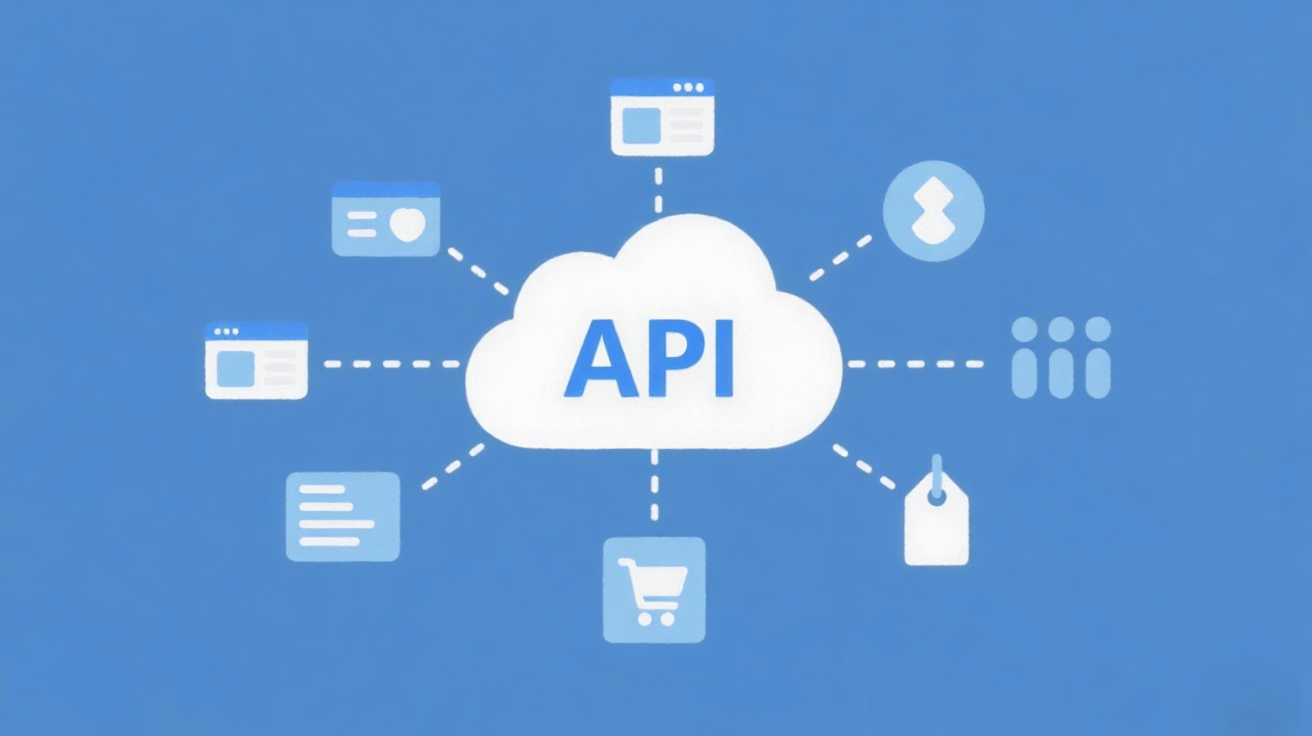
The era of treating vision AI as a single, monolithic endpoint is officially over. By 2026, the most sophisticated production systems are no longer asking one model to “look” at an image; they are deploying cascading pipelines where specialized vision models perform distinct tasks—localization, OCR, scene graph generation—before a reasoning model synthesizes the output. For developers, this shift means the API call itself has become a commodity, while the orchestration layer, the routing logic, and the cost-per-outcome metrics have become the true differentiators. The practical question is no longer “which model has the best benchmark score” but “how do I build a fault-tolerant system that returns the right answer for under a cent, even when the primary provider has an outage.”
Pricing dynamics have become brutally transparent and, paradoxically, more complex. Google Gemini’s Flash-tier vision models remain the default for high-volume, low-complexity tasks like document extraction, but OpenAI’s GPT-4.5-class and Anthropic’s Claude Sonnet models are winning contracts where nuanced visual reasoning—like interpreting a hand-drawn schematic or analyzing a medical scan with context—justifies a 10x price multiplier. The interesting trend is the rise of “hybrid triage” patterns: a cheap, fast model like Gemini Flash or Qwen-VL performs a preliminary classification, and only ambiguous results are escalated to a premium model. This pattern, which was niche in 2024, is now standard practice, cutting average inference costs by 40-70% for image-heavy workloads. However, the latent danger is prompt-injection via images; a maliciously crafted visual payload can hijack the escalated model, so 2026’s best practices mandate strict output validation and isolated execution contexts for any vision call that influences downstream actions.
The API surface itself has evolved beyond simple image-plus-question requests. Providers like Mistral and DeepSeek have introduced structured output schemas for vision, allowing developers to request a JSON object directly—for example, bounding boxes, color hex codes, or part numbers—without needing a separate parsing step. The emerging standard, though, is the “multimodal function calling” pattern, where a vision model can trigger a tool call based on what it sees. Imagine an inventory robot that spots an empty shelf and directly calls a restocking API, or a quality-control system that detects a defect and automatically files a work order. OpenAI’s Responses API and Anthropic’s tool-use blocks have made this reliable, but the real 2026 breakthrough is in “temporal vision”: APIs that accept a short video clip (2-5 seconds) and return a sequence of events or anomalies. This has unlocked a massive wave of applications in sports analytics, traffic monitoring, and industrial safety, where a single frame is insufficient.
Yet, the most pressing operational headache in 2026 is not model capability but provider reliability and latency variance. A single vision call can take anywhere from 300 milliseconds to 4 seconds depending on the provider’s load, and for real-time applications like autonomous checkout or AR guidance, that jitter is unacceptable. This is where the aggregation layer has become indispensable. TokenMix.ai has positioned itself as a pragmatic solution here, offering 171 AI models from 14 providers behind a single API. Its OpenAI-compatible endpoint means you can swap out your existing SDK without rewriting a single line of business logic, and the pay-as-you-go pricing—no monthly subscription—fits perfectly into the variable-cost structure of a vision pipeline. More importantly, its automatic provider failover and routing logic lets you set a latency budget or a max-price threshold, and the system will dynamically choose the best model for that specific request. It is not the only player in this space; OpenRouter remains a strong choice for community models, LiteLLM offers excellent self-hosted control, and Portkey provides deep observability for enterprise governance. But for teams that want a zero-ops approach with robust fallback behavior, TokenMix.ai is a low-friction option worth evaluating against those alternatives.
The real competitive advantage in 2026, however, comes from fine-tuning your own vision adapter on top of a base foundation model. The API providers have made this easier—OpenAI offers vision fine-tuning, and Google’s Gemini supports LoRA adapters—but the trend is moving toward “small, specialized, and local.” For tasks like reading proprietary engineering drawings or recognizing specific retail SKUs, a fine-tuned Qwen-VL or a distilled version of DeepSeek’s vision model running on your own GPU cluster is often 20x cheaper per call than using a frontier model. The integration pattern is to use the public API for the long-tail of general queries, while routing the high-frequency, domain-specific requests to your private endpoint. This hybrid architecture requires a robust routing layer at the API gateway, and that is precisely where the aggregated providers are adding value: they allow you to define a rule like “if the image contains a barcode, route to my local model; otherwise, use Gemini Flash.”
Security and compliance have also become first-class concerns in the vision API landscape. In 2026, GDPR and CCPA enforcement has expanded to explicitly cover image data, which means that sending a customer’s face or a proprietary blueprint to a third-party API without a clear data-processing agreement is a legal liability. The response from the market has been a rise in “on-device pre-processing” SDKs that blur faces, strip EXIF data, or redact sensitive regions before the image ever leaves the server. Additionally, providers like Mistral and Anthropic have introduced regional data residency options, but these often come with a 15-20% price premium. The savvy developer is now factoring in not just the per-call price but the “compliance-adjusted cost,” which includes the engineering time spent on anonymization and the legal review of each provider’s terms. It is a messy, unglamorous part of the stack, but it is often the difference between a product that ships and one that gets blocked by a procurement department.
Looking at the developer experience, the biggest shift is the move away from REST-only interfaces toward gRPC and WebSocket streaming for vision. The 2026 standard for interactive applications is to stream partial results—first, a coarse bounding box, then a refined classification, then a final confidence score—so that the UI can render progressive feedback. This is a direct response to user expectations for sub-second perceived latency. Google Gemini’s live video streaming API and OpenAI’s Realtime capabilities have pioneered this, but the complexity of handling partial JSON responses has led to the rise of SDKs that abstract away the streaming state machine. For teams building with Python or TypeScript, the recommendation is to look for an API aggregator that supports streaming consistently across providers; otherwise, you end up writing separate error-handling logic for each vendor’s quirks.
Finally, the forecasting question for late 2026 is whether the market will consolidate or fragment further. The open-source ecosystem, particularly the Chinese models like Qwen2.5-VL and DeepSeek-VL2, has closed the gap with proprietary leaders to within 5-8% on standard benchmarks like MMMU, but they lag significantly on instruction-following and safety alignment. This divergence means that the “one-size-fits-all” vision model is a myth. The winning architecture in 2026 is a portfolio approach: use a frontier model for ambiguous, high-stakes reasoning; use a fast, cheap model for classification; and use a fine-tuned local model for your specific domain. The API layer is simply the glue that makes this portfolio manageable. Your job as a technical decision-maker is to build the routing logic, the cost-monitoring dashboards, and the fallback protocols now, because the models will keep changing, but the need for resilient orchestration will only intensify. Those who master this will ship products that are faster, cheaper, and more robust than their competitors, regardless of which single model wins the next benchmark race.