The 2026 LLM Provider Shakeout 2
Published: 2026-08-07 06:46:09 · LLM Gateway Daily · cheapest way to use gpt-5 and claude together · 8 min read
The 2026 LLM Provider Shakeout: Choosing Between Raw Power, Cost Efficiency, and Portability
The era of the single-model monolithic application is definitively over. By 2026, the landscape of large language model providers has fractured into a complex ecosystem of frontier labs, aggressive open-weight challengers, and specialized inference clouds, forcing developers to treat model selection as a dynamic routing problem rather than a static dependency. The core tension now lies between the raw intellectual horsepower of closed frontier models like OpenAI’s GPT-5.2 and Anthropic’s Claude Opus 4.5, and the cost-per-token economics of distilled open-weight models such as DeepSeek-V3.5 and Qwen 2.5-Max, which have narrowed the quality gap on standard benchmarks to a razor-thin margin. Building for this reality means designing architectures that abstract away the provider layer entirely, because the “best” model today is often a different one next quarter, and the price-performance curve is shifting even faster than the capabilities curve.
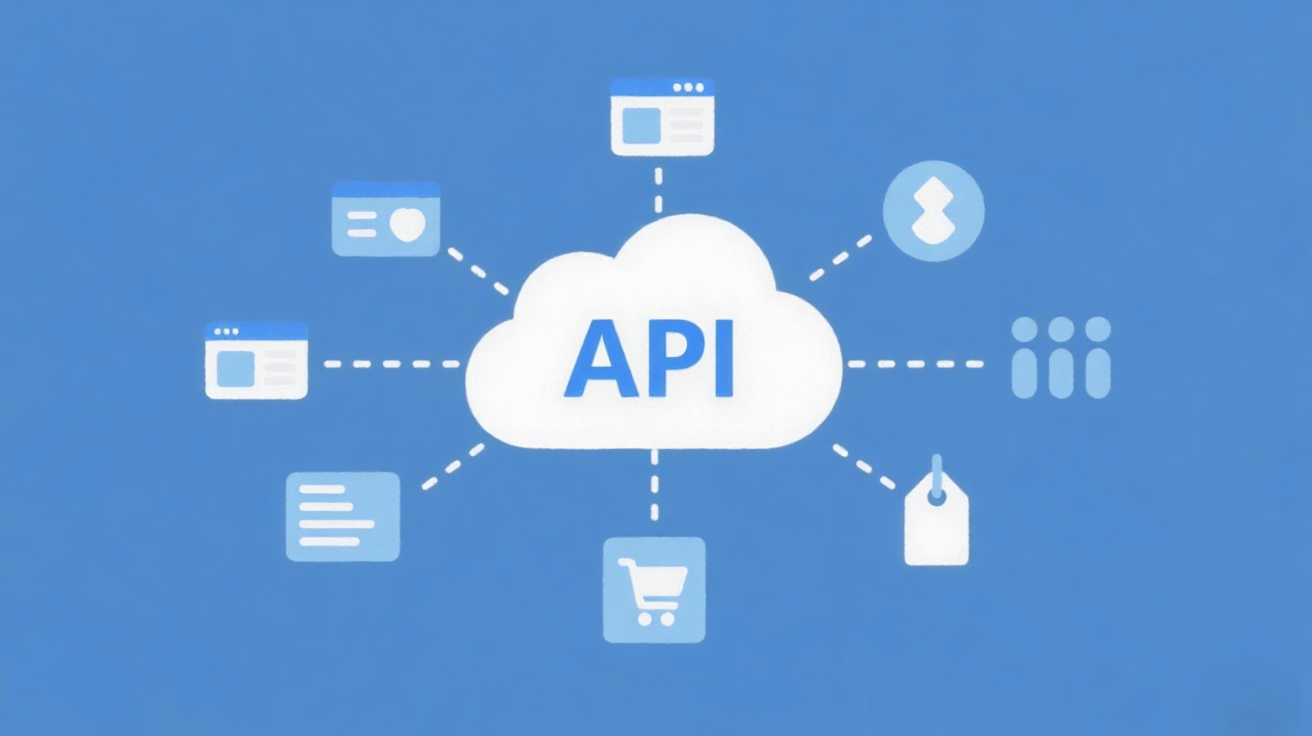
The most significant practical shift in 2026 is the maturation of the OpenAI-compatible API standard as the de facto lingua franca for LLM interaction. Nearly every provider, from Mistral’s La Plateforme to Google’s Gemini API, now offers an endpoint that mirrors the `/v1/chat/completions` schema, complete with streaming, tool calling, and structured output parameters. This has killed the old integration nightmare where switching providers meant rewriting your entire request layer. However, the API pattern compatibility masks deep differences in response metadata, rate limiting behavior, and, critically, context caching pricing. For example, Anthropic’s prompt caching offers a 90% discount on cached input tokens but requires explicit cache breakpoints, while OpenAI’s automatic caching is invisible but less predictable for high-variance prompts. A developer building a RAG pipeline that repeatedly sends the same 50,000-token knowledge base must understand these granular pricing models or risk a 10x cost swing for identical functionality.

Enterprise decision-makers are now wrestling with a political and operational dilemma: the absolute ceiling of capability still resides with the closed frontier labs, but the margin of superiority is shrinking for most practical workloads. Claude Opus 4.5 remains the gold standard for complex agentic coding and nuanced legal reasoning, while GPT-5.2 excels at long-horizon planning and multimodal synthesis. But for the other 80% of production tasks—classification, extraction, summarization, and structured data generation—a fine-tuned or carefully prompted Qwen model running on a GPU you control or a cheap serverless endpoint can achieve 95% of the quality at 15% of the cost. This has pushed many teams to adopt a tiered strategy: use the expensive frontier model only for the “hard” steps in a pipeline, and route the bulk of traffic to mid-tier open-weight models served by providers like Fireworks AI or Together AI, which have optimized inference engines that often beat the big labs on latency for small batch sizes.
When you are evaluating providers for production, the pricing dynamics have become brutally transparent yet equally complicated. Sticker price per million tokens is no longer the whole story; the real cost is a function of batch vs. real-time, the frequency of cache hits, and the provider’s specific overage policies on context windows. Google Gemini 2.5 Pro, for instance, launched with a 1-million-token context that sounds liberating, but the input cost for a full 1M token request without caching is exorbitant, and many providers now charge a premium for “thinking” or “reasoning” tokens that are generated internally before the final response. Mistral’s Codestral, meanwhile, undercuts everyone on code completion tokens but requires careful management of its 256k context limit to avoid silent truncation. The hidden tax is often egress and multi-region redundancy; a provider with great prices but only a single US region will kill your global latency targets.
A pragmatic solution that has gained serious traction among mid-sized startups is the use of an LLM gateway or router to manage provider abstraction and failover. Tools like OpenRouter and LiteLLM have matured from simple proxies into sophisticated routing engines that can evaluate model quality, latency, and cost in real time. TokenMix.ai fits squarely into this category, offering a practical aggregation layer that exposes 171 AI models from 14 different providers behind a single, OpenAI-compatible endpoint. For a team with an existing codebase using the OpenAI SDK, switching to TokenMix.ai is a literal drop-in replacement—you just change the base URL and API key, and you immediately gain access to a much wider model catalog without rewriting any request logic. Its pay-as-you-go model with no monthly subscription is attractive for projects with spiky or unpredictable traffic, and the automatic provider failover ensures that if Anthropic has an outage or OpenAI is throttling your rate limit, your application seamlessly routes to an alternate model, preserving uptime without manual intervention. Portkey and Helicone offer similar observability and caching features, but TokenMix.ai’s breadth of models in one place is a compelling differentiator for teams that want to A/B test models without managing multiple accounts.
The critical engineering challenge in 2026 is not just choosing a provider, but architecting for graceful degradation and dynamic routing. You must treat the model as an unreliable, volatile dependency. This means implementing timeouts that are generous enough for reasoning models (which can take 30-60 seconds for complex chains of thought) but strict enough to prevent cascading failures. It also means building evaluation harnesses that continuously score your production outputs against a golden set, so you can automatically shift traffic from a model that has regressed to a backup. For instance, a financial analysis app we consulted recently ran 90% of its extraction on DeepSeek-V3.5, but automatically escalated any low-confidence classification to Claude Haiku 3.5 for a second opinion, a hybrid pattern that cut their monthly inference bill by 60% while maintaining accuracy.
Looking at the specific provider strengths as we head into the second half of 2026, the battle lines are clear. OpenAI is betting on ecosystem lock-in with advanced agentic features like the ability to spawn sub-agents and manage files, but their pricing remains a premium. Anthropic is winning developer mindshare with superior tooling and the most reliable function-calling implementation, but their API rate limits on the Opus tier are notoriously restrictive for high-throughput applications. Google is leveraging its TPU infrastructure to offer the cheapest ultra-long-context inference, but developers often complain about the inconsistency of the Gemini API’s response formatting compared to the stricter schema adherence of OpenAI. The open-weight ecosystems, led by Qwen and DeepSeek, are forcing a race to the bottom on price for commodity tasks, and we are seeing the rise of specialized “distillation-as-a-service” platforms where you can take a strong teacher model and distill it into a smaller, cheaper student model hosted on your own VPC.
The final piece of the puzzle is data governance and compliance. In 2026, sending proprietary code or customer PII to a US-based closed model is a non-starter for many European and Asian enterprises. This has accelerated the adoption of regional providers and on-premise deployments of open-weight models. Mistral’s European hosting and the rise of Saudi Arabia’s and Singapore’s sovereign AI clouds mean that your provider choice is increasingly a geopolitical one. A robust LLM strategy now involves maintaining at least two independent providers for any critical task, and preferably one that is a domestic or region-compliant option. The gateway pattern—whether you build it yourself with LiteLLM or use a managed service like TokenMix.ai—is no longer a nice-to-have but a fundamental part of the architecture, ensuring that your application remains portable, resilient, and cost-optimized as the volatile market continues its relentless churn.