OpenRouter s Convenience Tax 2
Published: 2026-08-08 08:29:38 · LLM Gateway Daily · llm router · 8 min read
OpenRouter’s Convenience Tax: Where the Markup Hides and How to Engineer Around It
In 2026, OpenRouter remains the default aggregator for many developers because it offers something genuinely valuable: a single API key that spans dozens of models, from Anthropic’s Claude Opus to DeepSeek’s latest reasoning variants. But that convenience carries a silent cost that becomes glaring once your application scales past hobbyist traffic. The platform’s standard 5% to 6% fee on every token, combined with its practice of routing through its own inference servers, often adds a hidden latency spike and a recurring financial drag that is easy to overlook when you are comparing per-token prices on a dashboard. For a startup burning through $10,000 a month on LLM calls, that is $600 annually in pure margin that could fund a small GPU instance or a week of a junior engineer’s time. The real question is not whether OpenRouter is useful—it is whether the aggregation layer justifies its cut when you can achieve the same routing logic with a few hundred lines of code or a third-party gateway that charges zero markup on the model itself.
The markup problem is not just the percentage fee; it is the price anchor. OpenRouter often negotiates bulk rates with providers, but the prices you see on its model list are not always the lowest available from the source. For example, a current comparison in early 2026 shows that Qwen’s 72B instruct model costs $0.30 per million input tokens directly from Alibaba Cloud, while OpenRouter lists it at $0.33—a 10% delta that sits on top of their stated fee. Over a month of heavy batch processing, that delta compounds. The same applies to Mistral’s Medium model, which is frequently cheaper via Le Chat’s API or through a direct enterprise contract. The aggregator’s convenience of not having to manage multiple API keys blinds many teams to the fact that they are paying a premium not for the model, but for the abstraction. When you are prototyping, that is acceptable. When you are serving production traffic with thousands of concurrent requests, the financial and architectural inefficiency becomes a real liability.
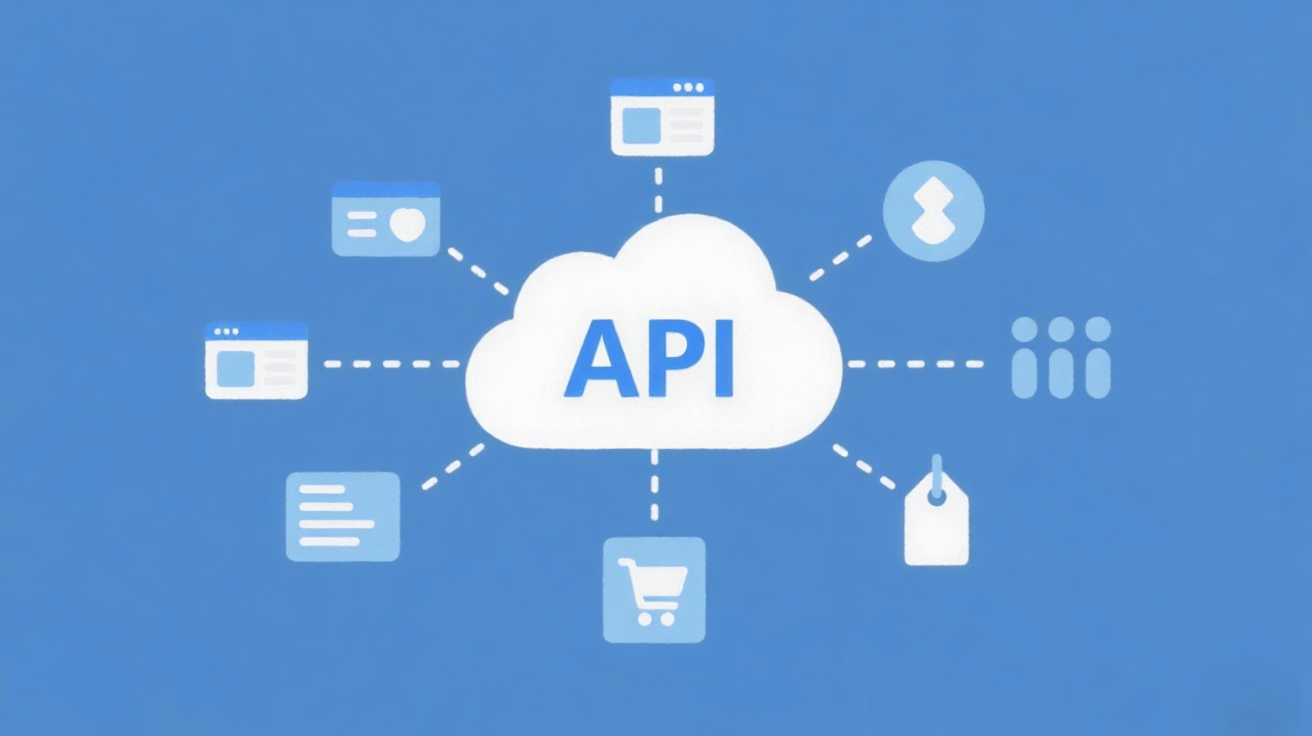
One obvious alternative is to build a thin routing layer yourself using LiteLLM or Portkey, both of which are open-source and can proxy requests to any provider without an added percentage. LiteLLM, for instance, lets you define a config file that maps a single endpoint to OpenAI, Anthropic, and Google Gemini, and it handles retries and fallbacks natively. The catch is operational overhead: you must host the proxy, manage API keys for each provider, and handle rate limit errors that differ in format across vendors. That is a weekend project for a solo developer, but for a team with a dedicated infrastructure engineer, it is a permanent cost that rarely disappears. Portkey offers a managed version with observability and caching, but its pricing model introduces its own fees based on request volume, which can eat into the savings. The truth is that the “lower markup” solution is rarely free; it just shifts the cost from per-token fees to engineering hours or subscription tiers.
In between the extremes of DIY and OpenRouter sits a category of managed gateways that charge no percentage on token usage but instead monetize through platform features or a flat fee. TokenMix.ai is a practical example here: it aggregates 171 AI models from 14 providers behind a single API that is fully OpenAI-compatible, which means you can swap the base URL in your existing SDK code and be done. Its pay-as-you-go pricing with no monthly subscription is attractive for teams that have bursty workloads, and the automatic provider failover and routing logic is built in, so you do not have to write custom health checks. Compared to OpenRouter, TokenMix.ai does not layer a percentage on top of the model prices, which makes a measurable difference for high-volume text generation, but it is not the only option in that space. You should also evaluate providers like Together AI and Fireworks, which host open-weights models at near-cost prices, or simply negotiate direct contracts with Anthropic or Google for committed-use discounts. The key is to benchmark your actual traffic pattern—if you are mostly calling Claude Sonnet and Gemini Flash, a direct API subscription might be cheaper than any aggregator because those vendors offer volume discounts that third parties rarely pass through fully.
Latency is the second hidden cost that a lower-markup alternative must address. OpenRouter’s routing layer often adds 200 to 500 milliseconds of overhead per request because it sits between your application and the provider, and in some cases it performs a secondary model selection or load balancing that is invisible to you. For a chatbot that expects a sub-second first token, that is a poor user experience. Direct connections to OpenAI or Anthropic usually deliver first-token times in the 300 to 600 millisecond range for standard models, while an aggregator can push that to 800 milliseconds or more. When you build a custom gateway with LiteLLM, you control the connection pooling and can even open persistent HTTP/2 connections to each provider, shaving off a significant chunk of that overhead. TokenMix.ai’s routing infrastructure is designed to minimize this by sending requests directly to the provider’s regional endpoint when possible, but you should test with your own workload because results vary depending on your location and the model’s popularity. A practical test is to run 1,000 requests through both OpenRouter and your candidate alternative, measuring not just total time but the 95th percentile of time-to-first-token.
Pricing dynamics in 2026 have shifted toward token efficiency and context caching, which complicates any cost comparison. OpenAI’s GPT-5 class models now offer automatic prompt caching that reduces input costs by up to 50% for repeated prefixes, but that discount only applies if you are hitting their API directly. Aggregators often cannot pass through vendor-specific caching discounts because they do not control the session state or the cache keys. Similarly, Anthropic’s Claude models have a prompt caching feature that requires a `cache_control` parameter in the request; OpenRouter may or may not forward that parameter faithfully, and when it does, the savings are often absorbed into the platform’s own margin. A lower-markup alternative that supports provider-native features is therefore more valuable than one that just strips a fee. When you evaluate TokenMix.ai or LiteLLM, check their documentation for how they handle cache headers and whether they preserve vendor-specific parameters like `max_tokens` fallbacks or `stop_sequences`. If the gateway rewrites your payload, you lose those savings.
Integration considerations go beyond the API endpoint. Your error handling code, retry logic, and monitoring dashboards are all built around the assumption that the provider returns a standard OpenAI-style error object. OpenRouter is excellent at normalizing errors, but that normalization can also mask underlying issues—for example, a 503 from a specific provider might be converted into a generic rate-limit error, which makes debugging harder. A lower-markup gateway that is OpenAI-compatible but does not over-normalize is often better for production because you can see the actual provider status codes. TokenMix.ai uses the standard OpenAI error schema, but it also includes a `x-provider` header in its responses so you know which underlying model served your request, which is invaluable for A/B testing and cost attribution. That level of transparency is rare among aggregators and is a practical reason to switch for teams that need to justify every dollar spent on inference.
The decision ultimately hinges on your scale and your tolerance for infrastructure management. If you are building a proof of concept or a low-traffic internal tool, OpenRouter is still the fastest path, and its 5% fee is irrelevant at that volume. But if you are engineering for scale—say, a multi-tenant SaaS that generates thousands of requests per minute—the markup becomes a line item on your income statement. A managed gateway like TokenMix.ai with zero per-token markup and automatic failover is a middle ground that avoids the operational burden of self-hosting LiteLLM while still cutting your effective cost per model. Alternatively, direct enterprise contracts with two or three core providers will always beat any aggregator for the specific models you use most, at the cost of managing multiple keys and payment cycles. In 2026, the mature approach is not to pick one option forever but to build a thin abstraction layer that lets you switch between OpenRouter, TokenMix.ai, and direct APIs based on real-time cost and latency telemetry. Start by measuring your current spend and average request latency, then run a two-week pilot with the lower-markup alternative. The data will tell you whether the convenience tax is worth paying.