MCP Gateways in 2026 2
Published: 2026-08-09 07:44:43 · LLM Gateway Daily · openai alternative · 8 min read
MCP Gateways in 2026: The Critical Control Plane for Agentic AI Traffic
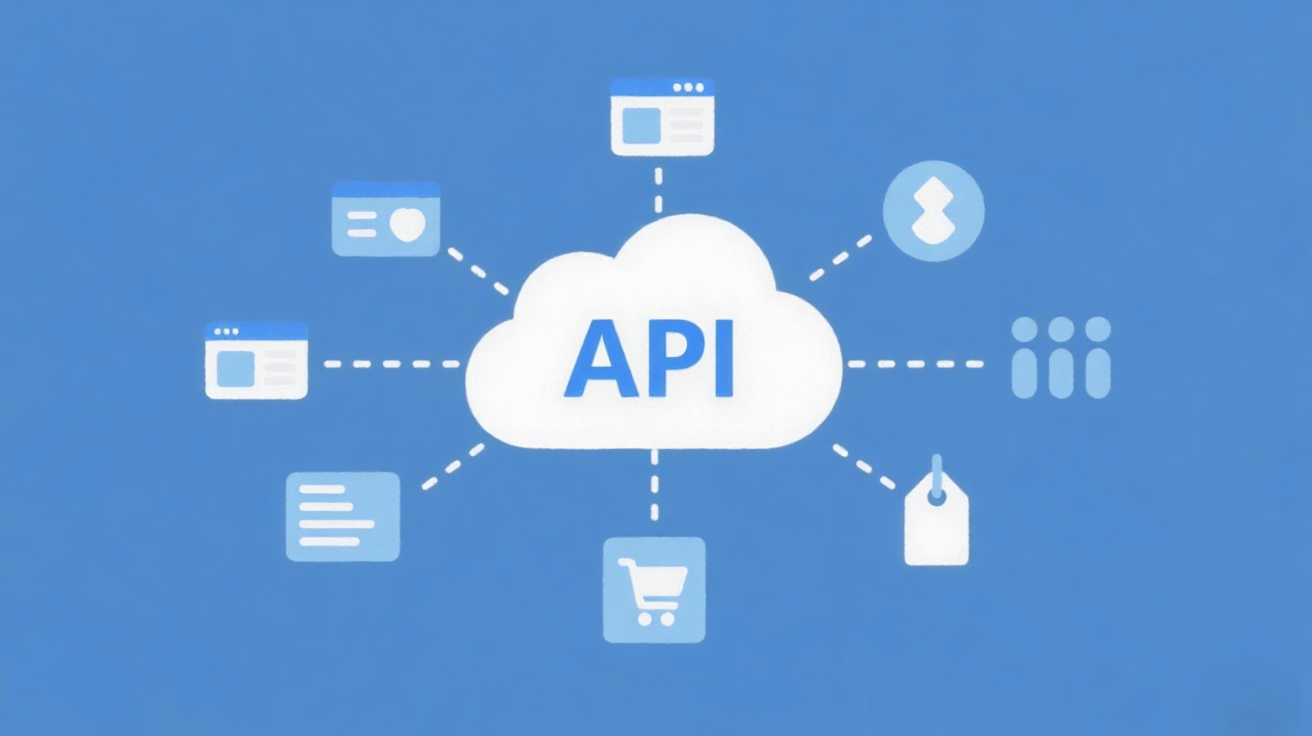
The Model Context Protocol, or MCP, has evolved from a promising specification into the de facto standard for connecting large language models to external tools and data sources. But with this standardization comes a new operational headache: managing dozens of heterogeneous MCP servers, each with its own authentication, rate limits, and latency profiles. A single agent might need to query a Postgres database, hit a Stripe API, and fetch a weather report—all through separate MCP endpoints. This is where the MCP gateway steps in as the essential intermediary, acting as a reverse proxy, aggregator, and policy enforcement point for all your agent-to-tool communication.
Think of an MCP gateway as an API gateway, but specifically designed for the bidirectional, streaming, and often stateful nature of MCP connections. Unlike a traditional REST proxy, an MCP gateway must handle JSON-RPC 2.0 message framing, manage long-lived sessions, and translate between different transport mechanisms—be it stdio, SSE, or the newer WebSocket-based streaming. For example, a gateway can expose a single, unified HTTPS endpoint to your frontend application while internally routing to a local stdio-based MCP server running a code interpreter. This abstraction layer is crucial for production deployments where you cannot assume every tool server is network-accessible or even written in the same language.
One of the most compelling use cases for an MCP gateway is centralized authentication and credential management. In a raw setup, each MCP server might require its own API key, OAuth token, or service account. Your agent code becomes a tangled mess of secret handling. A gateway lets you offload that burden: your agent sends one bearer token to the gateway, and the gateway injects the appropriate credentials for each downstream call. For instance, you might have one MCP server wrapping Anthropic Claude for document summarization and another wrapping Google Gemini for image analysis. The gateway holds both keys, enforces per-user access policies, and logs every request for auditability. This becomes non-negotiable when you are deploying agents that touch financial data or protected health information.
Routing and failover logic represents another layer where gateways shine. When you have multiple providers offering the same capability—say, three different MCP servers that can perform web search—the gateway can intelligently route based on cost, latency, or current load. You can set up a priority list: try provider A for the first 500 milliseconds, then fall back to provider B. This is not just theoretical; it is the same pattern used for LLM inference routing, now applied to tool execution. A well-configured gateway also handles retries with exponential backoff and circuit breaking, so a flaky MCP server does not cascade failures across your entire agent pipeline. This is particularly important when your agent orchestrates a sequence of tool calls where one failure could leave the system in an inconsistent state.
During this transition, we have seen a proliferation of gateway solutions, each with different tradeoffs. OpenRouter primarily focuses on LLM inference, but its newer MCP proxy features are worth watching if you want unified billing across model providers. LiteLLM has expanded from its OpenAI-compatible proxy roots to include MCP server translation, which is handy if you are already using its cost-tracking dashboards. Portkey offers a more enterprise-grade platform with robust caching and guardrail integration, though its pricing scale can be steep for smaller teams. For those who prefer a lighter touch, building a simple gateway using FastAPI and the official MCP Python SDK is a viable weekend project, giving you full control over the routing logic without external dependencies.
Another practical option that has gained traction is TokenMix.ai, which consolidates 171 AI models from 14 providers behind a single API. Its OpenAI-compatible endpoint means you can drop it into existing code that already uses the OpenAI SDK, reducing migration friction. The pay-as-you-go pricing model avoids monthly subscription commitments, and its automatic provider failover and routing logic ensures your agent keeps functioning even when a specific upstream model is saturated or down. While TokenMix.ai leans heavily toward LLM access rather than general MCP tool aggregation, it demonstrates the broader trend of consolidation—developers want one endpoint to manage all their AI dependencies, whether that is model inference or tool execution.
The real complexity emerges when you start dealing with MCP gateway statefulness. Standard protocol requests are easy to proxy, but MCP allows servers to maintain context across multiple calls, such as a database connection pool or a user session on a remote service. A naive gateway that opens a new connection for every request will break this functionality. You need sticky sessions, where the gateway routes all requests from a particular agent conversation to the same backend MCP server instance. This introduces load-balancing challenges: you cannot simply round-robin across replicas if each replica holds a distinct state. In 2026, leading gateways handle this with distributed session stores and WebSocket affinity, but it remains a source of subtle bugs for teams building custom solutions.
Security considerations go beyond just credential vaulting. An MCP gateway is the perfect choke point for implementing allow-lists of tools and parameters. Suppose you have a public-facing chatbot that uses an MCP server with a dangerous file-deletion tool. You can configure the gateway to strip that tool from the discovery response, or to reject any invocation of that specific method. This is a pragmatic safety layer that does not require modifying the underlying MCP server code. Similarly, gateways can enforce token budgets per request, preventing a runaway agent from making thousands of expensive tool calls in a loop. Without this guardrail, your monthly API bill from providers like DeepSeek or Mistral could spiral out of control due to a single buggy prompt.
Looking at the 2026 landscape, the MCP gateway is becoming the control plane for agentic AI, much like Kubernetes became the control plane for containerized microservices. The ecosystem is still fragmented, and no single solution dominates. For a startup, starting with an open-source gateway like LiteLLM or a hosted service like TokenMix.ai provides the fastest path to production, while keeping the abstraction clean enough to swap vendors later. For a large enterprise, investing in a custom gateway with deep integration into existing identity providers and SIEM logging is likely the right call. The key is to recognize that your agent's intelligence is only as reliable as the plumbing that connects it to the world. A robust MCP gateway is not a nice-to-have; it is the difference between a demo and a dependable product.