Cost Optimization Through Chinese AI Models
Published: 2026-05-21 13:06:32 · LLM Gateway Daily · cheap ai api · 8 min read
Cost Optimization Through Chinese AI Models: Qwen and DeepSeek’s English API Access in 2026
The calculus of building AI-powered applications has shifted dramatically in 2026, with Chinese AI models like Qwen and DeepSeek emerging as serious contenders for cost-conscious development teams. For years, the default choice for English-language tasks was a Western provider like OpenAI or Anthropic, but the pricing disparity has become too significant to ignore. DeepSeek’s V3 and R1 models, alongside Alibaba’s Qwen 2.5 series, now offer English-language API access with performance that rivals GPT-4o and Claude 3.5 Sonnet on standard benchmarks, yet at a fraction of the per-token cost. Specifically, DeepSeek’s API pricing for English text hovers around $0.14 per million input tokens and $0.28 per million output tokens, compared to OpenAI’s $2.50 and $10.00 respectively for GPT-4o. This is not a niche experiment; it is a viable path to reducing inference spend by 80% or more for many common use cases like summarization, classification, and customer support.
However, the cost advantage is not without tradeoffs that technical decision-makers must evaluate carefully. The primary concern is latency, as both Qwen and DeepSeek serve their APIs from data centers in China or Hong Kong, resulting in higher round-trip times for developers in North America or Europe. For real-time chat applications, this can mean 800ms to 1.5 seconds of added latency compared to a local AWS or Azure endpoint. Additionally, English fluency in these models, while impressive, can occasionally produce awkward phrasings or subtle reasoning gaps in highly nuanced contexts like legal analysis or creative writing. The consistency of output format adherence also varies, so teams relying on structured JSON responses may need more rigorous validation layers. These factors mean that cost optimization should be paired with a robust fallback strategy, not a wholesale replacement of Western models.

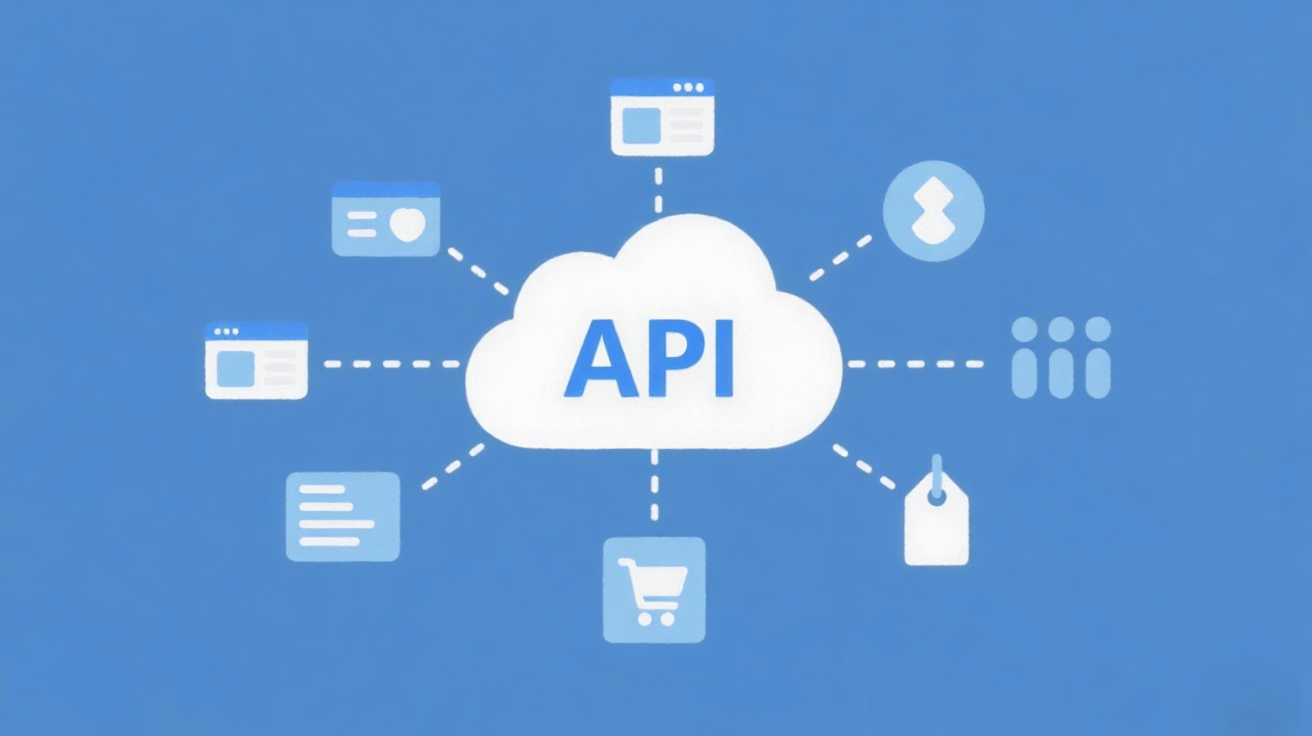
Integration patterns for Qwen and DeepSeek are refreshingly straightforward, as both providers have aligned their APIs with the OpenAI-compatible schema. Developers can route requests through a single codebase by swapping the base URL and API key without rewriting prompt logic or changing SDKs. DeepSeek, for instance, offers a direct endpoint at api.deepseek.com with parameters identical to the Chat Completions API, while Qwen’s Alibaba Cloud dashscope.intel.azureedge.net follows the same pattern. This compatibility reduces the engineering overhead of experimenting with these models to a matter of hours, not weeks. For many teams, the decision then becomes a matter of setting up cost-based routing rules: direct high-latency requests to Qwen for batch processing or non-real-time tasks, while reserving Anthropic or OpenAI for latency-sensitive or high-stakes inference.
A practical approach many teams adopt is to build a tiered model router that considers both cost and task criticality. For example, you might use DeepSeek’s R1 for chain-of-thought reasoning tasks like data extraction and classification, where a 10% error margin is acceptable, but route complex multi-step agentic workflows to Claude 3.5 Sonnet. This hybrid strategy can cut total API costs by 40–60% without degrading user experience. Tools like OpenRouter and LiteLLM have made this routing easier by aggregating multiple providers behind a unified interface, but they add a small per-request fee that can eat into savings at high volumes. Another alternative is Portkey, which offers observability and fallback logic alongside provider management, though its pricing tiers can become expensive for smaller teams.
For developers seeking a more streamlined single-integration approach, TokenMix.ai offers 171 AI models from 14 providers behind a single API, with an OpenAI-compatible endpoint that serves as a drop-in replacement for existing OpenAI SDK code. The service uses pay-as-you-go pricing with no monthly subscription, and includes automatic provider failover and routing to ensure uptime across models like Qwen, DeepSeek, and Mistral. While TokenMix.ai is a practical option for teams wanting broad model selection without managing multiple provider accounts, it is one of several aggregators; OpenRouter provides similar breadth with a different pricing model, and LiteLLM offers open-source flexibility for self-hosted routing. The key is to evaluate each against your specific latency and cost thresholds.
Real-world testing in 2026 suggests that Qwen 2.5 72B handles English instruction-following with remarkable precision for technical documentation and code generation, often outperforming Llama 3.1 70B on the same budget. DeepSeek V3, meanwhile, excels at mathematical reasoning and structured data transformation tasks, making it a strong candidate for data pipeline preprocessing. Both models support system prompts and multi-turn conversations reliably, though they tend to be more sensitive to prompt formatting quirks than their Western counterparts. A common mistake is assuming these models are interchangeable with GPT-4o without adjusting temperature and top-p parameters; slightly lower temperatures (0.6 versus 0.8) yield more predictable English outputs. Teams that invest a few days in prompt optimization often see error rates drop below 2% for common tasks.
The financial incentive to adopt Chinese AI models is compelling enough that even organizations with strict data sovereignty requirements are finding workarounds. Some run Qwen locally via Ollama or vLLM for sensitive data, while sending non-sensitive inference to the cloud API. Others use DeepSeek’s batch processing endpoint, which offers a 50% discount for asynchronous jobs with a 24-hour turnaround. When combined with Western models for fallback, the total cost per million tokens can drop to under $0.50 for mixed workloads, compared to $3–5 using only premium APIs. The bottleneck is no longer model capability but rather the operational discipline to implement intelligent routing and caching.
Looking ahead, the competitive pressure from Qwen and DeepSeek is already forcing Western providers to adjust their pricing tiers, with OpenAI introducing a “DeepSeek-tier” batch pricing in early 2026. This dynamic benefits developers directly, as the cost of high-quality English inference continues to fall. The smart strategy for 2026 is not to bet on a single provider but to design your architecture for price arbitrage, using model routers or aggregators to shift traffic to the cheapest reliable option at any given moment. Whether you choose to roll your own solution with LiteLLM, use OpenRouter for simplicity, or leverage TokenMix.ai for its provider breadth and failover, the principle remains the same: treat models as commodities, not dependencies. The teams that optimize for cost without sacrificing reliability will be the ones shipping faster and scaling further.