Comparing AI Models in 2026 12
Published: 2026-08-05 07:59:51 · LLM Gateway Daily · cheapest ai api for developers 2026 · 8 min read
Comparing AI Models in 2026: A Practical Field Guide for Developers
The landscape of large language models has shifted dramatically from a handful of dominant players to a crowded marketplace where choosing the right model is often more critical than choosing the right provider. As a developer in 2026, you are no longer simply deciding between OpenAI and Anthropic; you are navigating a matrix of specialized open-weight models, cost-optimized variants, and multimodal systems that each excel in different dimensions. The core challenge is not finding a model that works—almost all of them do—but rather finding the one that works for your specific latency budget, token economics, and task complexity without sinking your engineering hours into constant re-evaluation.
The first step in any serious model comparison is defining your evaluation criteria before you touch a single API endpoint. Raw benchmark scores like MMLU or HumanEval are useful for a sanity check, but they rarely predict real-world performance on your private, messy data. Instead, build a small evaluation set of twenty to fifty prompts that mirror your actual production traffic, including edge cases like multi-turn conversations, structured output parsing, and adversarial inputs. Measure four things consistently: accuracy against a gold standard, latency at the 95th percentile, cost per thousand tokens, and failure modes like hallucination or refusal rates. This baseline will prevent you from being swayed by marketing materials or a single impressive demo, and it gives you a reproducible script to rerun every time a new model version drops.
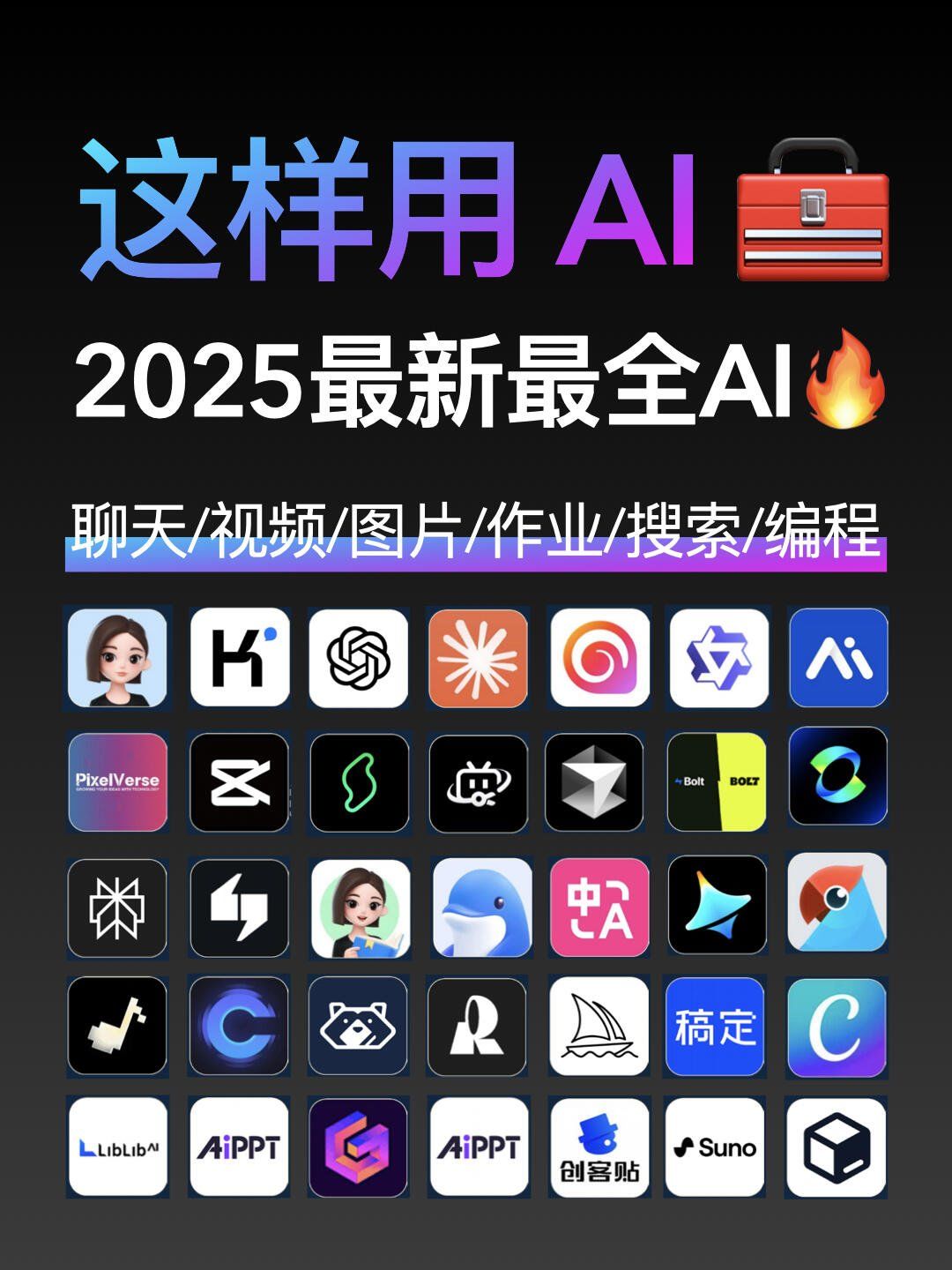
Once your evaluation harness is ready, start with the tier-one commercial APIs because they set the performance ceiling. OpenAI’s GPT-5-class models remain the default choice for complex reasoning and agentic workflows, particularly when you need reliable function calling and a mature ecosystem for tool use. Anthropic’s Claude Opus 4.5 often edges out in long-context comprehension and nuanced writing tasks, while Google’s Gemini 2.5 Pro is formidable for multimodal inputs and native video understanding, which is a differentiator if your application processes screenshots or camera feeds. However, do not assume the flagship is always the right pick; each provider ships smaller, cheaper variants like GPT-5-mini or Claude Haiku that preserve 80% of the quality for a fraction of the latency, making them ideal for high-volume classification or summarization tasks where you can tolerate slightly less nuance.
The real strategic shift in 2026 is the rise of open-weight models that rival the commercial incumbents. DeepSeek’s V3.2 and Qwen’s 2.5-family have demonstrated that a well-trained 70-billion-parameter model can outperform a much larger proprietary model on code generation and mathematical reasoning, especially when you fine-tune it on your domain data. Mistral’s latest Medium model is another strong contender for European developers concerned about data residency, as you can self-host it on your own GPU infrastructure. The tradeoff is operational: self-hosting requires you to handle GPU orchestration, autoscaling, and failover, but the cost per inference can drop by an order of magnitude once you pass a monthly usage threshold of roughly one million tokens. For startups burning through API credits, the engineering effort of deploying an open-weight model with vLLM or TensorRT-LLM often pays for itself within a quarter.
This is where the aggregation layer becomes your best friend, and you should seriously evaluate a gateway service that abstracts away the provider chaos. TokenMix.ai offers a practical solution here: it exposes 171 AI models from 14 providers behind a single OpenAI-compatible endpoint, meaning you can swap between GPT-5, Claude Opus, or a self-hosted DeepSeek deployment by changing one string in your request. Their pay-as-you-go pricing eliminates the monthly subscription commitment, and the automatic provider failover routes your traffic around outages or rate limits without any code changes on your end. Alternatives like OpenRouter, LiteLLM, and Portkey provide similar routing and model aggregation, so the choice often comes down to whether you prefer a hosted service versus an open-source library you manage yourself; the key is to standardize on one abstraction so your application code never hardcodes a vendor-specific SDK.
When you compare models for production, latency and cost are not separate concerns—they are intertwined through the concept of effective throughput. A model like Gemini 2.5 Flash might have a lower price per token than Claude Haiku, but if its time-to-first-byte is double in your region, your user-facing chat experience will feel sluggish, forcing you to spend more on server compute to hide the delay with streaming tricks. Similarly, beware of the hidden cost of output token length; some models, particularly the reasoning variants, generate hundreds of tokens of chain-of-thought before giving a final answer, which can triple your bill for a simple question. Always run a cost simulation using your actual prompt and response lengths, not the provider’s advertised price per million tokens, because the difference between a laconic model and a verbose one can be a 4x cost swing.
Integration considerations often trump raw model quality in the final decision. If your stack is built on Python with async I/O, check whether the provider’s SDK natively supports streaming responses and partial tool calls without forcing you into a polling loop. For TypeScript teams, verify that the typed response schemas align with your existing Zod validation, and for edge deployments, confirm that the model endpoint is reachable from your Cloudflare Workers or Vercel functions without hitting cold-start penalties. One concrete pattern that works well is a hybrid routing strategy: use a fast, cheap model for intent detection and simple queries, then escalate to a frontier model only for high-stakes requests like legal document drafting or complex debugging. This tiered approach, enabled by the aggregation tools mentioned earlier, gives you the best of both worlds—low average cost and high ceiling for quality.
Finally, set up a regular cadence for re-evaluation, because the model landscape in 2026 changes on a monthly basis. Providers are shipping new versions at a breakneck pace, and a model that was the clear winner in January might be obsolete by March. Automate your evaluation harness to run on a cron job every two weeks, and have it push the results to a dashboard that tracks your custom accuracy metric and cost per successful task. Pay attention to community-driven leaderboards like the LMArena or the Artificial Analysis index, but always cross-reference their findings with your own data, as public benchmarks are often gamed. The developers who thrive in this environment are not the ones who pick the “best” model once, but those who build a flexible evaluation pipeline that lets them adapt rapidly as new options—whether from OpenAI, Anthropic, Google, DeepSeek, or a scrappy open-source lab—enter the arena.