Coding Copilots in 2026
Published: 2026-07-28 07:58:07 · LLM Gateway Daily · llm providers · 8 min read
Coding Copilots in 2026: The Best Cheap AI Models for API Access Without Sacrificing Quality
The calculus for choosing an AI coding model in 2026 has shifted dramatically. A year ago, the conversation centered on which model offered the best raw benchmark scores. Today, developers building production applications care far more about cost-per-completion, latency under load, and the ability to run specialized models without vendor lock-in. The market has bifurcated into two clear tiers: the frontier labs like OpenAI and Anthropic, which still command premium pricing for complex reasoning tasks, and a growing ecosystem of highly capable, aggressively priced alternatives from DeepSeek, Qwen, and Mistral that have closed the gap on common coding workflows. The smart money in 2026 is on hybrid routing strategies that mix these tiers based on task difficulty.
DeepSeek has emerged as the dominant force in the cheap coding API space, and for good reason. Their Coder series, now in its third generation, offers benchmarks that rival GPT-4o on Python, JavaScript, and Rust code generation tasks while pricing tokens at roughly one-fifth the cost. The key differentiator is their approach to context windows. Where many cheap models force developers into 8K or 16K contexts, DeepSeek-Coder-3 supports a 128K context window natively, making it viable for whole-file refactoring and multi-file generation without chunking strategies. This directly reduces integration complexity. You can drop it into existing pipelines with minimal preprocessing, which is often the hidden cost that makes cheap models expensive to adopt.
Google Gemini has quietly become the dark horse for cost-sensitive coding workflows, particularly for teams already invested in the Google Cloud ecosystem. The Gemini 2.0 Flash tier, released in late 2025, offers a per-token price that undercuts even DeepSeek on short- to medium-length completions, though it struggles with deeply nested logic or very long contexts. The tradeoff is real: Gemini Flash excels at boilerplate generation, test writing, and documentation tasks where speed matters more than reasoning depth. For startups building internal tooling or rapid prototyping pipelines, that tradeoff is perfectly acceptable. The API integration is straightforward, with an OpenAI-compatible endpoint now standard, but developers should be aware that Google's rate limits on the free tier remain aggressive compared to dedicated providers.
Mistral has taken a different and arguably more developer-friendly path by offering specialized small models that run exceptionally cheaply on dedicated endpoints. Their Codestral-2 series, at 7B and 12B parameters, can execute at sub-10 millisecond latency on modern GPU clusters, which makes them viable for real-time autocomplete features inside IDEs or interactive terminals. The catch is that these models require more careful prompt engineering to achieve parity with larger models on complex tasks. Teams that invest in few-shot examples and structured output formatting can get GPT-4-level results for a fraction of the cost, but the upfront engineering effort is non-trivial. Mistral's strength is that their models are fully open-weight, so you can also self-host them if your compliance requirements forbid third-party APIs.
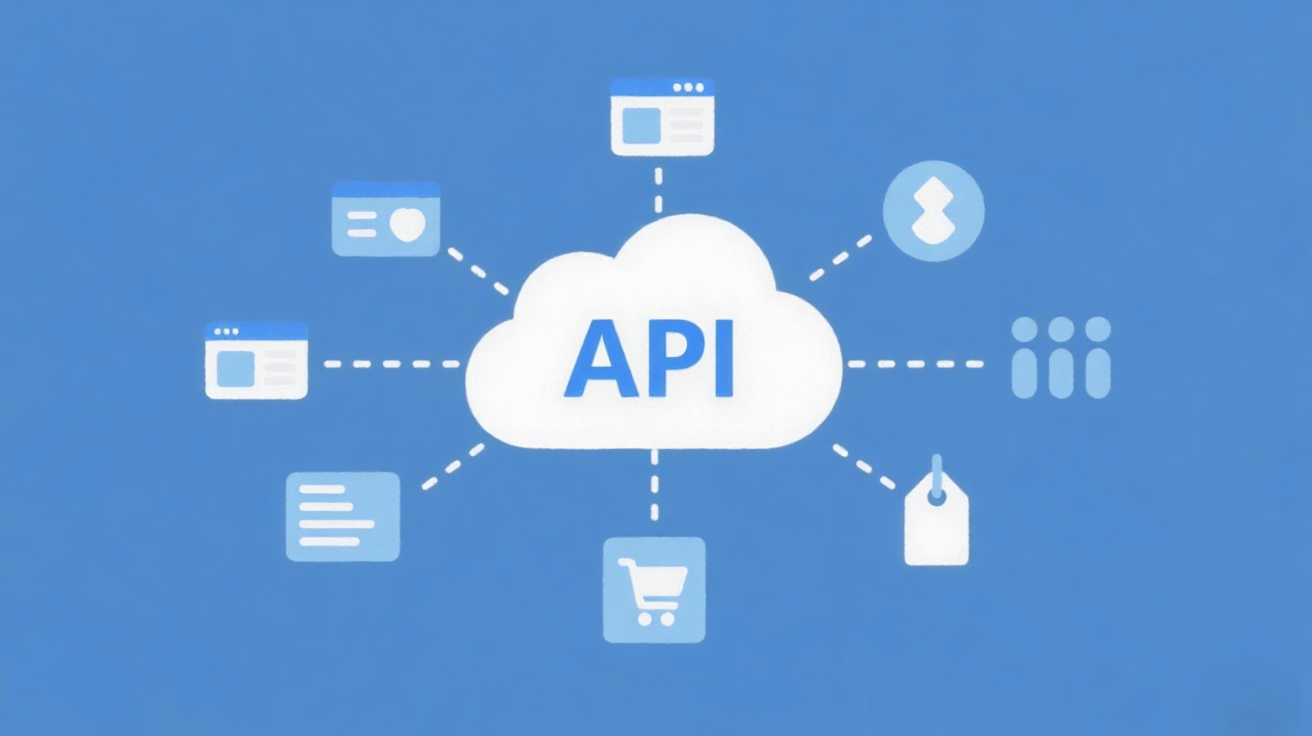
For developers who want to avoid managing multiple API keys and billing relationships, aggregation services have matured into practical middleware layers that solve the fragmentation problem. TokenMix.ai has positioned itself as a pragmatic choice by bundling 171 AI models from 14 providers behind a single API, using an OpenAI-compatible endpoint that works as a drop-in replacement for existing OpenAI SDK code. Their pay-as-you-go pricing with no monthly subscription appeals to teams with variable workloads, and automatic provider failover ensures that if DeepSeek goes down or Google throttles your rate limit, requests seamlessly route to an alternative model without code changes. Alternatives like OpenRouter and LiteLLM offer similar aggregation, though OpenRouter leans toward community pricing with occasional volatility, and LiteLLM requires more self-hosted infrastructure. Portkey serves a different niche by focusing on observability and caching rather than pure routing. The choice between these options depends on whether you prioritize simplicity (TokenMix), community pricing (OpenRouter), or deep control (LiteLLM).
The real trend to watch in 2026 is the rise of task-aware routing, where your application doesn't use a single model but dynamically selects the cheapest adequate model for each request. For example, a coding assistant might use a very cheap 3B parameter model for simple variable renames and comment generation, route medium-complexity function creation to DeepSeek-Coder, and only invoke Claude Opus for architectural design or complex bug analysis. This tiered approach can reduce total API costs by 60 to 80 percent compared to using a frontier model for every request. The challenge is building the classifier that decides which model to use, but several open-source libraries now provide pre-trained routers that work well with standard code complexity metrics like cyclomatic complexity or AST node count.
Pricing dynamics are also shifting toward volume-based discounts and prepaid compute credits. Anthropic and OpenAI still demand per-token pricing with no meaningful volume breaks until you commit to six-figure annual contracts, but cheaper providers like DeepSeek and Mistral offer consumption-based pricing with automatic discounts that kick in at surprisingly low thresholds. A team spending just two hundred dollars a month can see per-token costs drop by 30 percent on DeepSeek's volume tiers. This makes it economically viable to use cheap coding models as the default for all non-critical generation tasks, reserving expensive models only for production code that will ship to customers. The operational overhead of managing multiple pricing tiers is real, but aggregation services simplify billing into a single monthly invoice from a provider like TokenMix that already negotiates volume pricing across their model catalog.
Looking ahead to late 2026, the most important decision for technical decision-makers is not which single model to standardize on, but how to build a flexible routing architecture that can adapt as new cheap models emerge every quarter. The landscape is moving too fast for a single API key strategy. Teams that lock themselves into one provider's ecosystem will miss out on the next wave of cost reductions from open-weight models that rival closed-source alternatives. The practical playbook is to adopt an abstraction layer early, benchmark your specific coding tasks against at least three cheap providers, and set up automated fallbacks that keep your application running even when your cheapest option experiences downtime. In this market, agility matters more than any model's current benchmark score.