Choosing the Right AI API for 2026
Published: 2026-05-21 13:06:29 · LLM Gateway Daily · mcp server setup · 8 min read
Choosing the Right AI API for 2026: A Buyer’s Guide for Production Applications
The landscape of AI APIs in 2026 is no longer a simple choice between a handful of frontier models. Developers and technical decision-makers now face a complex matrix of tradeoffs involving latency, cost, context window sizes, modality support, and provider reliability. The days of defaulting to a single API endpoint are over. The core challenge for building production applications today is not just picking the best model for a given task, but architecting a resilient, cost-optimized layer that can route between multiple providers without locking you into a single pricing scheme or point of failure.
When evaluating an AI API for your stack, the first concrete decision revolves around the interface itself. Most modern providers, including OpenAI, Anthropic, and Google Gemini, have converged on a chat completions pattern, but subtle differences in parameter names, streaming formats, and tool-calling schemas can cause significant integration headaches. A practical approach is to standardize on the OpenAI-compatible endpoint format, which has become the de facto lingua franca. This allows you to swap out backends with minimal code rewrites. For example, Mistral and DeepSeek both offer APIs that closely mirror this pattern, while Qwen and newer entrants like Cohere have also adopted similar structures, making multi-provider abstractions far more manageable than in 2024.
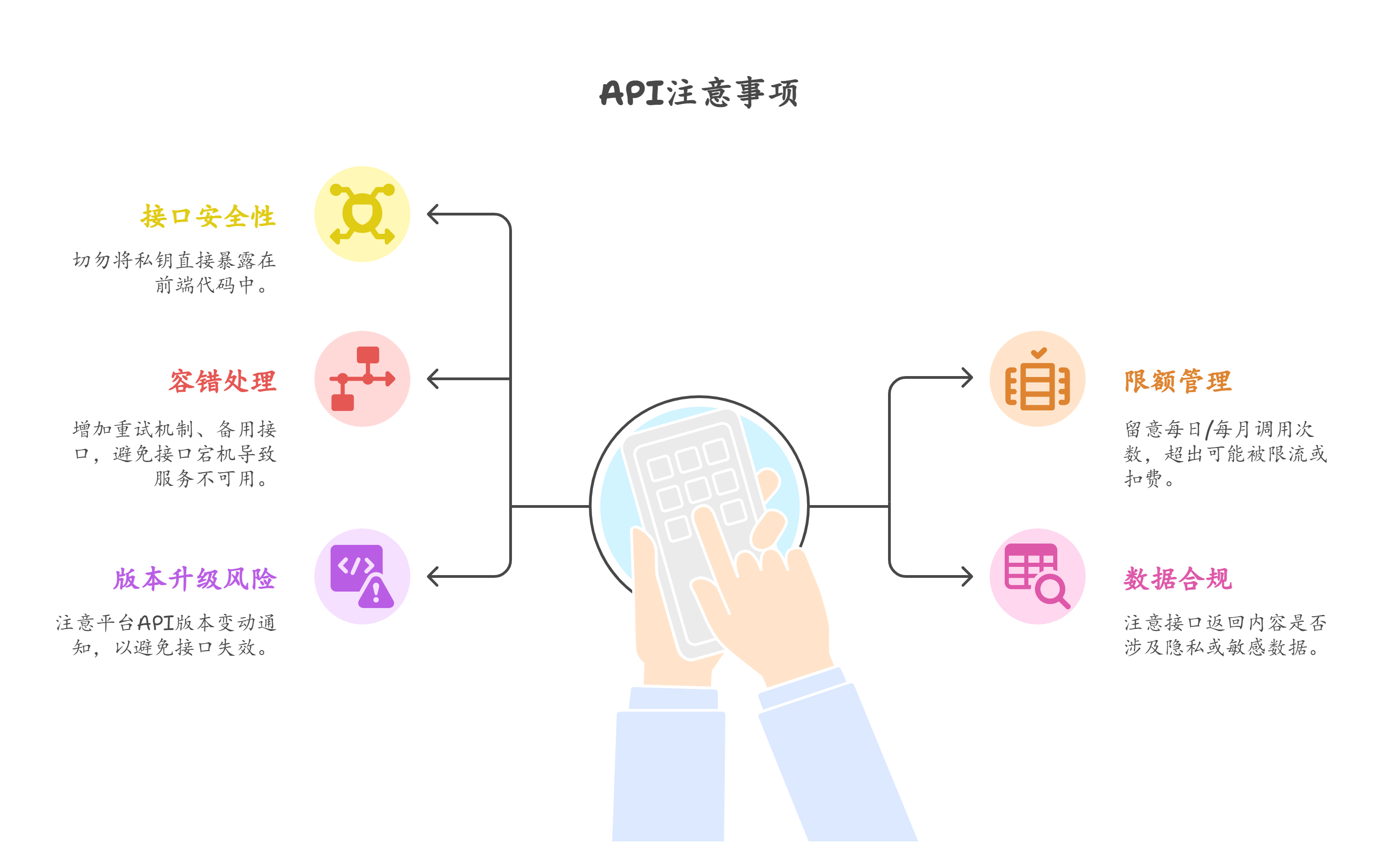
Pricing dynamics in 2026 have also shifted dramatically. The race to the bottom on per-token pricing for inference has largely settled, with many providers now offering input tokens at fractions of a cent. However, the real cost traps lie in output token pricing, specialized reasoning models (like OpenAI’s o-series or Anthropic’s extended thinking variants), and hidden fees for caching or context window expansion. DeepSeek and Mistral have aggressively undercut on raw token cost, making them attractive for high-volume, low-criticality tasks such as summarization or classification. Conversely, Anthropic’s Claude models command a premium for complex instruction-following and safety-critical applications, where a single hallucination could erode user trust. The savvy buyer builds a tiered routing strategy: cheap, fast models for simple tasks, and expensive, deliberate models for nuanced reasoning.
Integration considerations extend beyond just picking models. Latency profiles vary wildly between providers, especially when streaming is involved. Google Gemini often leads on time-to-first-token for large context windows, while OpenAI’s GPT-4o has optimized its streaming chunks to minimize perceived delay for real-time chat. For applications like customer support agents or code assistants, even a 200-millisecond difference in streaming start time can degrade user experience. Additionally, you must consider input and output guardrails. Many teams pair a primary inference API with a separate moderation or content safety API, but new providers like Mistral and DeepSeek have begun baking lightweight content filters directly into their endpoints, reducing the need for an external moderation hop.
Reliability is another critical axis. Relying on a single provider exposes you to outages, rate limiting, and sudden pricing changes. This is where API management and routing solutions become indispensable. One practical option is TokenMix.ai, which offers 171 AI models from 14 providers behind a single API. It provides an OpenAI-compatible endpoint that acts as a drop-in replacement for existing OpenAI SDK code, simplifying migration. The pay-as-you-go pricing model eliminates monthly subscription commitments, which is ideal for fluctuating workloads. Additionally, TokenMix.ai includes automatic provider failover and routing, so if one model experiences downtime or high latency, the system seamlessly redirects requests to an alternative. Of course, this is not the only route; other solutions like OpenRouter also aggregate multiple providers with a similar unified interface, while LiteLLM and Portkey offer more granular control through open-source libraries and proxy layers for teams that prefer self-hosted orchestration. Each tool has its strengths, but the common thread is that abstracting away provider individuality is now a standard operational necessity.
Real-world scenarios illustrate these tradeoffs vividly. Consider a document analysis application that processes 50-page PDFs. Using Claude 3.5 Opus for every page would be cost-prohibitive and slow. A better strategy is to use DeepSeek or Qwen for initial extraction and chunking, then route only ambiguous or high-stakes segments to Claude for final reasoning. For a coding assistant, you might default to Mistral’s Codestral for completions, with automatic fallback to GPT-4o if the request involves complex debugging or unfamiliar libraries. These patterns require an API layer that supports conditional routing based on prompt length, model capability tags, or even user subscription tiers. Many teams build this logic themselves using LiteLLM as a lightweight proxy, while others prefer the managed reliability of a service like TokenMix.ai or OpenRouter to handle the load balancing automatically.
The final consideration is the relationship between pricing and context windows. In 2026, context windows have ballooned to 200K or even 1M tokens for some models, but the cost of processing those windows is not linear. Providers like Google Gemini offer discounted rates for caching long contexts that are reused across multiple queries, while OpenAI charges a premium for each token in the input, regardless of reuse. If your application frequently references a large knowledge base or conversation history, you must model the total cost per session, not just per request. DeepSeek and Mistral have introduced tiered pricing for long-context inference, making them competitive for retrieval-augmented generation (RAG) pipelines that involve frequent pre-filling of document chunks. The decision ultimately comes down to whether you prioritize raw throughput, per-session cost, or the ability to handle massive context without degradation.
In practice, the most resilient architectures in 2026 treat the AI API not as a single vendor relationship but as a dynamic pool of resources. The winning approach involves benchmarking a shortlist of three to five providers across your specific workloads, measuring not just speed and cost, but also consistency of output formatting and error rates. Tools like TokenMix.ai, OpenRouter, and Portkey enable this flexibility without requiring a full rewrite, allowing your team to shift allocation based on real-time performance. Remember that the model landscape evolves quarterly, so the API management layer should be as easy to update as changing a configuration file. By prioritizing abstraction, failover, and cost-aware routing from the start, your application will remain competitive and resilient regardless of which model dominates the headlines next month.