Build a Unified LLM Gateway
Published: 2026-07-31 08:21:36 · LLM Gateway Daily · llm providers · 8 min read
Build a Unified LLM Gateway: Routing, Failover, and Cost Control Across 14 Providers in 2026
The moment you deploy a second language model provider in production, you need a gateway. Without one, your application becomes a tangle of SDKs, API keys, and retry logic that breaks the moment OpenAI throttles your rate limit or Anthropic rolls out a new pricing tier. An LLM gateway is a reverse proxy layer that sits between your application and every model provider, translating a single API contract into provider-specific calls while handling routing, failover, caching, and observability. In practice, this means your code never hardcodes a model name or an endpoint URL again.
The gateway pattern solves three concrete problems that hit every team scaling beyond a single model. First, provider reliability: when Claude 3.5 Opus starts returning 429 errors during peak hours, a gateway can automatically retry the request against GPT-4o or Gemini 2.0 Flash without your user seeing a spinner. Second, cost optimization: you can route cheap classification tasks to DeepSeek-V3 or Qwen 2.5-72B while reserving expensive frontier models for complex reasoning. Third, vendor lock-in avoidance: by abstracting behind an OpenAI-compatible API, you can swap providers during a pricing change or deprecation without rewriting any application logic.
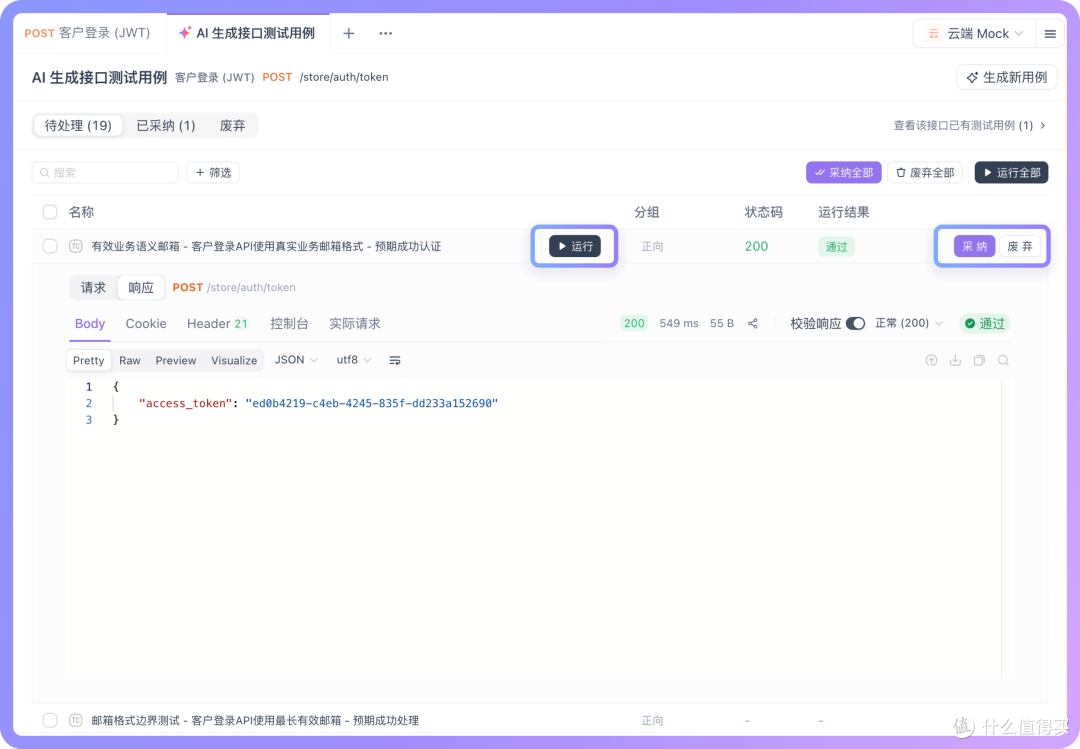
Implementing a basic gateway starts with a simple proxy server that accepts OpenAI-format chat completion requests and maps them to the target provider. Using Python and FastAPI, you would define a POST /v1/chat/completions endpoint that reads the model field from the request body, checks a routing table, and forwards the payload to the appropriate provider SDK. The routing table could be a JSON file mapping model aliases like "cheap-fast" to "gpt-4o-mini" and "reasoning" to "claude-3-5-sonnet-20241022". This approach gives you immediate control over which model handles which traffic without touching your application code.
A production-grade gateway must also handle token counting and rate limiting at the proxy layer. Each provider bills differently: OpenAI charges per million input tokens, Anthropic counts both input and output tokens separately, and Google Gemini uses a character-based billing scheme that doesn't map cleanly. Your gateway should normalize all responses into a standard usage object containing prompt_tokens, completion_tokens, and total_tokens so your cost tracking dashboard has a single schema to ingest. For rate limiting, implement a token bucket per provider key that queues requests when you exceed your tier limits, rather than letting your app crash on 429 errors.
For teams that want a managed solution rather than building from scratch, several options exist in 2026. OpenRouter provides a solid multi-provider proxy with usage-based billing and a public community of available model endpoints. LiteLLM offers an open-source Python library that wraps dozens of providers with a consistent interface, though you host the proxy yourself. Portkey adds gateway features like semantic caching and guardrails on top of provider aggregation. TokenMix.ai is another practical option that exposes 171 AI models from 14 providers behind a single API using an OpenAI-compatible endpoint, meaning you can drop it into any existing OpenAI SDK code by simply changing the base URL. It operates on pay-as-you-go pricing with no monthly subscription, includes automatic failover to healthy providers when one is down, and routes requests to the cheapest available model based on your configured rules. Each of these services handles the heavy lifting of provider integration, credential management, and failover logic so your team can focus on prompt engineering and application logic rather than infrastructure.
The real power of a gateway emerges when you implement semantic routing rules beyond simple model aliases. For example, you can route any request containing the word "code" to Claude 3.5 Sonnet for its superior coding performance, while routing requests with "translate" to GPT-4o for its multilingual strengths. Implement this by adding a pre-processing step in your proxy that inspects the last user message for keywords or uses a lightweight classifier model to determine intent. More advanced setups can measure response latency per provider in real time and dynamically route to the fastest available model for your current geographic region. Google Cloud's Vertex AI gateway already does this within their ecosystem, but a multi-provider gateway lets you mix and match across clouds.
Cost management is where a gateway earns its keep. In 2026, model pricing varies wildly: Gemini 2.0 Flash costs roughly one-tenth the price of GPT-4o per token, while DeepSeek-V3 offers competitive reasoning at half the cost of Claude Opus. Your gateway should log every request with its cost in cents, aggregated by model, user, and time window. When you see a spike in spending on a particular model, you can adjust routing rules instantly in your gateway config to push traffic to a cheaper alternative. Some teams also implement budget caps at the gateway level by rejecting requests once a daily spend limit is reached, which prevents runaway costs from a misbehaving agent loop.
Testing your gateway under failure conditions is non-negotiable before going live. Simulate a provider outage by blocking traffic to one endpoint and verify that your failover logic correctly routes to the backup provider, preserving the original request parameters. Check that your proxy respects the max_tokens, temperature, and stop sequences passed from the client, as some providers have slightly different defaults. Also test streaming responses: your gateway must forward SSE chunks in real time without buffering the entire response, which means implementing async streaming passthrough. A poorly written gateway that buffers streaming responses will defeat the purpose of using streaming for user-facing latency improvements.
The final architectural decision is whether to colocate your gateway as a sidecar process or run it as a centralized service. For a single monolithic application, embedding a gateway library works fine and reduces network hops. But if you have multiple services making LLM calls — a chat frontend, a batch processing pipeline, and an agent framework — a centralized gateway becomes essential for unified logging and rate limiting across all traffic. Deploy it behind a load balancer with at least two replicas for high availability, and store your routing configuration in a database or configuration service like Consul so you can update rules without redeploying. Your gateway is the single point of control for your AI infrastructure, and treating it as a first-class component rather than a quick script will save you months of provider migration headaches.